Full Article
about Pineda de Mar
Family-friendly beach destination with a long stretch of sand and year-round cultural events.
Hide article Read full article
Life on an Open Stretch of Coast
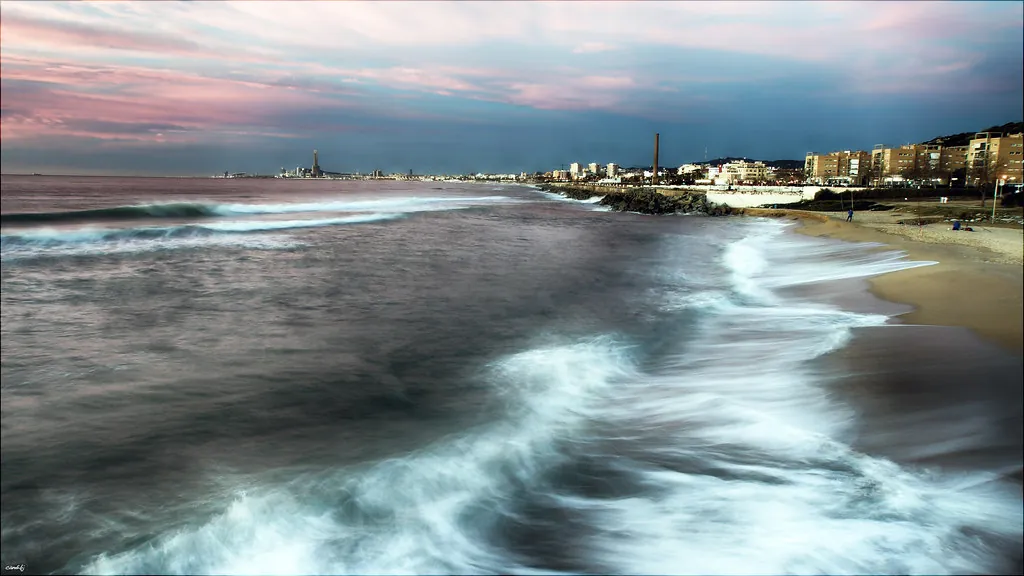
Pineda de Mar occupies a broad section of the Maresme coastline where the coastal plain lies exposed to the open sea. There are few natural shelters here. For generations, life in the town has revolved around this strip of sand and the riera, the seasonal stream, that descends from the Montnegre hills behind it.
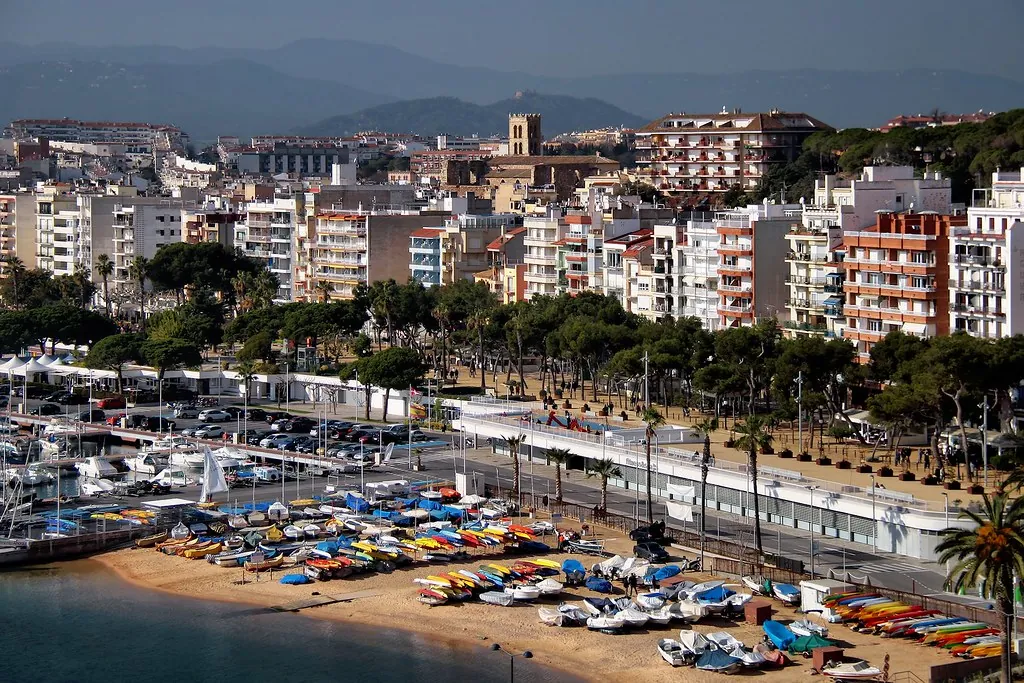
In the late afternoon, boats can still be seen drawn up on the Platja dels Pescadors. People work around them, repairing gear or preparing for the next outing. It is a scene that recalls how deeply the local economy once depended on fishing and on whatever the sea was willing to provide.
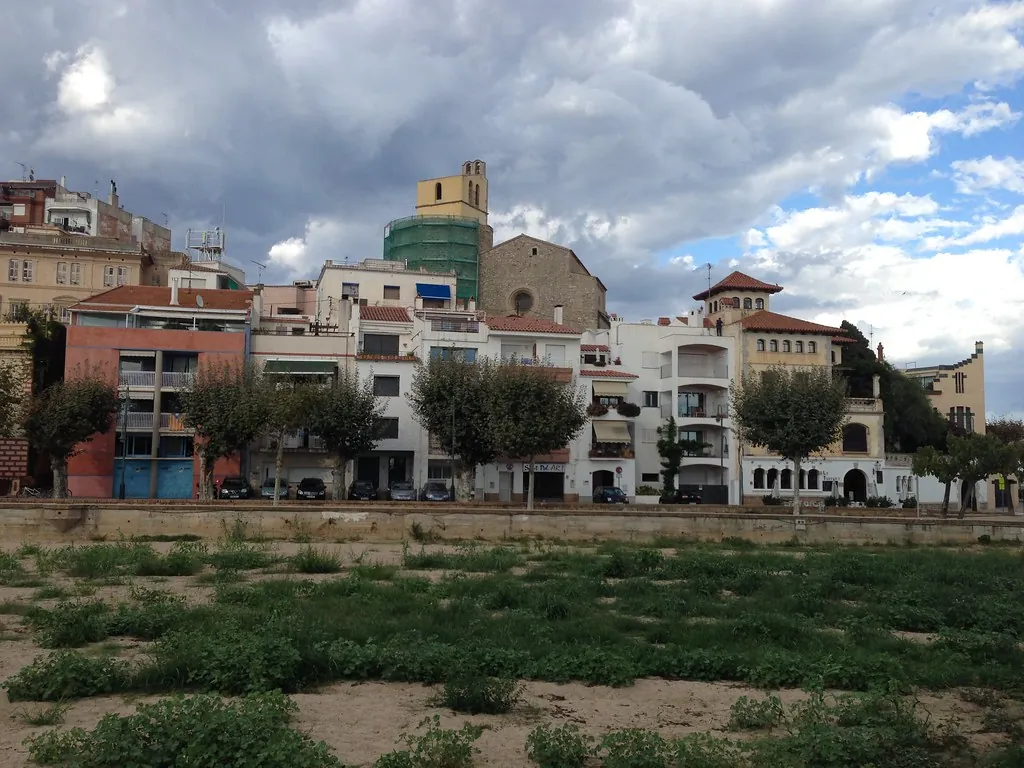
This stretch of the Maresme coast was long considered vulnerable. Between the 16th and 17th centuries, corsair attacks were a genuine concern. Many coastal settlements reinforced churches and built watchtowers. In Pineda de Mar, traces of that defensive past remain visible in parts of the old town, a reminder that daily life here was shaped as much by caution as by the tides.
Between the Sea and Montnegre
Settlement in the area predates the present town. On the hill of Montpalau there are documented remains of an Iberian settlement that once commanded wide views along the coast. From this vantage point, the logic of the landscape becomes clear: a long, open shoreline and, inland, a natural route towards the Vallès.
Over time, the population moved down from the heights to the plain. The church of Santa Maria, of medieval origin and altered in various periods, came to serve defensive purposes as well as religious ones. Its thick walls and additions from the Early Modern period reflect a time when coastal churches doubled as places of refuge.
Around the urban centre, there are also remains from the Roman period, including fragments of a small aqueduct associated with former agricultural activity. It is not a monumental complex, yet it helps to show that this part of the Maresme had been cultivated for centuries before the municipality existed in its current form.
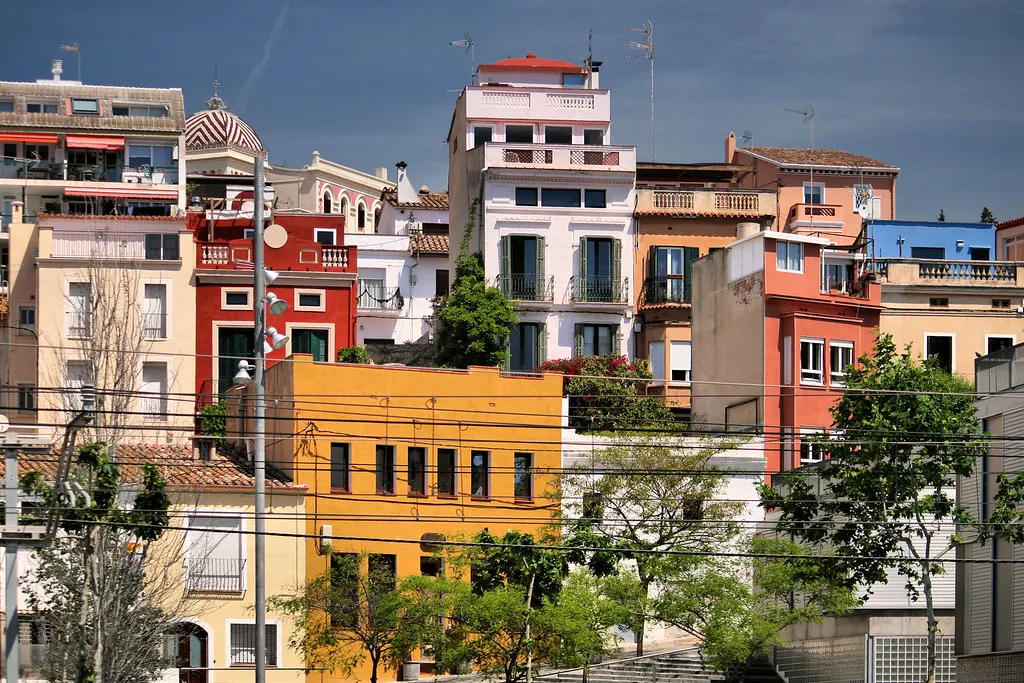
The layout of the old centre still follows the pattern of narrow streets and deep plots typical of settlements that grew from a single main road. Some houses retain wide doorways once designed for carts, or wooden eaves used for drying nets, linen and other goods connected to domestic life and maritime work. The architecture speaks quietly of routine tasks carried out close to the sea.
Straightforward Coastal Cooking
Local cooking reflects what traditionally came in on the boats. Dishes such as suquet de pescado, a fish stew, and arroz negro, rice cooked with cuttlefish ink, appear on many menus in the area. The approach is consistent: make use of rock fish, cuttlefish, squid or whatever has arrived that day at the nearby fish market.
Fideuàs marineras are also common. In season, sea urchins are eaten in the simplest way possible, opened on the spot and served with bread. The cooking is not elaborate. It is closer to the routines of the harbour than to any polished image of the Mediterranean coast.
At various times of the year, the municipality organises gastronomic days dedicated to specific products, often fish or cod. These themed events are common in towns along the Maresme and reflect an ongoing connection between local identity and what is caught or produced nearby.
Montnegre: The Landscape Behind the Beach
Looking inland from the beach, the scenery changes quickly. The municipal area extends into the Parc del Montnegre i el Corredor, a protected zone of Mediterranean woodland dominated by pines, holm oaks and cork oaks.
The riera de Pineda forms a natural corridor into the hills. In the past, timber, charcoal and stone were transported down this route to the coast. Today, several paths make it possible to explore this environment without straying far from the town.
The climb to the castle of Montpalau is one of the best known routes. What remains of the fortification consists mainly of the base of its tower and sections of wall, yet its position explains its purpose. From here, it was possible to monitor the surrounding territory and control movements between coast and interior. The view stretches across much of the Maresme and, on clear days, the outline of Barcelona can be seen to the south.
Parts of the path are covered with loose slate, particularly towards the end, so suitable footwear is advisable for the ascent.
Festivals Rooted in the Town
The summer festa major concentrates much of Pineda de Mar’s cultural life. As in many Catalan towns, the programme includes correfocs, where participants dressed as devils run through the streets with fireworks, along with parades and events organised by local associations.
Some groups in the town also work to recover traditional dances and music documented in 19th century archives. During the festivities they often hold open rehearsals or performances in the main square. Anyone can stop to watch, or even try to follow the steps.
Rather than being designed primarily for visitors, the atmosphere feels closely tied to the town’s own rhythm and community life.
Getting Around
Pineda de Mar is easy to explore on foot. The distance between the old town, the beach and the railway station is short, making it straightforward to move between them.
The Maresme railway line connects the municipality with Barcelona and with other towns along the coast, with frequent services throughout the day. For those arriving by car, much of the available parking is concentrated along the seafront promenade and in nearby streets.