Full Article
about Premià de Mar
Dense coastal town with a beach and a textile-printing museum
Hide article Read full article
The smell of sardines grilling along the seafront begins to drift through Premià de Mar by mid-morning, when the sun is still gentle and the first tables facing the sea fill with people holding café con leche. By that hour the Passeig Marítim already has its rhythm. Retirees stride out with purpose, someone returns from the market with a cloth bag over their arm, cyclists skim past the palm trees.
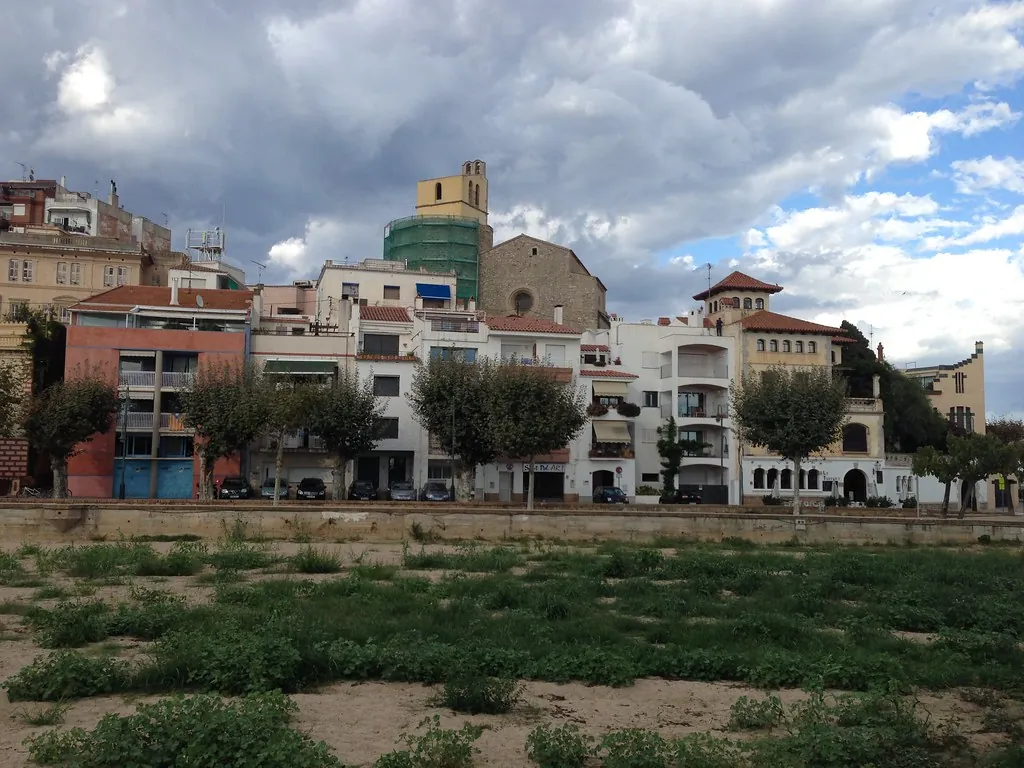
The town wakes slowly. Boats at the Club Nàutic rock at their moorings, some still covered with tarpaulins, waiting for the afternoon wind to come in from the south. From the pier, the promenade stretches in a straight line, palms leaning when the tramontana blows. Behind it stand low houses that recall the time when families from Barcelona came here to spend the summer. Many still have green wooden shutters and wrought-iron balconies where towels, swimsuits and salt-stiff T-shirts hang out to dry after a morning on the beach.
Traces of Steam and Printed Cotton
On Carrer de l’Amistat, the former gas factory survives, built at the end of the 19th century. The red-brick building with its metal structure now houses the Museu Municipal d’Estampació Tèxtil. Even without a particular interest in industry, it is an intriguing place to visit. The rooms display printing rollers, old fabrics and tools that still bear stains of ink.
For decades, textiles set the pace of life here. Premià de Mar had workshops and small factories where cotton fabrics were printed according to designs that arrived from elsewhere. The so-called indiennes, printed cottons inspired by oriental textiles, circulated across much of Europe, and some were made here. In the museum there are fragments where cobalt blue and deep red remain vivid, as if they had only just left the workshop.
The presence of the old factory on Carrer de l’Amistat is a reminder that this stretch of the Maresme coast was not solely about summer holidays and sea air. Industry and the railway that runs along the shoreline shaped daily life. Today, the museum offers a way of understanding that past through objects that are both practical and unexpectedly beautiful.
Coarse Sand and Everyday Life
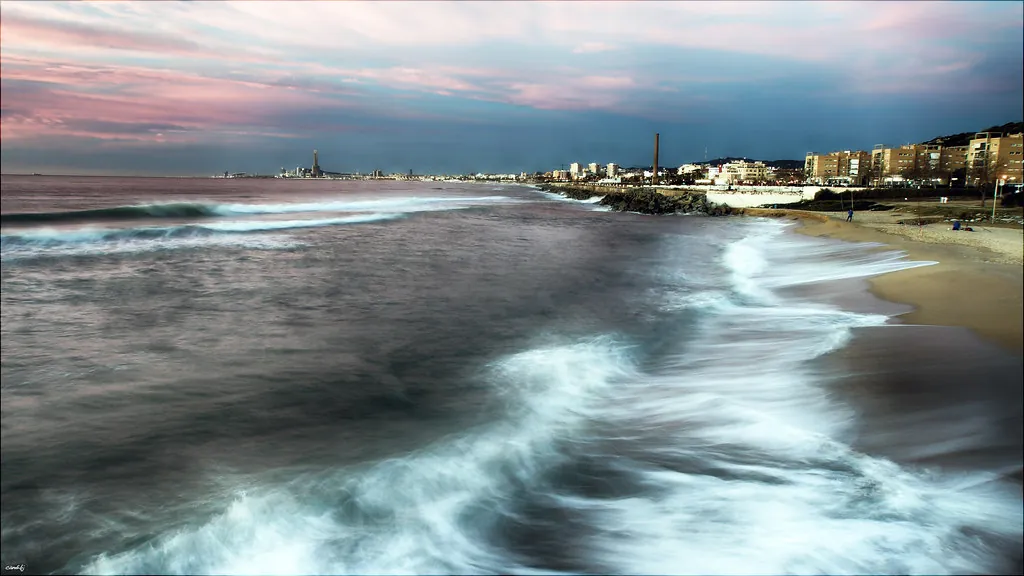
Premià’s beach is long and fairly open, with coarse sand that crunches underfoot. It is not the best-known beach on the Maresme coast, yet it has a straightforward, unpolished feel. Families arrive with well-used parasols, children dig trenches near the water’s edge, older residents wade in slowly, measuring each wave.
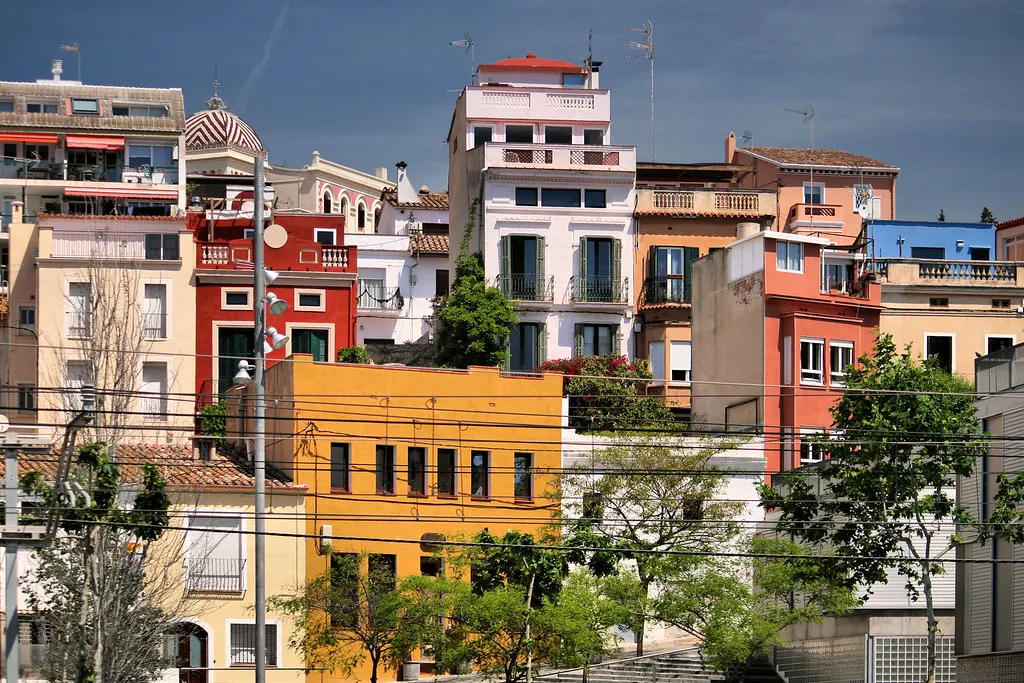
Behind the promenade, the urban fabric shifts quickly. Apartment blocks built in the 1970s stand beside Modernista houses decorated with coloured ceramics that remain in good condition. This contrast gives the town centre a layered look, where different decades sit side by side.
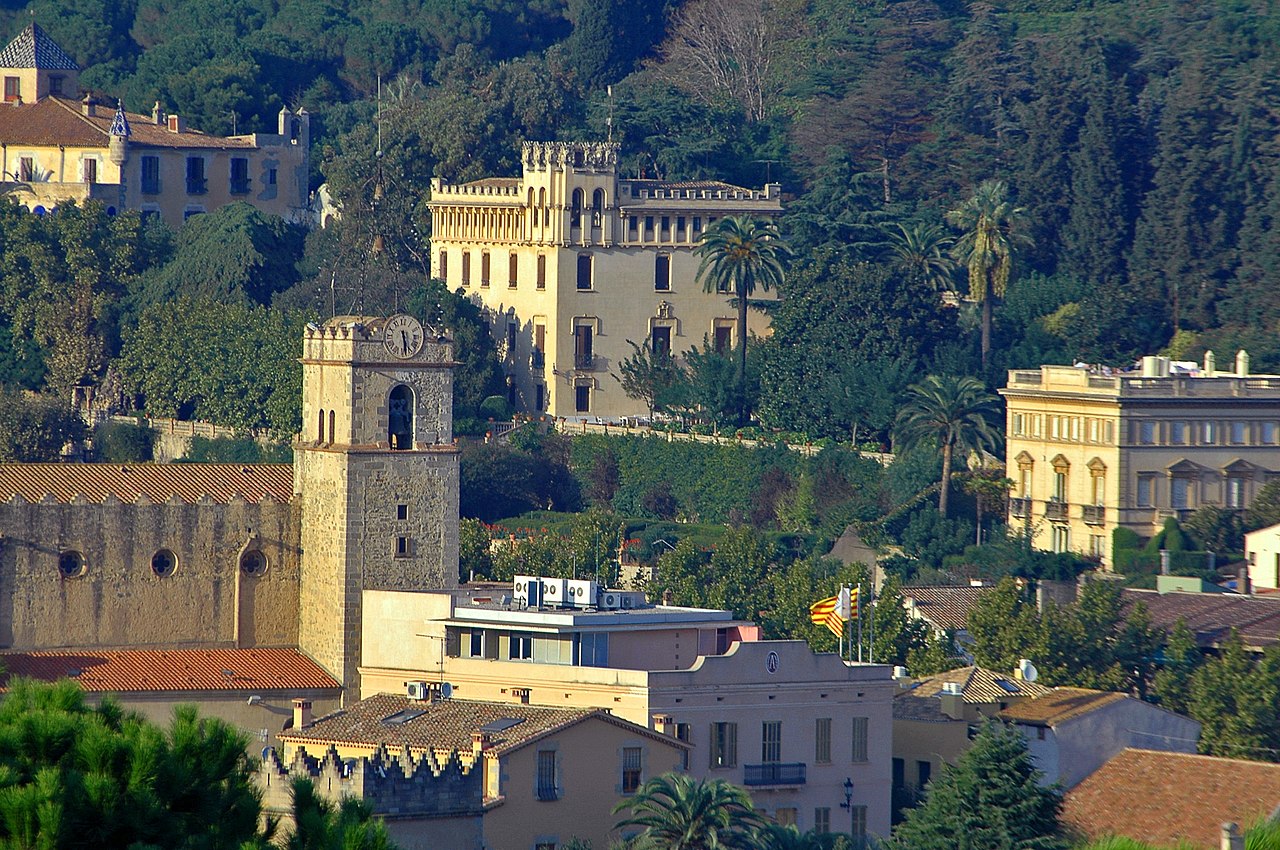
In Plaça de l’Església stands the parish church of Sant Cristòfor, whose origins date back to the 16th century. At certain times of day, the benches beneath the plane trees fill up. Card games unfold, conversations stretch on, and parents wait for children to come out of school while glancing at their phones. It is a space that feels firmly local, shaped more by routine than by spectacle.
Walking from the beach towards the centre takes only a few minutes, yet the atmosphere changes. The sound of the waves fades and is replaced by the scrape of chairs on pavement and the murmur of neighbours greeting one another. Premià de Mar is compact enough to cross on foot without effort, which makes these small shifts in mood easy to notice.
When the Light Turns Silver
Late afternoon is often the calmest moment of the day. Light from the west skims the surface of the water, turning it silver. At Espai l’Amistat, a theatre that now functions as a cultural centre, people begin to gather for whatever is on that evening’s programme, theatre, music or local events. The atmosphere is distinctly familiar. Many of the faces recognise one another.
Down at the port, a few fishermen may still be sorting nets or cleaning crates. There are not many of them. Some continue to head out before dawn, when the promenade is empty and the only sound is the soft knock of mooring lines against masts. By the time the town stirs, their work is already under way or done.
As darkness settles, the lights of the harbour come on gradually. The promenade fills again, this time with slower footsteps. Conversations carry across the open space, and the air cools enough to make the day’s heat feel distant.
Walking Without a Plan
Premià de Mar makes most sense when explored without much hurry. Along Carrer Major in the early evening, the smell of bread from the oven mixes with the rattle of metal shutters being pulled down. Shops close one by one, and the centre grows quieter.
There is no need for a fixed route. Turning corners at random reveals stretches of modest houses, small squares and glimpses of the sea at the end of a street. The scale remains human throughout. Nothing feels far away.
For a wider view of the coastline, it is possible to head uphill towards the ermita de Sant Mateu, in the range that rises behind the town. The path gains height quickly. When the vegetation clears, the entire strip of the Maresme comes into view, with the railway line and the chain of beaches pressed close to the water. From here, the relationship between town, tracks and sea is clear at a glance.
In summer, it is wise to avoid the central hours of the day. The promenade offers little shade and the heat lingers between the sea and the façades. June and September are usually easier. The water remains warm, and the town returns to a more everyday pace.
Premià de Mar does not rely on grand landmarks or dramatic scenery. Its appeal lies in small, repeated gestures: shutters opening in the morning, nets being folded at dusk, the scent of sardines drifting across the Passeig Marítim. Given time and an unhurried walk, the town reveals itself through these ordinary scenes, set between the Maresme hills and the open Mediterranean.