Full Article
about Sant Andreu de Llavaneres
Upscale residential town with a marina and renowned food scene.
Hide article Read full article
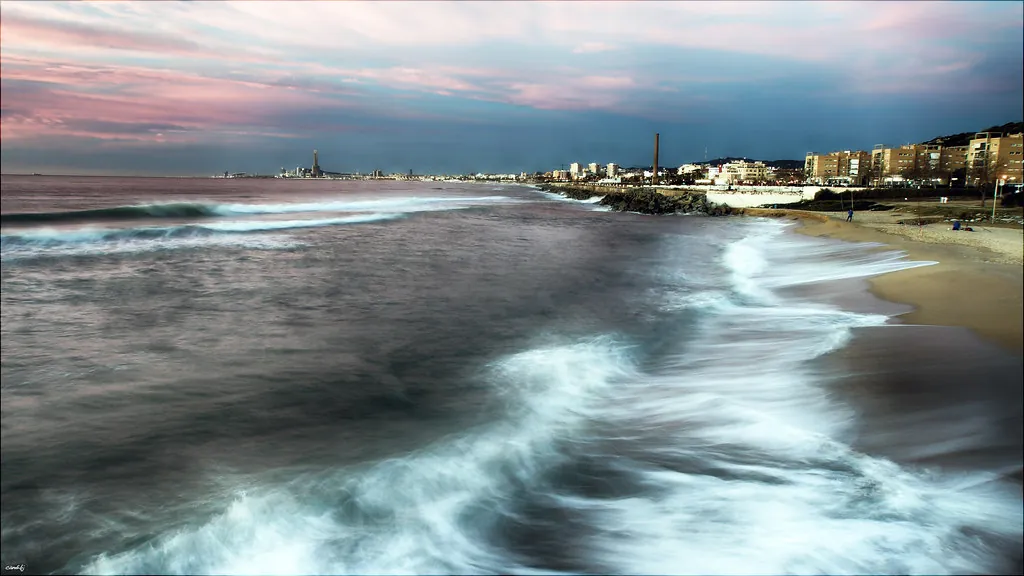
Sant Andreu de Llavaneres is a town of two levels. The old quarter holds the high ground, a cluster of streets around the parish church. Below, separated by the dry beds of seasonal streams, the modern marina and beachfront stretch along the railway line. This vertical separation is the key to understanding the place.
The town sits in the Maresme, north of Barcelona. Its original site was a practical choice: a small rise between the Riera de Llavaneres and the Riera de la Vall. From here, one could oversee the route from the shore inland. It was a neighbourhood of Mataró until 1579, when it became an independent municipality. The economy for centuries was a mix of vineyards, olive groves, and market gardens, with some supplementary fishing along the coast.
A Farmhouse at the Centre
The building known as Can Caralt tells part of this story. It is a masía, a traditional Catalan farmhouse, now adapted for use as a cultural centre. Its structure—wooden beams, an interior courtyard, former storage rooms—speaks of its original purpose. These houses were centres of agricultural production, not just homes. In the 18th and 19th centuries, many in the Maresme expanded with profits from the wine trade.
Local 19th-century archives already mention the pèsols de Llavaneres, a variety of pea well-regarded in Barcelona’s markets. The light soils near the sea seem to produce a notably sweet crop. It remains a distinctive local product, harvested in early spring.
The Slope to the Sea
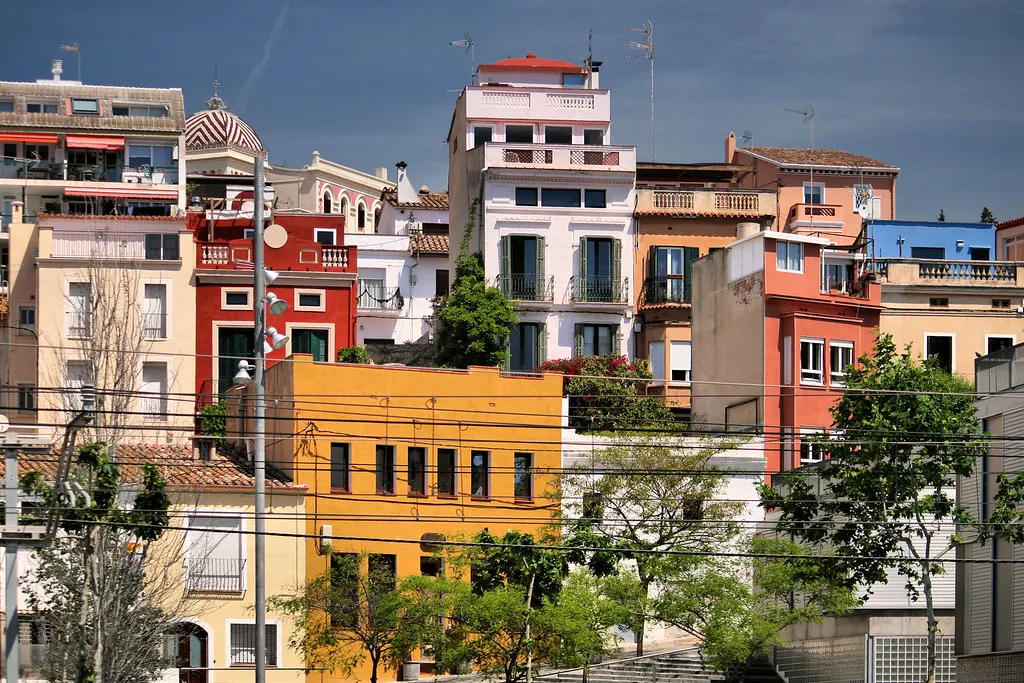
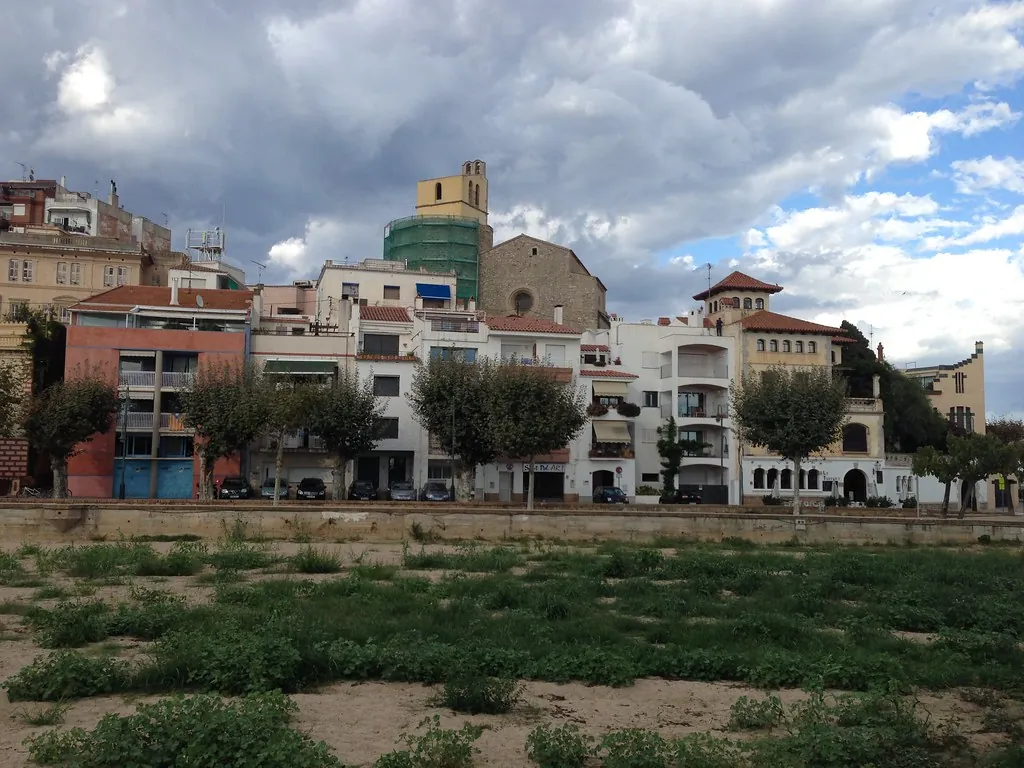
The historic centre is organised around the church of Sant Andreu. The building has been much renovated, but its location on the highest urban point is typical of the Maresme. From the square, streets slope down toward the coast. As you walk, the architecture shifts. Up top, you see narrow houses with stone or rendered façades and wrought-iron balconies. Some have wide doorways, a legacy of their agricultural past when carts needed access.
The transition downhill is clear. The urban fabric opens up. The lower areas near the coast developed much later, shaped in the mid-20th century by new residential growth and leisure infrastructure.
Modern Changes on the Coast
The town’s relationship with its shoreline changed decisively in the 20th century. First came a golf course, built on the gentle undulations between the old town and the sea. Later, the marina was developed. It is one of the larger harbours in the comarca. This introduced a new, seasonal rhythm focused on nautical activity. In summer, the population rises and life concentrates along the seafront.
This expansion contrasts with the older settlement pattern uphill. The slope between church and marina now maps the town’s evolution from an agricultural hamlet to a modern municipality.
Local Produce and Practicalities
The pèsol de Llavaneres is often prepared simply, lightly sautéed to highlight its sweetness. Another traditional item is the coca de Llavaneres, a sweet pastry with custard and pine nuts common at local festivities.
The town is easily navigated on foot. The historic quarter is compact. The marina and beaches are a walk downhill, close to the coastal railway line which provides a direct connection to Barcelona. By road, access is via the Maresme motorway. The layout—hilltop, streams, coast—forms a logical sequence that explains its past and present.