

Full Article
about Sant Pol de Mar
Charming coastal town with white houses and pretty coves.
Hide article Read full article
Late Light on the Promenade
At five in the afternoon, when the sun begins to drop behind the houses and palm shadows stretch across the sand, the seafront promenade in Sant Pol de Mar smells of salt and ripe strawberries. Tables start appearing on the pavement, chairs scrape lightly across the concrete, and a neighbour lingers on a bench, still holding on to the last minutes of a siesta while looking out to sea.
Sant Pol in July does not raise its voice. It speaks quietly, as if the Mediterranean were too close to argue with.
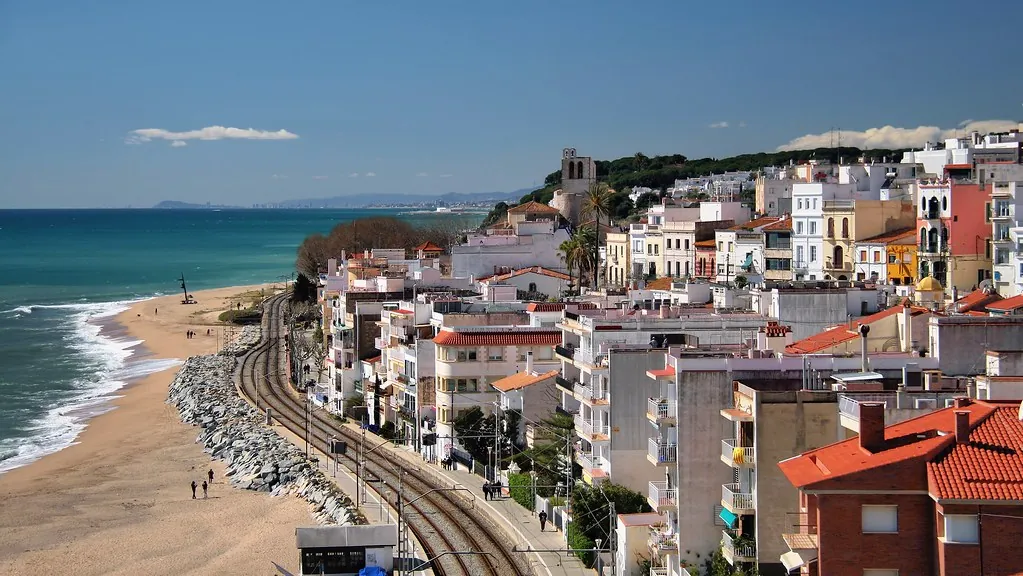
This small town on the Maresme coast, north of Barcelona, unfolds at an unhurried pace. The railway line runs right beside the beach, so arriving by train places you almost immediately between the water and the old streets. There is no grand entrance. Instead, there is light, salt in the air, and the sense that daily life continues much as it always has.
The Village That Was a Monastery
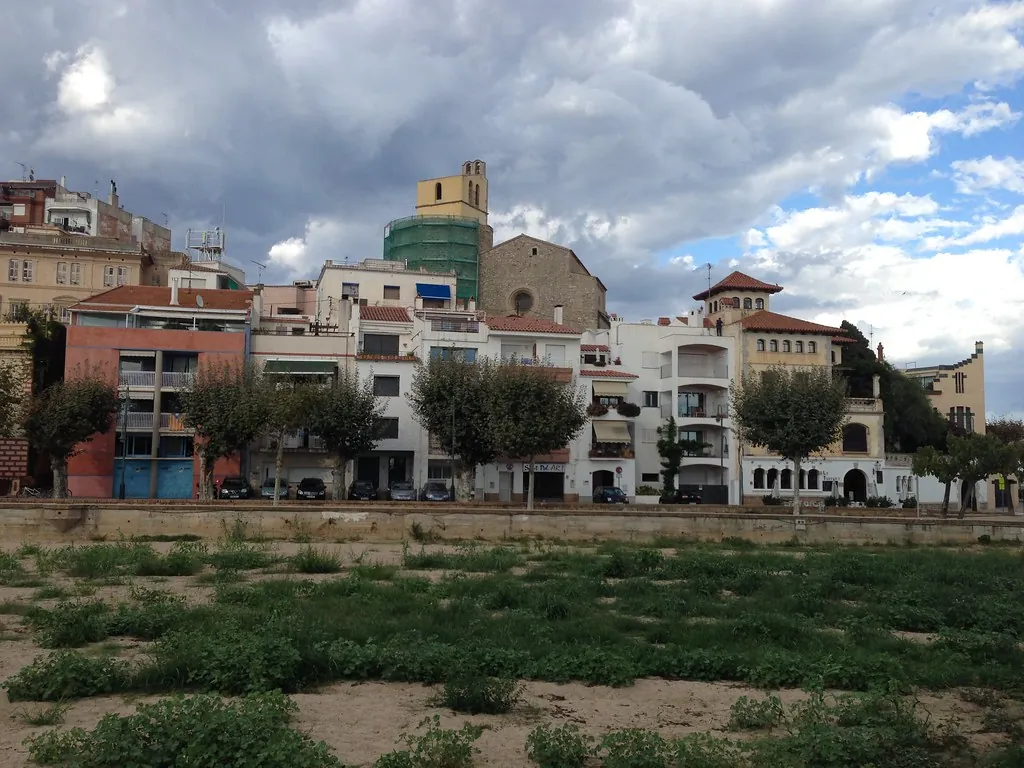
If you arrive by train, the first landmark within easy reach is the church of Sant Jaume. It is sober in appearance: a square stone tower, a relatively low bell tower, and a façade with little decoration. A flight of steps rises from the street, making you lift your gaze as you approach.
Inside, the contrast is clear. The air feels cool and still against the heat outside. The thick walls, built in the 16th century, hold the silence. In mid-afternoon the light enters from high windows and falls diagonally across the dark wooden pews.
A short walk uphill leads away from the centre along a street that becomes a dirt path between pines and holiday houses. There stands the ermita de Sant Pau. From the Benedictine monastery that gave the town its name, this small 11th-century Romanesque church is the main surviving element, with later additions.
The door is usually open during the day. Inside, there is the scent of damp stone and candle wax. On the façade, a sundial bears a phrase still heard in the surrounding comarca: “Sant Pol, quina hora és?” or “Sant Pol, what time is it?” It is a simple reminder of how closely the place remains tied to its past.
Modernisme Between Station and Sea
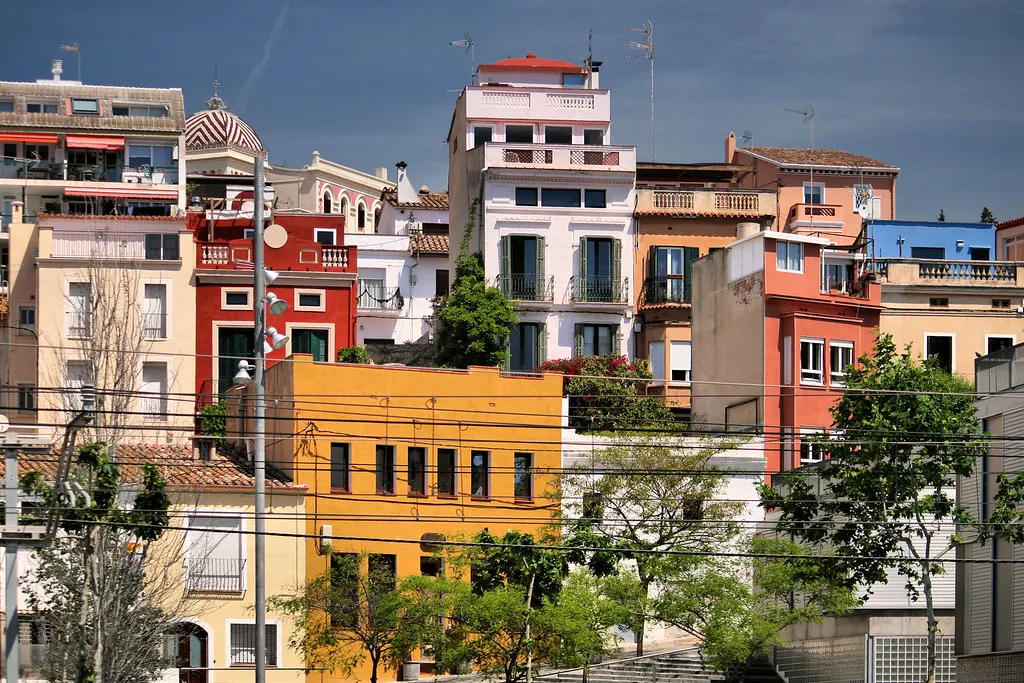
Between the station and the centre of town, several houses break with the more straightforward local architecture. Glazed ceramic tiles, wrought-iron balconies shaped into plant-like curves, and colours that intensify in the slanting light of late afternoon all point towards Catalan modernisme, the local version of Art Nouveau.
Several of these buildings are attributed to Ignasi Mas i Morell, an architect associated with the modernista movement. The Casa del Doctor Roura, built in the early 20th century, features a wrought-iron balcony that looks as though it were formed from twisted vine branches. Nearby stand the former public schools, recognisable by their green-tiled roof and broad windows.
At certain times of day, when children spill out from the nearby school, the square fills with noise and movement, as if the old building were still serving its original purpose. The architectural details here do not dominate the town, but they add flashes of colour and craft between the station platforms and the beach.
The Scent of Maresme Strawberries
In June, the air changes. Stepping out of the station or walking up the paths that climb towards the small agricultural plots above the town, a sweet scent becomes noticeable and unmistakable in this part of the Maresme: ripe strawberries.
The strawberries grown here are usually small and intensely red. They are cultivated on gentle slopes around Sant Pol, in parcels of land that still shape the landscape. The season begins in late spring, and for a few weeks they appear in markets and on dessert menus throughout the comarca.
Often they are served in the simplest way possible, with cream or a little sugar, nothing more. The flavour does not need embellishment. During these weeks, the fruit becomes part of the town’s identity, as present as the sea breeze that reaches the promenade.
A Small Town with a Serious Approach to Food
For a municipality of just over five thousand inhabitants, Sant Pol de Mar has long held a notable place in contemporary Catalan cooking. Conversations about food are as common as remarks about the state of the sea or the easterly wind.
This focus is visible in something straightforward: the produce. Fish arrives from nearby ports along the Maresme coast and from north of Barcelona. In season, dishes such as arroz negro, suquet and fideuà appear on tables facing the water. These rice and noodle dishes, closely tied to coastal cooking in Catalonia, are eaten with the sound of the train passing only a few metres away.
At midday, when the church bell strikes two, the promenade begins to fill. Sitting on a shaded bench, it is easy to watch as tables are gradually taken and paper napkins lift in the breeze. The rhythm is steady rather than hurried. Meals stretch out, conversations drift, and the sea remains in view.
Choosing the Right Moment
Sant Pol changes noticeably depending on the point in the summer. The second half of June is often a good balance: long days, beaches that are still relatively calm, and that distinctive strawberry scent drifting down from the nearby fields. During these weeks, a fair connected to the sea and local gastronomy usually takes place, bringing extra life to the town.
August feels different. At weekends, trains arrive full from Barcelona and the beach fills quickly from mid-morning.
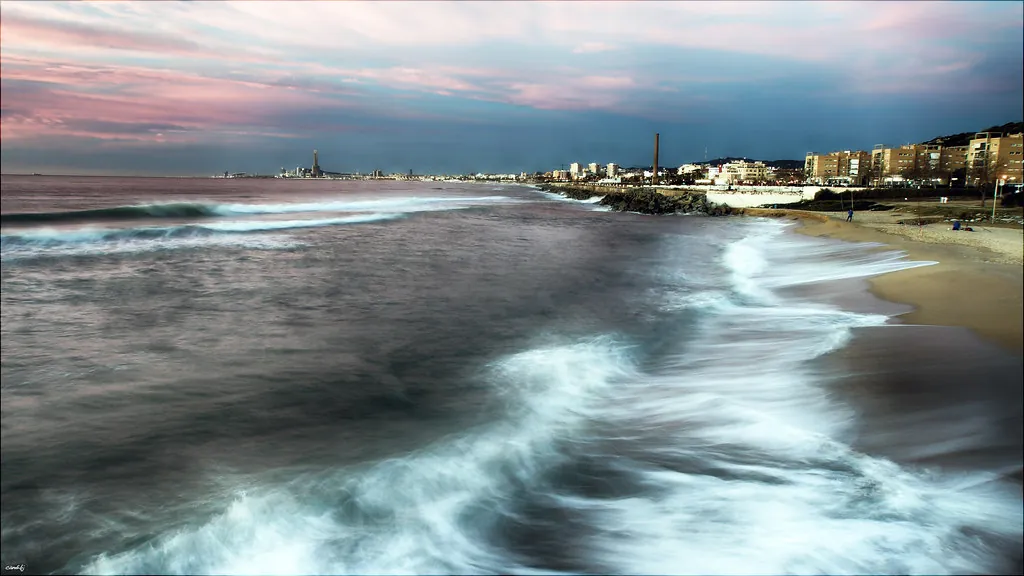
If possible, come during the week and rise a little earlier. Before seven o’clock the promenade is almost empty, and the sea takes on a grey-blue tone typical of the first hour of the day. Near the beach stands the Caseta del Motor, a small white building that for decades housed the engine used to help drag boats onto the sand. It is still preserved and forms part of the town’s maritime memory.
At that time of day, there is hardly any sound beyond the water and the occasional shutter being raised. Sant Pol de Mar, between monastery and railway line, strawberries and sea, reveals itself most clearly in those quiet hours.