Full Article
about Sant Vicenç de Montalt
Exclusive residential municipality with beach and mountain
Ocultar artículo Leer artículo completo
The 08:22 from Barcelona Plaça de Catalunya drops you at Caldes d’Estrac twenty-eight minutes later. From the platform you can already see the hills rising behind the station, a ridge of Aleppo pine and stone pine that looks improbably green this close to the sea. A taxi up the hill (€12, booked in advance—there’s no rank) or the hourly C-21 bus deposits you in Sant Vicenç de Montalt, 140 m above the Mediterranean, just far enough from the railway to lose the clatter of every passing Rodalies.
A Town That Turned its Back on the Beach
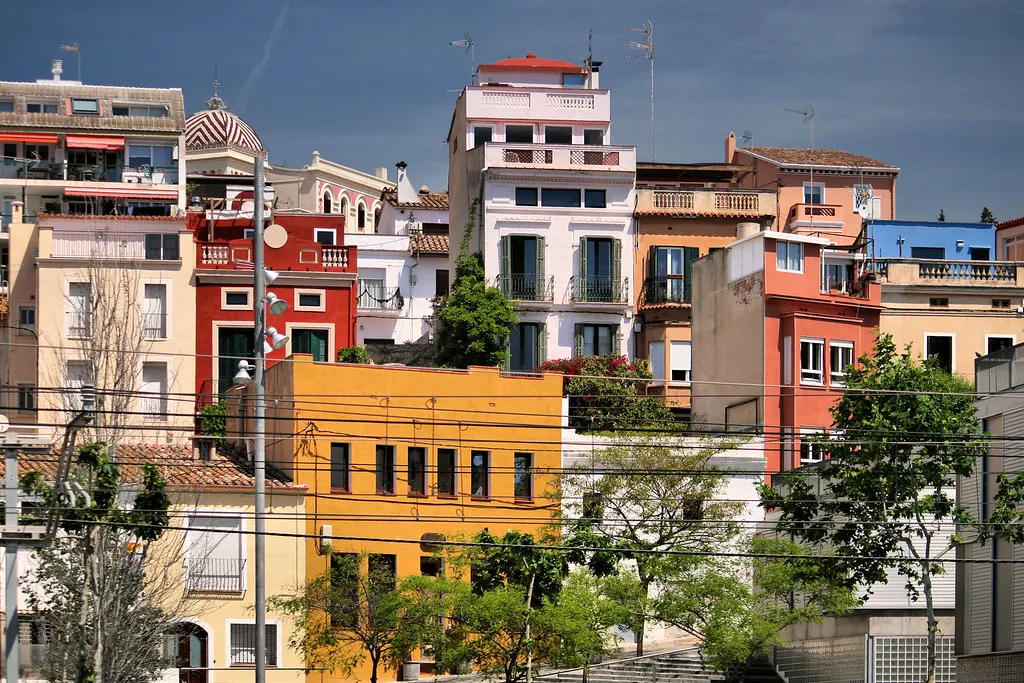
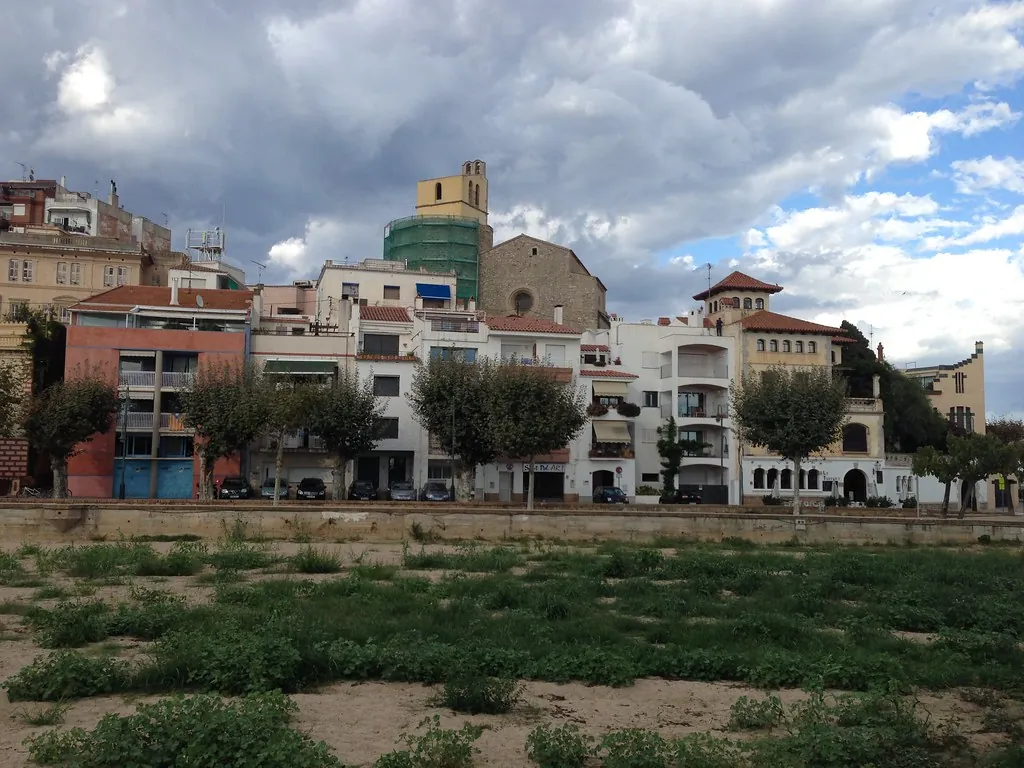
Most coastal villages shout about their shoreline; Sant Vicenç keeps its quieter. The old centre sits on a saddle between two small valleys, so the streets angle steeply down to the water in one direction and up towards the Litoral range in the other. That topography saved the place from the worst excesses of 1960s front-line speculation: the seafront got its apartment blocks, but the core survived with low houses, narrow pavements and plane trees that drop yellow leaves on the stone in November.
What you notice first are the summer villas. Between 1905 and 1930 Barcelona lawyers and textile dynasts built themselves miniature palaces here, a short walk from the new railway halt. Walk along Carrer Sant Josep and you’ll pass a 1912 house whose iron balcony rail spells out the owner’s initials in Art-Nouveau tendrils; round the corner on Passeig dels Pins a white noucentista mansion carries a marble plaque announcing that “Aquesta casa es va construir l’any 1918”. Most are still private, their gardens of carob and jacaranda visible only through wrought-iron gates, but the architecture is the town’s open-air museum and no ticket is required.
The parish church of Sant Vicenç is twentieth-century too, replaced after an earlier building collapsed in 1930. Inside it feels more like a solid neighbourhood hall than a cathedral, which suits a place whose population only swells from 5,600 in February to just under 9,000 at August’s height. Sunday morning mass still ends with locals chatting on the steps, swapping news about the fishing co-op’s catch and whose grandson is studying in Edinburgh.
Down to the Water—But Mind the Gradient
The beach is a mile downhill, a twenty-minute calf-stretch that locals treat as daily physio. The return journey, especially after a long lunch of suquet de peix and a bottle of chilled garnatxa blanca, is best tackled in the bus that loops every thirty minutes in July and August, hourly the rest of the year.
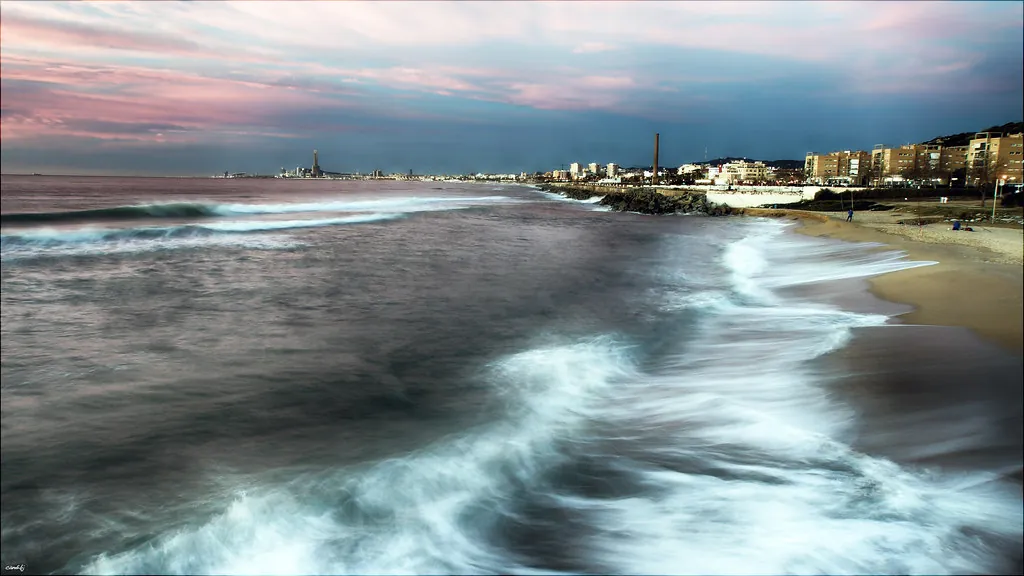
Platja de Sant Vicenç is not the Costa Brava of postcards. The sand is coarse and caramel-coloured, the kind that doesn’t stick to towels but heats up like a toast-rack by noon. A row of xiringuitos (beach bars) rents out sun-loungers for €5 a day and serves plates of chipirones a la plancha that arrive still sizzling. Behind the sand the railway cuts close; every half-hour a train flashes past, close enough to count the passengers’ heads, a reminder that this coast was urbanised long before “unspoilt” became a marketing word.
Yet step east beyond the yacht club and the shoreline fragments into rock shelves and pocket coves where the water clears to bottle-green. These slabs of pitted limestone are the locals’ preferred swimming spots; bring jelly-shoes because sea urchins colonise the pools. On a calm September morning you can float looking back up at the pine ridge, the villas reduced to toy-town scale, and understand why nineteenth-century doctors prescribed this exact view for “nervous dispositions”.
Walking Without the Crowds
Behind the town the Litoral range tops out at barely 500 m, but the paths feel higher because the sea is always in sight. A favourite circuit leaves from the cemetery gate on Carrer de la Vila, climbs through olive terraces, then contours along the ridge to the hermitage of Sant Pau. The round trip takes ninety minutes, just enough to work off breakfast, and lands you back in time for coffee at Forn de Sant Vicenç where the croissants pass even a British butter-pastry test.
Longer hikes link to neighbouring villages: south to Caldes d’Estrac along the Camí de les Vil·les, an undulating dirt lane shaded by stone pines, or north to Sant Andreu de Llavaneres on the GR-92 coastal path. Neither requires more than stout shoes and a litre of water; both deposit you at a station with twice-hourly trains back.
Winter Escapes and Spring Surprises
October half-term is when British visitors who “discovered” the place start returning. Temperatures still touch 22 °C, the sea holds its warmth until early November, and rental flats drop to €550 a month on a three-month winter contract. Pensioners from Sussex and Yorkshire colonise the library’s free Wi-Fi, swapping tips on which pharmacist will accept the European Health Card without fuss.
Spring brings wild gladioli to the verges and the first peas from the huerta. The town’s allotment gardens, wedged between houses and the stream, grow the famous guisantes de Llavaneres—fat, sweet peas that appear on every restaurant menu in May. Order them simply: sautéed with onion and diced ham, a dish that tastes of early English petits pois but arrives with Catalan bluntness and a slug of local olive oil.
Eating and Drinking, Catalan-Style
There is no Michelin star, and locals like it that way. Can Xarau on the main drag does a three-course menú del día for €14; the roasted chicken and chips keeps children quiet, while adults get crema catalana torched to order. El Balís yacht club grills squid that still twitch; ask for “sense sal” if you want it plain. Saturday morning market (Plaça de la Vila, 8-14 h) sells Cava in plastic bottles—€3 worth of picnic fizz that outclasses most British supermarket prosecco. Bring your own tote; bags cost 10 cents now.
Getting There, Staying Sensible
You don’t need a car for a week. Parking in town is tighter than a Barcelona side street; yellow lines are enforced with Catalan efficiency. Use the train: twice an hour to Barcelona (35 min), once an hour to Girona (55 min). A T-Casual ten-journey ticket covers both directions and costs €11.35—cheaper than four singles. If you do hire a car for a day, the inland C-1415a threads through vineyards to the monastery of Sant Jeroni de la Murtra, where Ferdinand and Isabella once received Columbus. Sunday lunch in the nearby village of Argentona costs half the beach price.
The Honest Verdict
Sant Vicenç de Montalt will not deliver white-washed fantasy or midnight club culture. August weekends fill with Spanish families, the beach bars run out of tables, and the climb back up the hill feels steeper after paella and two jugs of sangria. But for the other ten months it offers what few Mediterranean spots still manage: a working town where the baker recognises you after three mornings, where the sea is five minutes away by bus yet invisible from your bedroom window, and where Barcelona’s energy sits half an hour down the line whenever you crave a city hit. Pack good shoes, a tolerance for church bells at 8 a.m., and the expectation that “authentic” sometimes means a diesel train in the background. You’ll leave with calf muscles and a calendar note to return before everyone else catches on.