Full Article
about Montferrer i Castellbò
Large municipality that includes the historic Castellbò valley and cross-country ski trails.
Hide article Read full article
A valley that reveals itself slowly
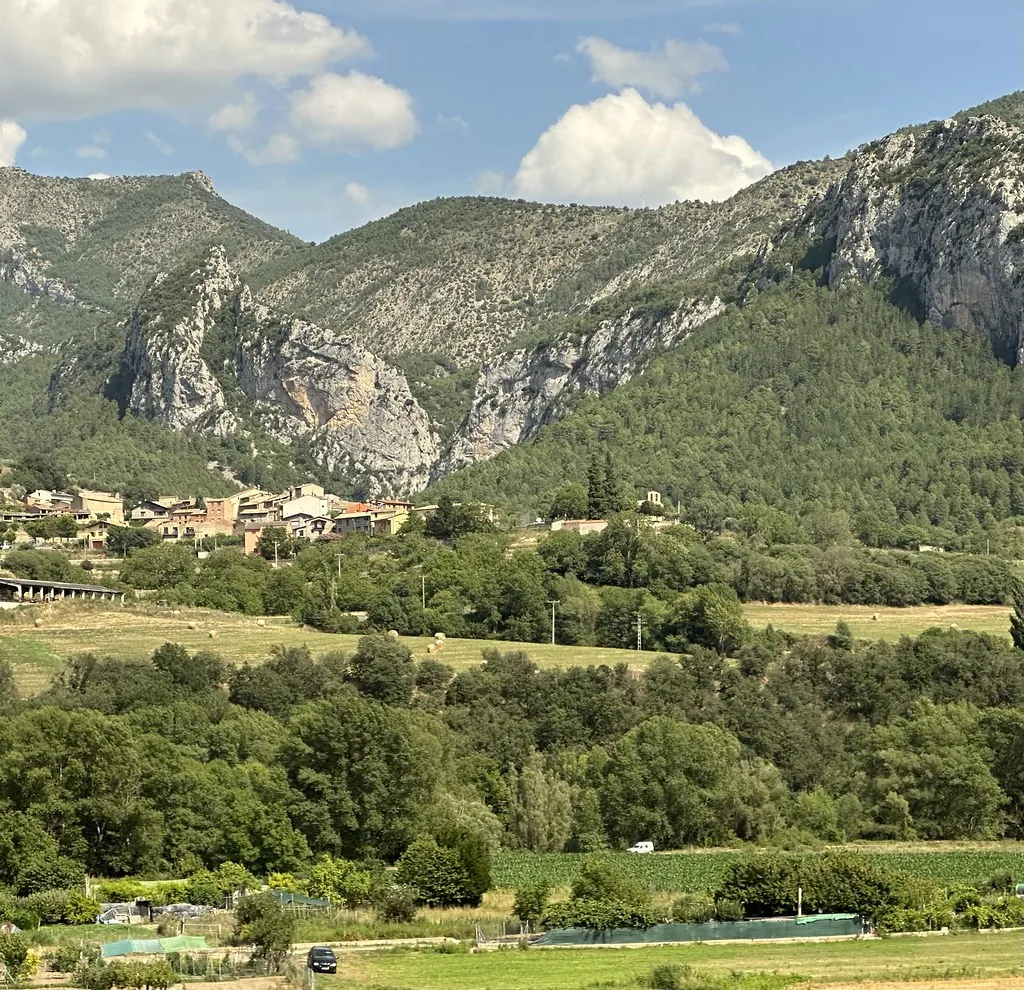
Early in the day, when the light still arrives cool from the north, the valley opens wide and quiet from the road that leads into Montferrer. The Pyrenees sit in the distance, their peaks often still holding snow while the lower ground already smells of freshly cut grass. Tourism in Montferrer i Castellbò often begins in this low-key way: a short pause, a look around, then moving on, because the landscape here does not try to impress at first glance. It unfolds gradually.
At around 730 metres above sea level, in the Alt Urgell comarca in Catalonia, the municipality brings together several small settlements scattered between fields, gentle slopes and woodland. Montferrer lies closest to the main road, with clustered houses and an everyday rhythm that feels steady and unhurried. Castellbò sits further into the valley, more sheltered, where the land narrows and the mountains seem to draw a little closer.
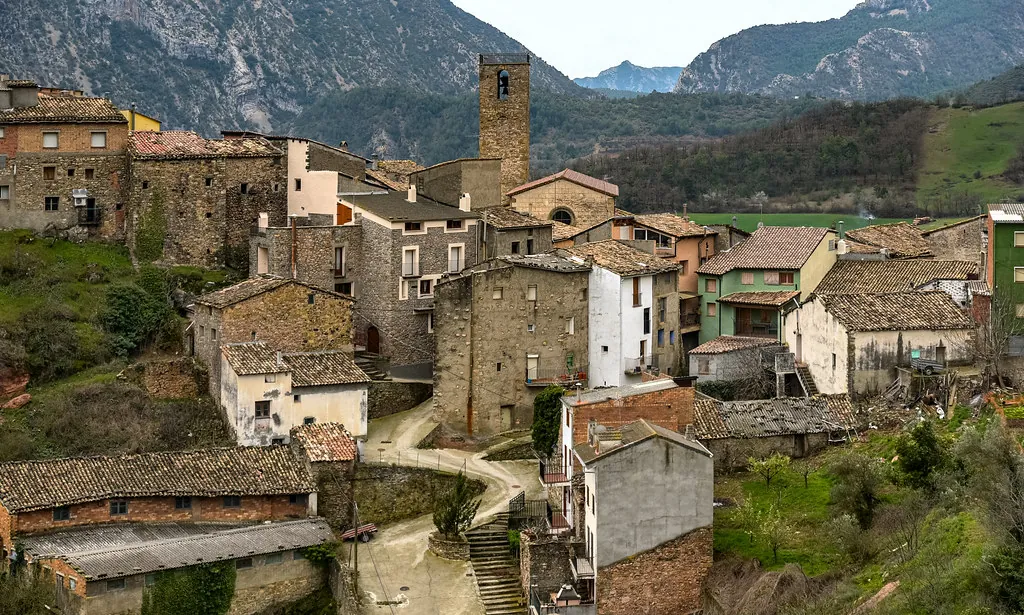
The municipality itself comes from the administrative union of these two places, each with a distinct character shaped over time. Montferrer retains the structure of an agricultural village, with storage buildings, vegetable plots and tractors still moving in and out during the day. Castellbò, by contrast, holds on to a more visibly old atmosphere: narrow streets, dark stone walls and, above all, the broken outline of its castle above the village.
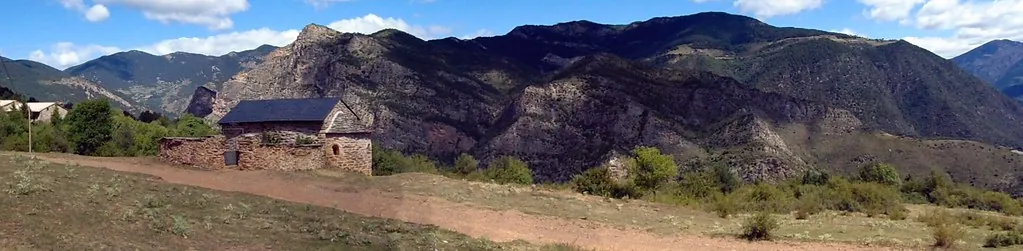
There are no large tourist facilities here, and no network of perfectly signposted routes. What you find instead are dirt tracks, paths climbing through pines and open fields where the wind moves through tall grass. Comfortable shoes and some water are sensible if you plan to walk, especially in summer when some stretches offer very little shade.
Castellbò and the remains above it
The path up to Castellbò’s castle begins simply, leaving from near the village itself. At first it passes between stone walls and small terraces, then the terrain opens out and the first wider views of the valley appear.
At the top are the remains of the old fortress, historically linked to the viscounts of Castellbò. What stands today are fragments: stretches of wall, the bases of towers and large stones now covered in grass. Even so, the position explains everything. From here, the valley lies fully exposed, easy to watch and control, which is exactly why the castle once stood here.
The walk up usually takes around half an hour at a relaxed pace. On clear days the view stretches towards the mountains of the Alt Urgell. If the air is still, there is very little to hear beyond the occasional distant cowbell.
Back in the village, the narrow streets and solid stone buildings continue that sense of continuity. Nothing feels arranged for visitors, and that is part of what defines the place.
Montferrer and its everyday rhythm
Montferrer has a different feel altogether. The streets are more open, and daily life is easier to spot: cars coming and going, neighbours talking in doorways, someone working a small plot early in the morning.
The parish church of Sant Bartomeu contains older elements within its structure. Its thick walls and small windows point back to Romanesque origins, although the building has changed over time. It is not an imposing monument, but it sits naturally within the village: grey stone, sloping roofs and a quiet that settles once the noise from the main road fades.
A short walk through the village reveals small details that are easy to miss at first: worn wooden doorways, external staircases, courtyards where logs are still stacked for winter. These are the kinds of features that speak more about continuity than display.
Tracks, fields and the Segre valley
Across the municipality, rural tracks link smaller settlements and scattered farmhouses. These are not dramatic or technical routes, but calm paths that move between fields and patches of woodland.
One of the most common walks connects the village of Castellbò with the castle and the fields closer to the Segre river. The scenery shifts noticeably with the seasons. In spring, the meadows turn a vivid green and the river runs stronger. By late summer, the ground becomes drier and the smell of warm earth lingers along the paths.
Secondary roads in the area also attract local cyclists. There are no major mountain passes here, but there is a steady pattern of ups and downs that requires a consistent pace. The nearby county capital, La Seu d’Urgell, lies close enough that many people combine both places in a single outing.
If visiting in August or during a long holiday weekend, starting early in the day makes sense for walking. By mid-morning the sun can be strong in open areas, and some tracks offer little shelter. In autumn, the atmosphere changes again. The valley grows quieter, and nearby woods begin to carry the scent of damp leaves.
Mountain flavours of the Alt Urgell
The cooking in this part of the Alt Urgell revolves around simple, direct ingredients: cured meats, mountain cheeses and warm dishes suited to cooler temperatures. Serrat cheese, common in the comarca, has the distinctive intensity of sheep’s milk and a slightly dry texture that pairs well with rustic bread.
It is not a complex cuisine. It follows the rhythm of the seasons and what is produced locally, something that remains visible in many villages of the inland Pyrenees.