Full Article
about Alcanar
Southernmost coastal municipality in Catalonia, known for its citrus fruit and seaside Iberian settlements.
Hide article Read full article
Clementines ripen here earlier than in many other stretches of the Spanish coast. While autumn still feels distant elsewhere, the fields around Alcanar begin to turn a deep, glowing orange that promises sweetness. Ask anyone local about tourism in Alcanar and the conversation often drifts towards the same thing: the smell. Early in the morning, among orchards that lie just a couple of kilometres from the sea, the air blends mandarin peel, damp earth and a faint saline note drifting in from the Mediterranean.
This is a place where agriculture and coastline sit almost side by side, and where daily life still follows the rhythms of field and harbour.
Where Time Moves a Little Differently
In Plaça de Sant Miquel, the stone benches hold on to the cool of the night as the sun rises behind the Serra del Montsià. The mountain range stands close, forming a calm barrier that shields the town from inland winds. Farmers have observed the effect for generations: citrus fruits tend to ripen a few weeks earlier here, and winters are milder than might be expected at this latitude.
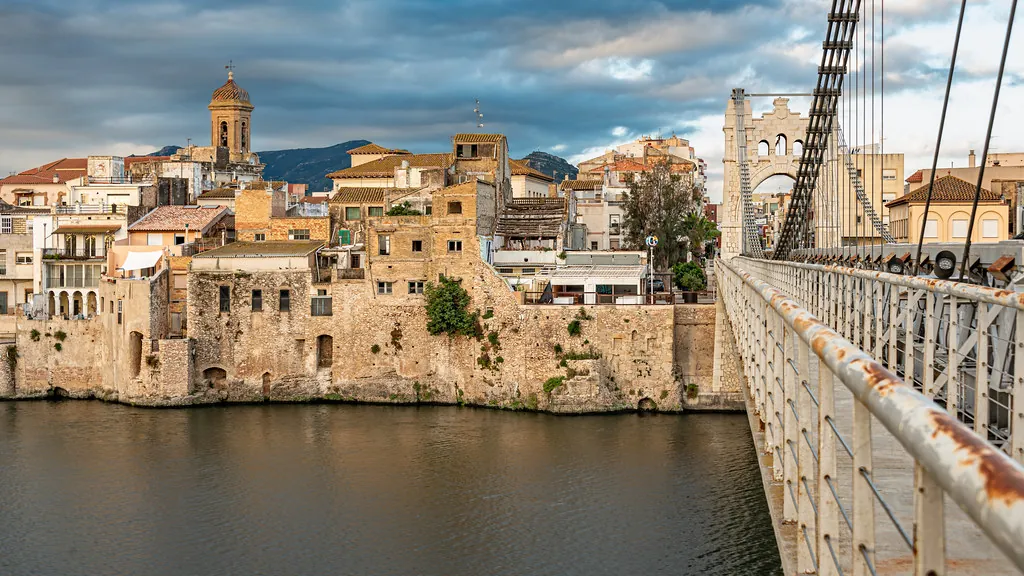
Alcanar is not arranged as a single compact centre. There is the original town, a network of narrow streets where the sound of a passing car bounces off the façades. Closer to the water lies Les Cases d’Alcanar, the fishing quarter beside the harbour and promenade. Along the coast stretches Alcanar-Platja, with residential developments built on what were once orange groves. Inland, newer neighbourhoods have grown where life revolves less around the sea and more around the routines of a town that remains deeply agricultural.
The shift between these areas is gradual rather than abrupt. A few minutes’ drive or walk can take you from orchard tracks to the waterfront, from mountain views to the flat shimmer of the coast.
A Low, Unhurried Coastline
By midday, the beach at Les Cases often has the untroubled look typical of the low-lying shores of southern Montsià. The water slopes in gently and takes time to deepen, so even a short distance from the edge the seabed is still visible: dark sand mixed with broken shells and small stones polished smooth by the swell. Children move forward cautiously, peering into the shallows as if studying a natural aquarium.
Near the harbour, boats return in mid-morning. The air fills with a mix of diesel, damp nets and freshly landed fish. The promenade is short and easy to cover at an unhurried pace. Continue north and the setting grows quieter, with stretches of coastal vegetation and dirt paths where the only sounds are the sea and wind brushing through pine trees.
In the height of summer it is wise to avoid the central hours of the hottest days. The sun bears down without shade and the humidity quickly makes itself felt.
Flavours That Return Each Season
Food conversations here tend to circle back to whatever has come in from the fields or the harbour that morning. Arrossejat remains a familiar dish in many homes. The rice is cooked slowly, allowed to take on a toasted edge before the stock is added, a method that gives it depth and character. Suquet, a traditional fishermen’s stew, appears when the catch is fresh, something the harbour’s fishermen continue to assess with a critical eye.
Savoury cocas are common at the start of the day. These flatbreads may be topped with roasted vegetables, sometimes with fish or cured meats, and are part of the everyday rhythm rather than a special occasion. Further inland within the municipality, ancient olive groves on the slopes of the Serra del Montsià produce a dense, dark green oil. Tasted raw on bread, it carries a peppery finish that lingers at the back of the throat.
Autumn shifts the focus back to citrus. Clementines once again dominate the landscape, and many families still sell them directly from small agricultural warehouses in the area. Buying fruit here often means it has travelled only a short distance from tree to counter.
Iberian Roots and Watchful Towers
Above the town, on a stony hill dotted with low pines and rosemary, stands La Moleta del Remei. The path climbs steadily through Mediterranean scrub and usually calls for water and comfortable footwear, particularly on hot days. At the top lies one of the best-known Iberian settlements in southern Catalonia. The Iberians were pre-Roman peoples who inhabited parts of the eastern Iberian Peninsula, and their presence here adds a much older layer to the landscape.
From this vantage point, the view opens wide. Citrus fields form green rectangles across the plain. The town presses up against the foothills of the Serra del Montsià. Beyond, the Mediterranean appears as a darker blue band on the horizon.
Along the coast, several watchtowers still stand, built centuries ago to monitor attacks arriving by sea. Today some find themselves wedged between housing developments or near the seafront promenade, yet they retain their solid stone presence, a reminder of the vigilance they once required.
Choosing the Right Moment
Spring is often one of the most pleasant times to visit. Orange trees are in blossom, and their sweet scent drifts even onto the regional roads that cut through the orchards.
Summer brings a different tempo. Beaches and coastal apartments fill up, particularly in August, and traffic increases noticeably on the access roads to the municipality and along the route that links this stretch of Catalonia with the Valencian coast.
For a quieter atmosphere, September and October tend to work better. The sea still holds the warmth gathered over summer, the fields begin to shift in colour, and the overall mood returns to that of a town sustained year round by its fields and its harbour.