Full Article
about Bell Lloc Durgell
Ocultar artículo Leer artículo completo
The Green Grid
From the air, Bell-lloc d'Urgell looks like a chessboard someone has tilted toward the sun. Rectangles of wheat, maize and fruit trees meet at perfect angles, edged by water channels that glitter like silver wire. This is not the chaotic terraces of Andalucía or the rugged folds of the Pyrenees; it is the Pla d’Urgell, a plain so flat that locals joke you can watch your dog run away for three days. At 196 metres above sea level, the village sits lower than Birmingham yet feels closer to the sky—heat haze and dust give the light a pale, almost bleached quality that makes colours seem over-exposed.
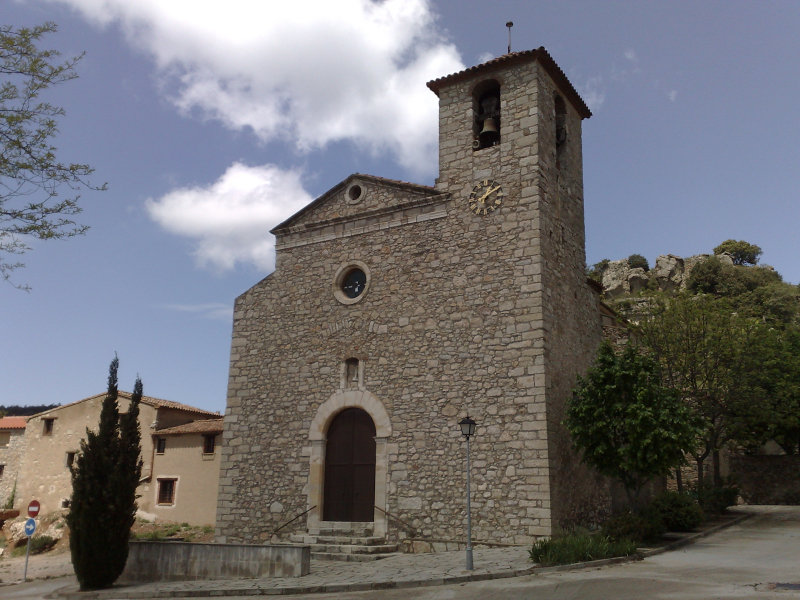
The first thing you notice on arrival is the quiet. Traffic on the N-II that skirts the settlement is steady but muffled; inside the grid of low stone houses the dominant soundtrack is the clank of irrigation gates being opened and closed. Agriculture still sets the clock here. Tractors appear at dawn, rumble past the 18th-century church of Santa Maria, and vanish into fields that stretch uninterrupted to the horizon. There are no tour buses, no souvenir stalls, not even a rack of postcards in the only open café. Bell-lloc receives day-trippers from Lleida—25 minutes west—not long-haul travellers, and the village behaves accordingly.
Water That Redrew a Landscape
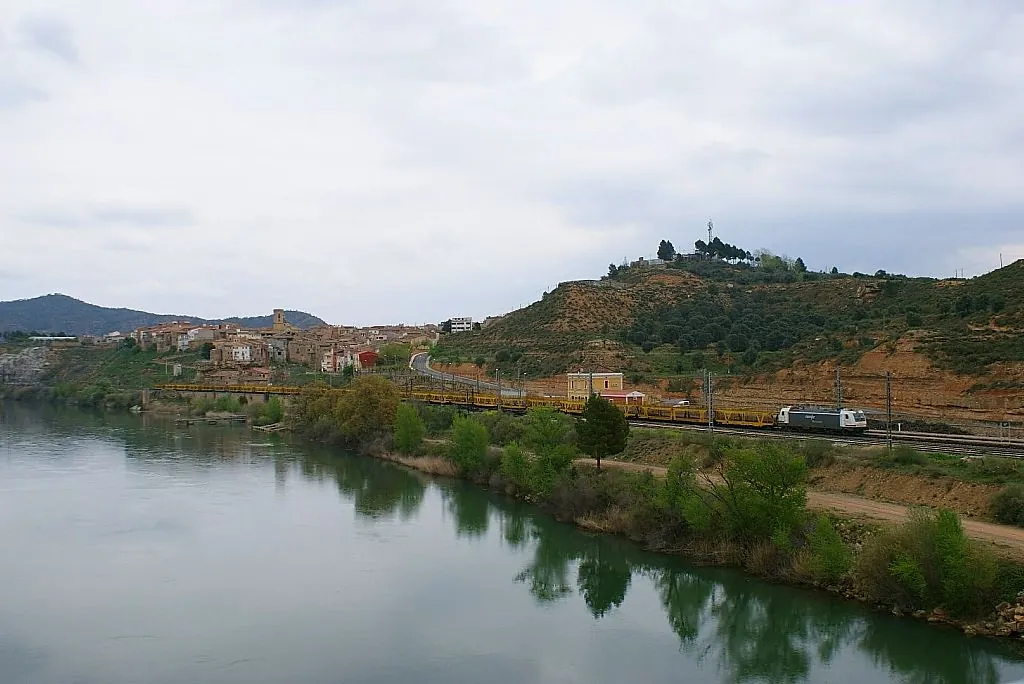
The reason Bell-lloc exists where it does lies beneath the road. In 1861 engineers finished the Canal d’Urgell, a 144-kilometre network that siphons water from the Segre River and delivers it to 30,000 hectares of previously bone-dry plain. The project turned Lleida province into Catalonia’s breadbasket and gave tiny settlements sudden prosperity. You can trace the story in the architecture: stone farmhouses widened into squarish 19th-century mansions, cooperatives built with the same brick-and-iron confidence as Manchester cotton mills, and the 1933 art-deco water tower that still spells out “Bell-lloc” in fading white tiles.
Walk south along Carrer Major and the canal is literally at your feet—an open trough two metres wide, its surface covered by a skin of duckweed that parts every so often for a drifting pear core or a shoal of tiny carp. There are no guard-rails; children lean their bikes against plane trees and dangle lines baited with chorizo fat to catch crayfish the size of a thumbnail. It is a working waterway, not a heritage showpiece, and the village treats it with the matter-of-factness of Londoners using the Thames.
Lunch at the Edge of Town
El Parador de Bell-lloc occupies a 1920s townhouse whose ground-floor windows once displayed farming tackle. Inside, the décor is plain to the point of austerity: white walls, red-checked cloths, a television mounted mute in the corner. The menu arrives handwritten on a scrap of card that changes daily depending what arrives from the fields. Start with escalivada—smoked aubergine and peppers dressed in peppery arbequina oil—then move on to xai amb cols, lamb shoulder braised until it collapses into sweet strands, served with winter cabbage that has absorbed the gravy like a sponge. Pudding might be a slice of recuit de drap, a fresh cheese wrapped in muslin and drizzled with local honey that tastes faintly of rosemary. Three courses, bread and a carafe of house red cost €18; cards are accepted but the proprietor prefers cash because the signal for the machine is “temperamental”.
Portions are generous enough that the neighbouring table of fertilizer-salesmen loosen their belts before ordering coffee. They speak Catalan peppered with Spanish expletives; English is non-existent, yet the waitress will happily fetch a phrase book if you attempt to ask what a calçot is out of season. Service is slow by city standards—plates appear when the kitchen is ready—but no one glances at a watch.
Pedal Power and Paper Maps
Flat terrain and almost traffic-free caminos make Bell-lloc an ideal base for gentle cycling. The tourist office—one room inside the ajuntamiento open on Tuesday and Thursday mornings—lends out free route sheets photocopied back-to-front. Route 2, 22 kilometres anti-clockwise to Mollerussa and back, passes three canal locks, a 12th-century Moorish Watchtower (now a private hay store) and a roadside stall where an honesty box asks for €2 per kilo of just-dug onions. The tarmac is buttery smooth, the prevailing wind gentle enough to push you home. Hire bikes in advance from the Repsol garage on the outskirts; they have four hybrids with chains that actually work and helmets that don’t smell of other people’s fear.
If you prefer walking, follow the GR-175 long-distance footpath which bisects the village for 6 kilometres along the canal bank. Spring brings storks nesting on electricity pylons; autumn smells of bruised apples fermenting in the grass. Either season, carry water—shade is limited and cafés are spaced according to farming need, not tourist thirst.
When the Plain Turns White
Summer highs regularly top 36 °C; in August the village empties as families flee to the Costa Brava. Conversely, January can dip below freezing for a week at a time. When that happens the canals steam like kettles and the fields glaze over with frost that crunches like sugar. Access remains straightforward—the C-58 from Barcelona is gritted—but accommodation shrinks to two pensions that keep their heating on a timer. Book ahead if you plan to witness the Festa Major in mid-August or the Sant Josep agricultural fair on 19 March, when tractors polish up like museum pieces and the scent of grilled butifarra drifts across the fairground.
The Catch
Bell-lloc is not dramatic. There are no sierra backdrops for selfies, no Michelin stars, no flamenco tablaos. Evenings tail off around 22:30 when the bars pull down shutters and the only sound is the irrigation timer clicking over in the pear orchard behind the church. Public transport is patchy: two buses a day to Lleida, none on Sunday. Without a car you are effectively marooned. Phone coverage is 4G in the centre, EDGE in the fields; downloading a map can mean standing on a hay bale for elevation. And if it rains, the entertainment palette narrows to watching droplets chase one another down the café window.
Yet for travellers who measure value in unfiltered everyday life rather than bucket-list ticks, Bell-lloc d'Urgell delivers. You will leave knowing the difference between a Gala and a Golden Delicious, the exact hour the canal level drops, and why a village of 2,400 people still keeps a blacksmith on retainer. That knowledge lingers longer than another cathedral nave—especially when the apples you buy at the petrol station taste of somewhere you have actually been.