Full Article
about La Torre De Lespanyol
Ocultar artículo Leer artículo completo
The church bell strikes noon, and the only reply is the hum of a tractor somewhere beyond the olive groves. In La Torre de l'Espanyol, population 599, this passes for rush hour. The village sits 164 metres above sea-level on a gentle fold of Tarragona's interior, far enough from the Costa Dorada for the air to lose its salt edge and the roads to narrow to single-track lanes where wheat brushes the wing mirrors.
A grid that follows the slope, not a spreadsheet
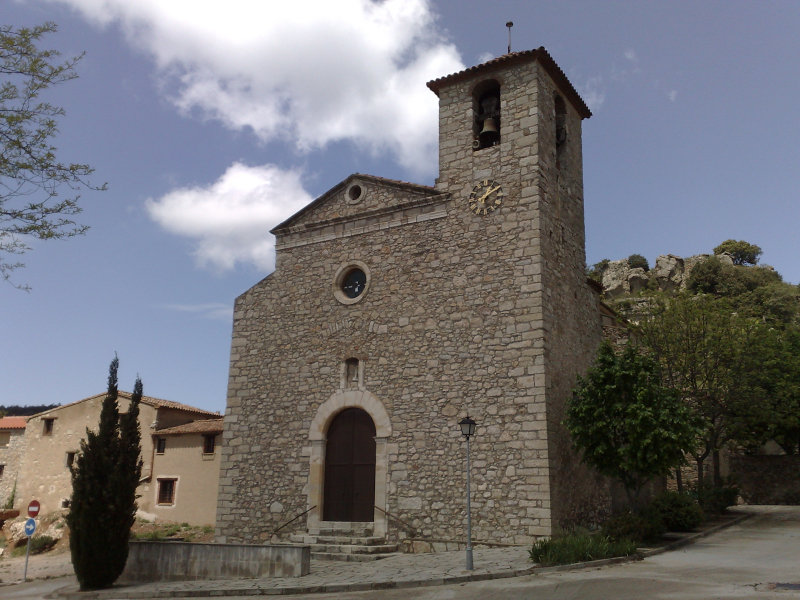
No one planned the street layout here; the topography did. Houses huddle along contour lines, their stone walls the colour of dry biscuit, roof tiles faded to the same terracotta you will see in the fields when the earth is ploughed. The parish church of Sant Miquel anchors the highest point, its square tower visible for miles across the cereal terraces. There is no ticket office, no audioguide, simply a door that is usually open and, inside, nineteenth-century frescoes that are quietly flaking. Light falls through a side window onto pews polished by farm jackets and Sunday best alike; the silence smells of wax and dust.
Walk downhill – it takes four minutes – and you reach the only bar still pouring coffee after 11 a.m. The owner keeps a plastic folder of black-and-white photographs showing the same street during the 1950s: same stone, same telegraph pole, half as many cars. Order a cortado and you will be asked whether you want UHT or fresh milk; the question is delivered in Catalan first, Spanish second, and a smile bridges whatever gap remains.
The calendar written in soil, not ink
Visit in late March and the almond blossom has already come and gone, leaving a confetti of petals on the windscreens of parked 4x4s. By mid-April the wheat is knee-high and the first poppies puncture the green with red exclamation marks. June turns everything gold; July burns it bronze. Harvest begins the second week of August, when combines crawl along the valley floor at dawn to beat the midday furnace. Tractors pulling grain trailers clog the lane to the cooperative; the smell is of warm straw and diesel, a combination that Catalan children remember decades later.
There is no interpretative centre explaining crop rotation, but if you stand beside the weighbridge at 9 a.m. you can watch the queue of laden trailers, read the chalked prices per tonne on a blackboard, and grasp the village economy in real time. Photographs are tolerated; questions answered with the brevity of people who still eat from what the land yields.
Paths that end at a threshing floor or a shepherd's hut
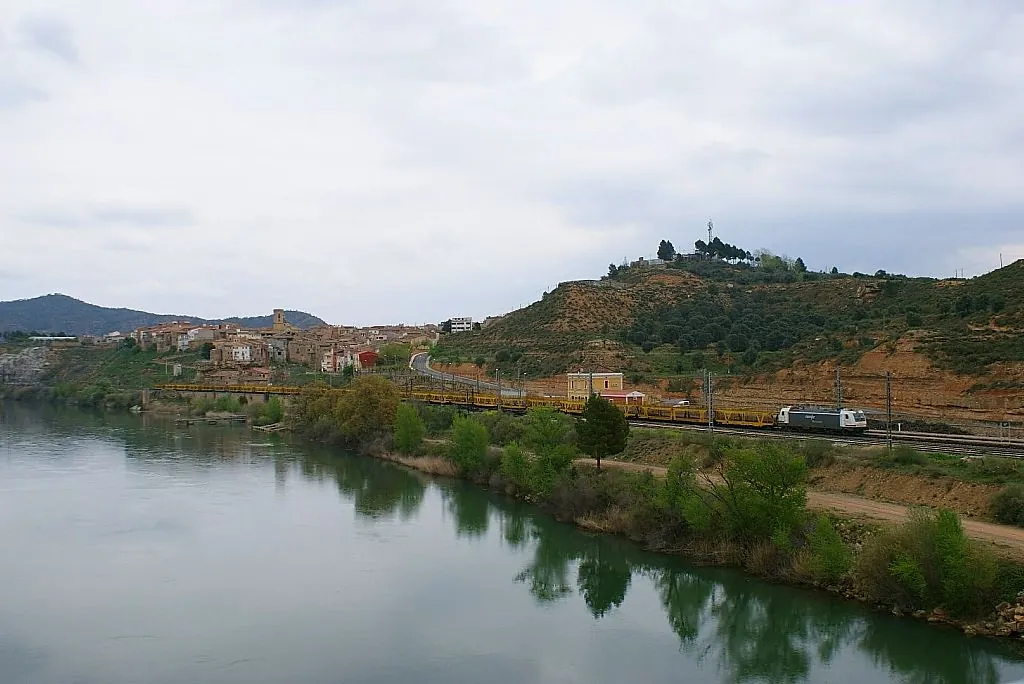
Maps are optimistic here. What appears as a dashed green line on the Institut Cartogràfic sheet may turn out to be a tractor rut that peters out among artichokes. That is part of the deal. Three waymarked walks do exist – the longest is 9 km – but the real pleasure lies in choosing any farm track heading west and seeing where it finishes. Most routes climb to a low ridge where the Ebro valley suddenly widens into a brown ribbon fringed by cliffs. Bring water; fountains are seasonal and the summer sun arrives with the force of a closed oven door.
Spring and autumn temperatures sit in the low twenties, perfect for half-day circuits that loop back through hamlets consisting of four houses and a barking dog. Winter is mild by British standards – frost is occasional – but the tramontana wind can make 10 °C feel like zero. Summer hiking is for early risers; by 1 p.m. the thermometer brushes 36 °C and shade is a currency.
Oil, wine and whatever the river provides
Gastronomy is inseparable from geography. Olive oil from the cooperative mill (Carrer Major, 18) is sold in unlabelled five-litre cans for €22; take your own bottle and they will fill it for €4.50. The variety is empeltre, giving a gentle, nutty oil that locals pour over toasted bread then rub with tomato and a pinch of salt. Wine drinkers need to drive twenty minutes south-west to Terra Alta for cellar doors, but every bar here stocks white grenache that costs €2.20 a glass and arrives straight from the fridge.
River fish appears on Fridays: strips of barbel dredged in flour, fried with garlic, served on a tin plate that burns your fingers. The solitary restaurant, Lo Molí, occupies a former watermill outside the village; book ahead because it opens only when the owner feels like cooking. Expect grilled rabbit, romesco sauce, and a bill under €25 a head including wine. Vegetarians can assemble a decent meal from escalivada (smoked aubergine and peppers) and local goat's cheese, but this is meat country and menus do not apologise.
When the village re-populates itself
The fiesta mayor begins on 15 August and lasts three nights. The population quadruples as grandchildren return from Tarragona and Barcelona. A soundstage appears in the car park, competing with the church bell; brass bands march at 2 a.m.; neighbours who have not spoken since Christmas now share tables sagging under trays of fideuà. Visitors are welcome but accommodation is scarce – book Cal Macia early or accept a 25-minute drive back to Móra d'Ebre where the hotels live.
Sant Antoni, 17 January, is quieter: bonfire, sausage sizzle, blessing of pets in the church doorway. Expect more dogs than people, and a waft of incense mixed with wood-smoke. Easter Monday sees a picnic in the almond groves; the location changes yearly, announced on a hand-written sheet taped to the bakery shutter.
Getting here without a private jet
Reus airport, served by summer Ryanair flights from London-Stansted, is 55 minutes away by hire car. From Barcelona El Prat allow two hours: AP-7 south to junction 35, then C-12 west following the Ebro. Public transport exists but demands patience: regional train to Móra la Nova, taxi for the final 12 km (about €25). Buses run twice daily on weekdays, not at weekends, and the stop is a kilometre outside the village beside a roundabout of sun-bleached oleanders.
There is no petrol station in La Torre; the nearest pump is 9 km towards Garcia. Parking is free and usually within 50 metres of wherever you want to be, though Friday market fills the main square with stalls selling cheap T-shirts and excellent strawberries – arrive before 10 a.m. or circle once and give up.
Why you might leave after one night
Evening entertainment options begin and end with the bar terrace. If you need museums, boutiques or Uber, stay on the coast. Mobile coverage is patchy inside stone houses; the 4G symbol vanishes entirely when the weather comes in from the north. English is spoken by the school-age generation and almost no one else; a phrasebook Catalan greeting unlocks more goodwill than fluent Castilian spoken too fast.
And yet, for travellers who measure value in silence, starlight and the smell of new bread carried through an unplanned alley, La Torre de l'Espanyol offers something increasingly scarce: a place where Spain has not reorganised itself for visitors, where the menu is written by the season, and where the loudest sound at midnight is a barn owl quartering the fields. Come with modest expectations and you may leave wondering why so much of modern travel feels like hard work by comparison.