Full Article
about Lalbi
Ocultar artículo Leer artículo completo
The thermometer outside the baker's reads 38°C at nine-thirty in the morning, yet the old men on the stone bench wear tweed jackets. They're discussing rainfall, not politics—specifically whether this year's olive crop will match 2021's. This is L'Albi, 526 metres up in les Garrigues, where conversations still revolve around soil moisture and almond prices rather than property values.
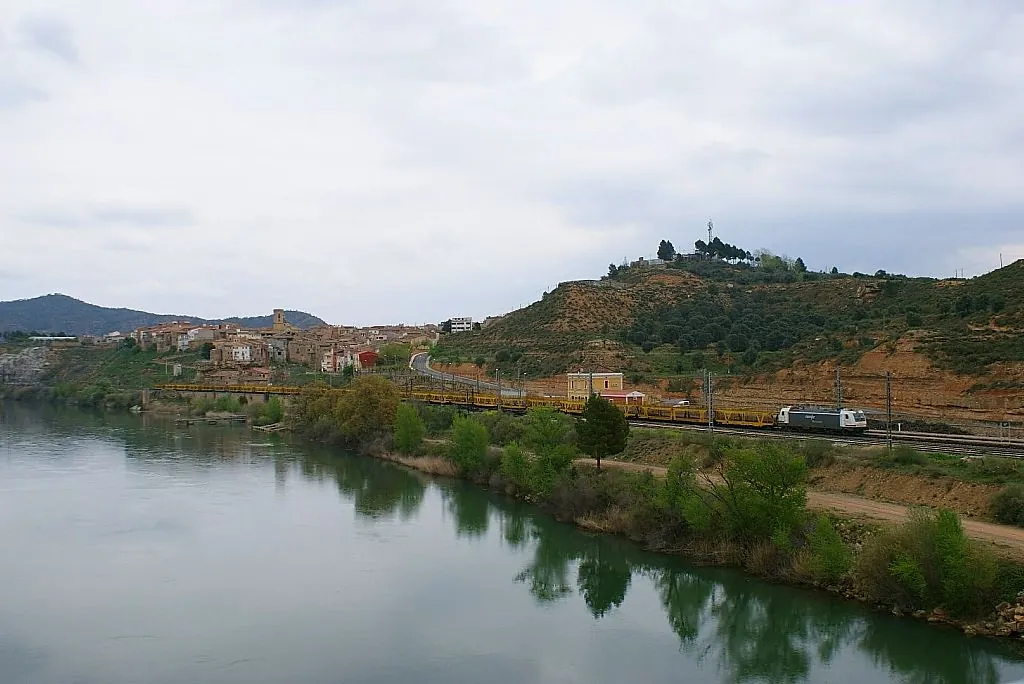
From this height, the Pyrenees appear as a jagged backdrop fifty kilometres north, while the Ebro valley spreads southwards in geometric patterns of olive green and ochre. The village itself tumbles across a limestone ridge, its sandstone houses the same colour as the earth beneath them. There are no souvenir shops, no boutique hotels, no Instagram-friendly murals. Just 764 inhabitants, three cafés, and a silence so complete you can hear irrigation water gurgling through buried pipes.
The Arithmetic of Silence
L'Albi sits ninety-five kilometres south-west of Lleida, reached via the L-702—a road that narrows to single-track through almond groves where tractors have right of way. The journey takes seventy-five minutes from Lleida's high-speed rail station, longer if you stop to photograph the century-old olive trees that predate the Republic. Rental cars are essential; buses run twice daily but connect through Les Borges Blanques, turning a straightforward trip into a half-day expedition.
Altitude changes everything here. Summer mornings might hit 35°C in the valley, yet evenings drop to 18°C with a breeze that carries thyme and rosemary from the surrounding garrigue. Winter operates in reverse: bright, cold days where the sun feels warm against stone walls but shade temperature hovers around 4°C. Snow falls perhaps once every three years, lasting just long enough for photographs before the thin Mediterranean soil absorbs it.
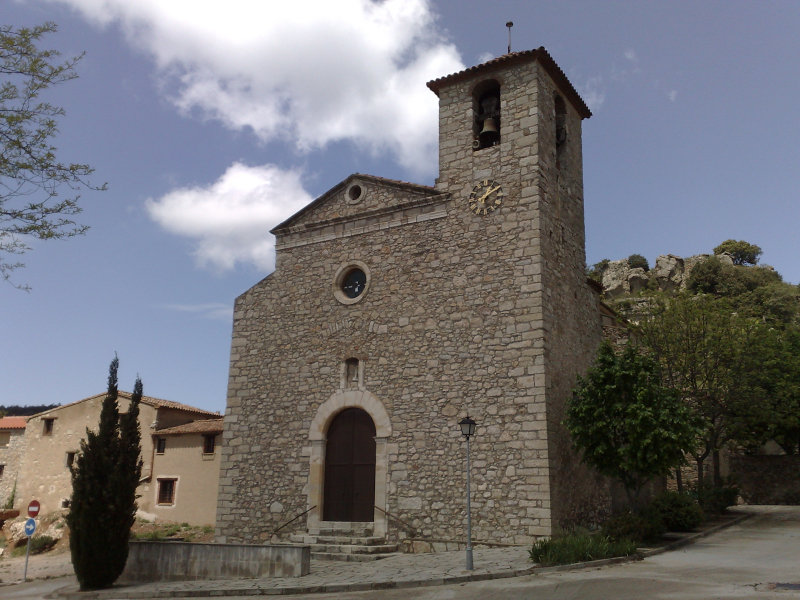
The village structure follows medieval logic. Houses cluster around the parish church of the Nativity, its 17th-century bell tower visible from every approach road. Streets narrow to shoulder-width between buildings, then widen unexpectedly into tiny squares where medieval grain mills have been converted into garages. Parking operates on a first-come basis; during August's fiesta, vehicles line the main road for two kilometres either side.
Oil, Almonds, and the Economics of Staying Put
October transforms the landscape. Harvest nets spread beneath almond trees create yellow pools between the olives. Tractors towing antiquated shakers arrive at dawn, their diesel engines echoing off stone walls. The cooperative on Carrer Major processes 300 tonnes of olives annually, producing oil that sells locally for €8 per litre—half the price of equivalent quality in Barcelona markets. Visitors can tour the facility between November and January, though you'll need basic Spanish; the manager, Jordi, explains the centrifuge process with hands blackened by machine oil.
Almonds follow a different calendar. February blossom turns the hillsides white for three weeks, attracting photographers who've exhausted the more famous cherry routes further north. By September, nuts dry in mesh bags outside farmhouses, their sweet scent competing with woodsmoke from early fires. A kilo costs €6 from the honesty box at Masia Cal Maginet, three kilometres west on the road to El Soleràs.
The village maintains three working farms producing vegetables for local consumption. Tomatoes arrive in July, peppers in August, winter greens from October onwards. There's no weekly market—locals buy direct from farm gates, or more likely, receive surplus left on doorsteps. The Spar on Plaça Major stocks UHT milk, tinned tuna, and little else; bread emerges from the bakery at 7 a.m. and sells out by 9.
Walking Through Layered Time
Footpaths radiate from L'Albi like spokes, following dry-stone walls built during the Moorish period. The route to Vinaixa covers eight kilometres through alternating olive groves and garrigue, rising 200 metres to a ridge where vultures circle on thermals. Markers consist of painted yellow dots on rocks—easy to miss, impossible to get seriously lost. Carry two litres of water; streams are seasonal and shade non-existent until November.
A shorter circuit heads south to the abandoned hamlet of Mas de Bondia, its stone houses slowly collapsing into almond orchards. Here, 19th-century threshing floors remain intact, their circular stones worn smooth by centuries of grain. The return path passes through a gorge where wild rosemary grows two metres high, filling the air with camphor when brushed.
Serious hikers use L'Albi as a base for the 54-kilometre Ruta de les Ermites, connecting five medieval hermitages across the comarca. The full route requires three days, but the section to L'Espluga Calba offers a manageable 18-kilometre round trip, climbing 400 metres through Holm oak forest to a 12th-century chapel carved directly into limestone cliffs.
When the Village Fills Up
August's Fiesta Mayor changes everything. Population quadruples as diaspora L'Albinians return from Barcelona and Tarragona, occupying houses shuttered since January. Brass bands parade at midnight, fireworks echo off stone walls, and the main road becomes an impromptu dance floor until 4 a.m. Accommodation doesn't exist—visitors either secure invitations to family houses or sleep in vehicles. The bakery produces special coca topped with roasted vegetables; queues form at 6 a.m. as the seriously hungover seek carb-heavy salvation.
September brings the olive oil festival, theoretically more sedate. In practice, this means free-flowing wine from 11 a.m. and arguments about whether the previous year's drought affected polyphenol levels. The cooperative offers tastings in plastic cups, served by women who've worked the bottling line for thirty years and can detect rancidity at twenty paces.
Winter operates on reduced hours. Two cafés close entirely between January and March; the third opens only for breakfast and the evening vermut. Temperature inversions trap woodsmoke in the valley for days, creating photographic opportunities but respiratory issues for asthmatics. The village becomes a place for long walks ending by wood fires, conversations stretching across afternoons that darken at 5:30 p.m.
The Unvarnished Reality
L'Albi makes no concessions to tourism. English isn't spoken; even Catalan comes with a thick regional accent that challenges Barcelona visitors. Mobile reception cuts out entirely in the old town; 4G exists only on the western ridge where teenagers gather to update social media. Restaurants number exactly two—both serve identical menus of grilled lamb, snails in tomato sauce, and flan. Vegetarians survive on tortilla and tomato bread.
The nearest cash machine stands twelve kilometres away in Les Borges Blanques; the village cooperative accepts cards but farms don't. Accommodation means renting an entire house through the ajuntament for a minimum week, costing €400 in season with cleaning fees extra. There's no pool, no tennis court, no evening entertainment beyond what you create.
Yet this is precisely the point. L'Albi functions as it has for decades, its rhythms dictated by harvest seasons rather than review platforms. The baker remembers your order by day three; the café owner produces your preferred coffee without asking. Children play in traffic-free streets; elderly residents leave doors unlocked. It's a village that measures wealth in olive tonnes and rainfall millimetres, where the biggest news involves someone returning from university to take over the family groves.
Come for the silence, the oil, the walking. Don't come for nightlife, shopping, or spa treatments. L'Albi offers something increasingly rare—a place that continues regardless of whether you visit, where your presence registers as a curiosity rather than an economic necessity. And in an age of curated experiences and Instagram moments, that authenticity feels almost revolutionary.