Full Article
about Laleixar
Ocultar artículo Leer artículo completo
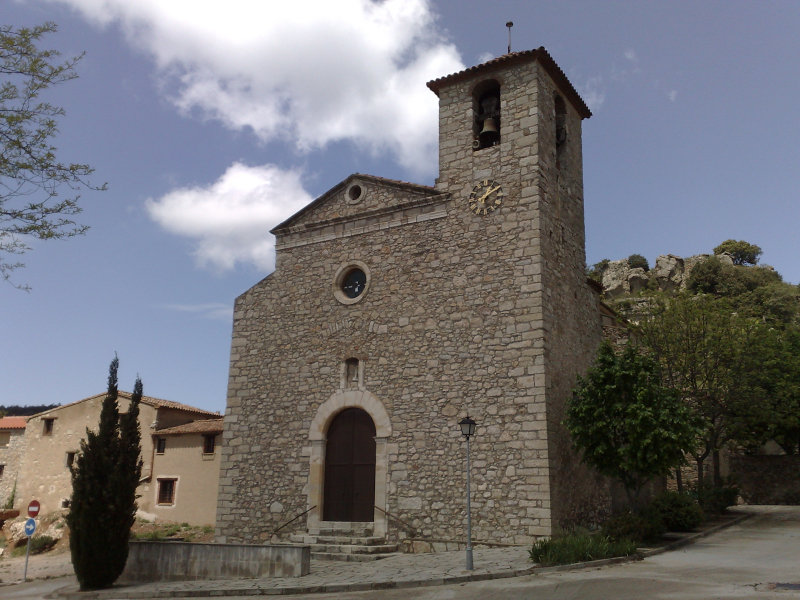
The church bell strikes noon, and the only other sound is a tractor grinding through olive groves somewhere below. From the stone bench beside Sant Miquel's square tower, the view stretches across Baix Camp's patchwork of hazelnut orchards and terraced olive terraces to the hazy Mediterranean, thirty-five kilometres distant. At 262 metres above sea level, L'Aleixar's altitude is modest, yet it feels suspended between two worlds: close enough to taste sea salt on stormy days, high enough that summer evenings cool to jumper temperature.
This is not a village that announces itself. The C-242 twists up from Reus through a landscape of dry-stone walls so old that lichen has etched them into abstract art. First impressions are of somewhere half-asleep: shuttered stone houses, a bar with opening hours that obey the harvest rather than Google, and a population of 940 who seem genuinely surprised to see outsiders wandering about with cameras. The surprise is mutual. Most visitors racing between Tarragona's Roman ruins and the Prades mountains barely register the turn-off sign, which suits locals fine.
Stone, Soil and the Slow Tick of Afternoons
The old centre clusters around Plaça Major, a triangle of worn flagstones where elderly men play cards under a pubescent plane tree. Sant Miquel watches over them with medieval solidity; its square tower leans slightly, as if bored by eight centuries of the same view. Step inside and the temperature drops ten degrees. Baroque altarpieces glint dimly, but the real treasure is acoustic: close the door and your footsteps echo like slow claps in a stone auditorium.
Radiating from the church are lanes just wide enough for a donkey and cart. House façades glow ochre, mustard, terracotta—colours mixed by sun and time rather than any designer. Some retain Gothic doorways carved with grape sheaves and wheat heads, symbols of an economy that once turned on cereals and wine rather than weekenders. Number 18 on Carrer Major still has a medieval grain chute beside its entrance, now converted into an unlikely post box. Peer through the slot and you smell woodsmoke and something savoury; Catalan grandmothers guard their recipes like state secrets.
Below the church, the village's restored public washhouse runs with mountain spring water even though nobody scrubs sheets there anymore. On hot afternoons children dam the outflow with stones, shrieking when the torrent breaks through. A plaque explains—in Catalan only—that until 1963 this was where every Monday women beat laundry while exchanging gossip sharp enough to bleach fabric. The translation isn't really necessary; the scene writes itself.
Walking Through the Calendar
L'Aleixar's greatest museum is its surrounding farmland. A spider's web of footpaths, waymarked in green and white, loops through hazelnut groves that turn bronze each October. Farmers still shake the trees with long poles, gathering nuts into yellow nets that look like giant pancakes from a distance. Join the two-hour circular to Vilaplana and you'll pass three generations of one family doing exactly that, grandfather up the tree, teenage granddaughter raking below, Spotify leaking from her pocket.
Spring brings a different palette: ox-eye daisies between wheat rows, almond blossom flickering like faulty lightbulbs, and the smell of wild thyme crushed underfoot. The PR-C 124 path climbs gently eastwards to the Ermita de la Fontcalda, a 13th-century hermitage wedged into a cliff above a natural spring. Water temperature stays at 18°C year-round; on blistering July days locals haul beer crates here and stage impromptu pool parties in stone basins carved by centuries of pilgrims.
Cyclists find quieter pleasures. Farm tracks south towards Alforja roll through olive plantations where trunks twist like elderly dancers. Gradient rarely exceeds 5%, perfect for gravel bikes, though the surface can shatter into fist-sized rocks after heavy rain. Carry two spare tubes; mobile coverage disappears behind every second ridge.
What to Eat When Nobody's Advertising
There are no restaurants on TripAdvisor because nobody here needs the internet to fill tables. The only public eating option is Bar Plaça, open 07:00–16:00 and again 20:00–22:30 if Vicente feels like it. Weekday lunch is a three-course menú del dia costing €14, including wine poured from an unlabelled bottle that started life in the cooperative down the road. Expect escalivada (smoky aubergine and peppers) topped with anchovies, followed by rabbit braised in hazelnuts—local, abundant, and completely unlike anything served on the nearby Costa Daurada. Arrive after 14:30 and the kitchen's closed; they're serious about siesta.
Saturday night means calçotada season if you're there between January and March. Whole spring onions are charred over vine prunings, wrapped in newspaper to steam, then dipped in romesco sauce so pungent it could wake the medieval dead. You eat them standing, bib tied like a surgeon, wine dribbling down your wrist. Tourist offices in bigger towns charge €35 for the experience; here it's whatever you donate to the village football fund.
Buy supplies at the cooperative on Carrer de la Creu. Their extra-virgin oil, pressed from arbequina olives grown on slopes too steep for machines, costs €7 a litre if you bring your own bottle. The hazelnut shortbread biscuits disappear fast; blame British cyclists who've discovered carbohydrate disguised as dessert.
When the Village Decides to Wake Up
Late September's Festa Major transforms the place. On the 29th, Sant Miquel's statue is carried through streets strewn with rosemary and thyme, accompanied by a brass band that appears to have learned its repertoire entirely by ear. Fireworks at midnight are launched from the church tower, a health-and-safety nightmare that nobody questions because grandfathers did the same. For three days the population quadruples; second-home owners from Barcelona argue over parking spaces, and teenagers sneak off to the picnic area with litre bottles of ron y coca-cola. Book accommodation a year ahead, or accept you'll be sleeping in the municipal sports hall shower block with fifty other unfortunates.
August's nit de estels (night of stars) is gentler. Astronomers from Reus set up telescopes on the football pitch; Saturn's rings draw actual gasps from children who've never seen a sky unfiltered by streetlights. Bring a jacket—mountain air drops to 15°C even when the coast swelters at 30°C.
Getting Here, Staying Put, Leaving Again
Reus airport, served by Ryanair from London Stansted and Manchester March–October, sits forty minutes away. Hire cars negotiate the final 12 km of winding asphalt easily, though headlights are advisable after dark when tractors sans indicators rule the road. Without wheels, weekday bus number 42 departs Reus at 13:15 and 18:30, returning 07:00 and 16:00. Miss the last service and you're walking; taxis refuse to come this far unless pre-booked and paid in advance.
Accommodation totals three legal options: two village houses rented by the week, and a room above the bakery that smells permanently of ensaimadas. Prices hover around €70 per night, cash only, cleaning included if you count Maria spraying bleach around for three minutes. Anything else advertised online is probably in neighbouring Alforja; double-check coordinates before committing.
Winter brings mist that pools in the valley like milk, and the odd snowfall that shuts the access road for half a day. Summer can hit 36°C by day but plunges at sunset; pack layers. Spring and autumn are the sweet spots, warm enough to sit outside at 10:00, cool enough to hike at 16:00 without melting.
Leave before dawn on your final morning and you'll meet delivery vans heading down with crates of hazelnuts, the village's real currency. The driver will raise two fingers from the steering wheel in salute, a gesture that passes for conversation here. Head round the last bend and L'Aleixar disappears, tucked back into its folds of olive and oak, perfectly capable of getting through the next century without you—or anyone else—noticing.