Full Article
about Largentera
Ocultar artículo Leer artículo completo
The road from the coast climbs so sharply that even the almond trees seem to lean backwards. After the last hairpin of the CV-1472, the Mediterranean disappears behind a ridge and L'Argentera appears: a single stone eyebrow of a village balanced between sea air and mountain silence. At 344 metres above the delta, the temperature drops four degrees in summer and the Tramuntana wind arrives salted from the Ebro mouth, 25 kilometres away as the crow flies.
This is not the Catalonia of Gaudí queues or Costa packed-lunches. The village registers 133 souls on the padron, though locals joke the number doubles if you count the feral cats sunbathing on Toyota bonnets. Narrow lanes end in dry-stone walls; houses are the colour of toast, their arches soft with centuries of bread-coloured plaster. There is no town square worthy of a postcard rack, only a sloping triangle of concrete outside the church where elderly men park mobility scooters beside a 200-year-old olive trunk that grows sideways, like a bench.
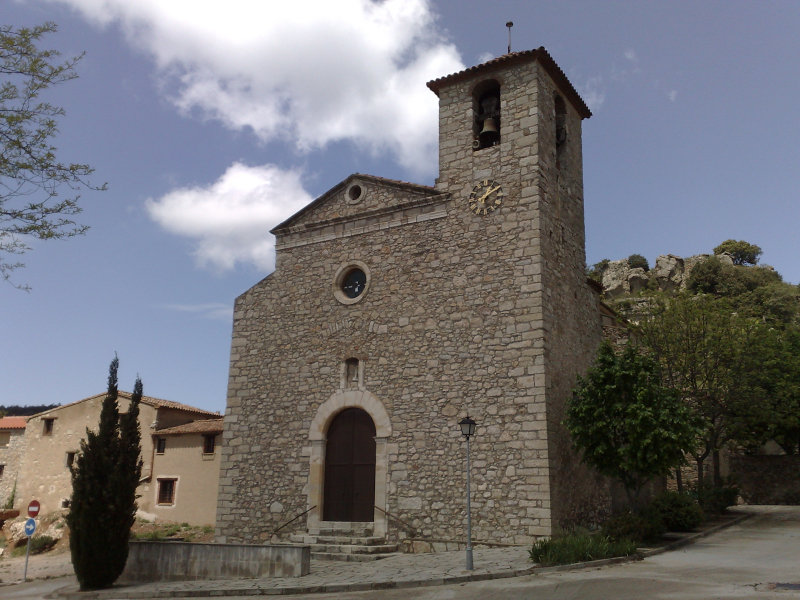
Sant Bartomeu watches over the slope, its square tower rebuilt in 1783 after the French Wars. The door is usually locked, but knock at the ajuntament across the lane and the clerk will fetch a key the size of a courgette. Inside, the nave smells of beeswax and dust; a single bulb illuminates a Baroque altarpiece gilded so discreetly you might mistake it for varnished pine. Sunday mass is at eleven, attended by twelve regulars and whichever walker has misread the timetable. The bell still rings the old way: by rope, shoulder-height, no mechanics. If you tug it, the whole village knows a stranger is here.
Beyond the last house the land folds into a patchwork of olives, almonds and old vine terraces held together by moss-covered walls. These fields once supplied Tarragona’s oil presses; now most fruit is sold cooperatively to a mill in El Perelló, twelve kilometres down the serpentine road. That drive takes thirty minutes if you meet a tractor, forty if the almond blossom photographers have parked in the bends. The road is tarmac, but single-track and honest about it: mirrors are smashed, edges crumble, and the drop is vertical enough to make a passenger gasp. After dark the asphalt absorbs moonlight and becomes a ribbon of pewter; locals avoid it unless urgent, and hire-car insurers classify it as “mountainous risk.”
Walkers arrive on the GR-92 coastal path, though the Mediterranean section officially ends at L’Ampolla. From there a signed spur cuts inland, climbing 600 metres over 9 kilometres to reach L’Argentera. The route passes abandoned masias whose roofs have collapsed into the kitchens, exposing stone hearths black with decades of olive-wood smoke. Spring brings purple orchids among the wheat stubble; autumn smells of rosemary and wet earth. The village bar will fill water bottles and sell a hand-drawn map for fifty cents, but there are no buses back to the coast. Either thumb a lift or keep walking north until the path meets the tarmac at El Perelló.
The only commercial life is Bar-Restaurant l’Argentera, open Tuesday to Sunday, 08:00–16:00 and 19:00–22:00. Monday is dead; even the cats look elsewhere. Inside, the floor is tiled green and white, the coffee machine older than the barman. A glass of Priorat costs €2.80, smoother than Rioja and 14% proof—sip slowly if driving. The weekday menú del día is €14 for three courses, bread and wine. Expect grilled escalivada still smoky from the coals, followed by rabbit stew that arrives jointed but recognisable. Vegetarians get tortilla thick as a paperback, served lukewarm because that’s how villagers like it. Pudding is either almond cake or almond cake; the recipe uses village oil and tastes like marzipan that has seen sense.
There is nowhere to stay in L’Argentera itself. The nearest bed is in Falset, twenty minutes by car, where Hotel-Hostal Sport has English-speaking staff and a wine list longer than the Bible. Budget travellers sometimes ask to pitch tents among the olives; technically wild-camping is forbidden, but the mayor shrugs and says, “Just don’t light fires.” Summer nights are cool enough for a jumper; in January the wind rattles loose shutters and daytime struggles above eight degrees. Snow falls once every three years, shutting the road for half a day while a farmer clears drifts with his tractor bucket.
Day-trippers combine the village with Priorat wineries: Scala Dei is twenty-five minutes north, and the twisty drive itself is a tasting of altitude. Others head south to the Ebro Delta for flamingos and rice paddies, though the delta is flat enough to feel boring after the ridge drama. A more honest itinerary is to park, walk the olive loop (5 kilometres, marked with yellow dots), drink coffee, buy a half-litre of local oil (€8 from the bar counter) and leave before the peace turns to solitude.
What you won’t find: souvenir shops, cash machines, petrol, public toilets, or phone signal inside stone houses. Download offline maps before arrival. What you might find: silence so complete the blood pulses in your ears, and a view at dusk when the sea reappears as a silver seam between two ridges, looking closer than it has any right to be.
Come for an hour or half a day, not for ticking boxes. L’Argentera offers no epiphanies, only calibration: a place where the wind still tastes of salt even though the waves are out of sight, and where the loudest sound at siesta is the click of almond husks hitting terracotta roofs.