Full Article
about Riba Roja Debre
Ocultar artículo Leer artículo completo
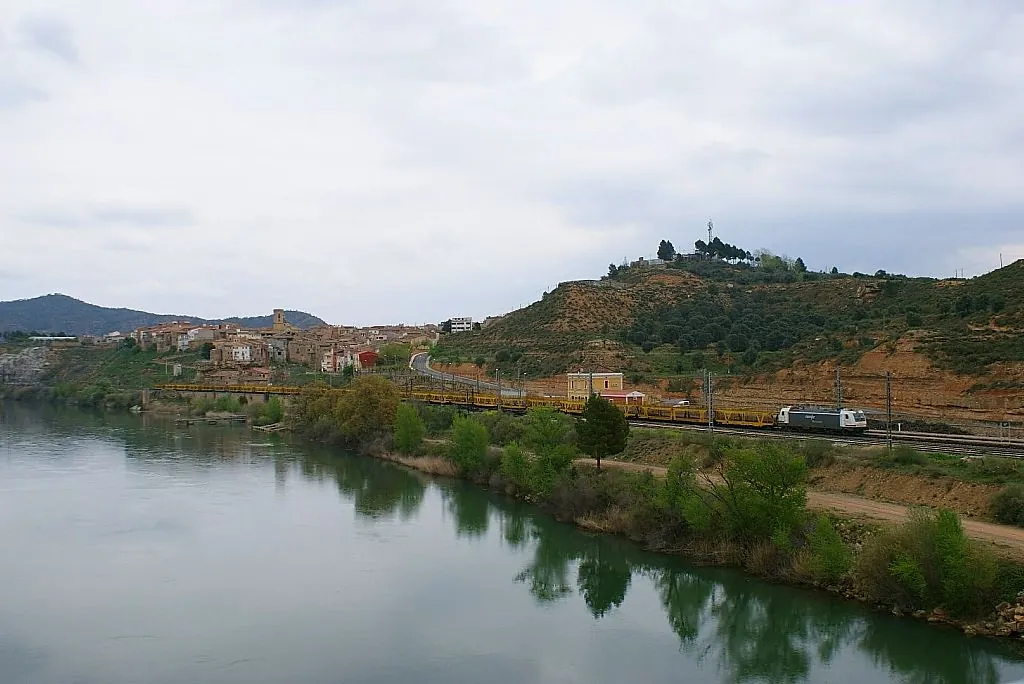
The peach trees are the first thing you notice. In late March their petals drift across the single-track road like late snow, settling on the windscreen of the only car for miles. Below them, the river Ebro slides west in a broad, deliberate arc, carrying irrigation water from the Pyrenees to the Mediterranean 90 km away. This is Riba-roja d’Ebre, a scatter of stone houses and smallholdings perched 76 m above the water, halfway between the high-speed bustle of Tarragona and the empty sierras of Aragón.
A village that faces the water, not the road
Most visitors race along the C-12 on the opposite bank, heading for the Priorat vineyards or the Delta’s flamingos. Riba-roja turns its back on the highway. The old quarter faces south, terraces stepping down toward the river as if the town were still waiting for barges that stopped running in the 1960s. Mooring rings are set into the stone at the bottom of Carrer de la Mar; net-menders’ benches survive outside the bar-cum-grocery; even the parish church is dedicated to sailors’ lore—the Assumption, celebrated when the August heat makes the Ebro smell of warm algae and melted tar.
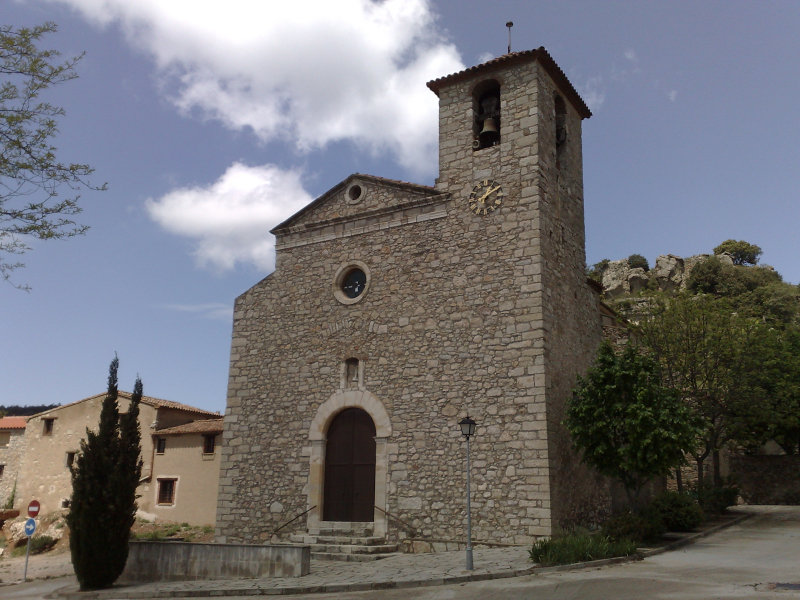
Inside, the nave is a palimpsest: Romanesque base, Gothic arches, Baroque plaster stripped back in the 1930s to reveal older brick. No audioguides, no ticket desk, just a printed A4 sheet that notes the bell was cast in 1587 and re-hung after the Civil War using scrap metal from a blown-up railway bridge. Light comes through greenish glass, the colour of olive brine, and on weekdays the door is wedged open with a breeze block.
Walking the meanders
A path leaves the upper town beside the petrol station—two pumps and a kiosk that sells fishing licences—and drops quickly through almond terraces to the water. In twenty minutes you’re alone under 30 m poplars, the hum of the road replaced by bee-eaters and the soft knock of irrigation pipes. The GR-99 long-distance trail passes here, but few walkers bother with the 8 km loop to La Palma d’Ebre; midday in July the thermometer nudges 38 °C and shade is partial at best. Spring and autumn are kinder: April brings carpets of yellowOxalis, October smells of crushed grapes and wood-smoke as growers burn vine cuttings.
Carry water. The only fountain is at the old laundry, now converted into a bird-hide decorated with schoolchildren’s murals of kingfishers. Binoculars help: purple herons fish the backwaters, and on still evenings otters cross the gravel bars. The river is officially Class II, gentle enough for novice kayakers, but sudden releases from the Riba-roja dam 5 km upstream can raise the level half a metre in fifteen minutes. Check the daily bulletin posted at the boat ramp; if the graph spikes, stay ashore.
Calories and credit cards
There is no ATM in Riba-roja. The nearest cash machine is in Móra d’Ebre, ten minutes by car or thirty by bike along the service road that flanks the river. Cards are accepted at the bakery and the cooperative filling station, but the Friday market stalls—peaches, tomatoes the size of cricket balls, and knives sharpened on a pedal-powered wheel—deal only in coins. Budget €1.80 for a kilo of fruit, €3 for a hunk of local goat’s cheese wrapped in plane-tree leaf.
Meals are served at two speeds. Bar Riu, halfway down to the water, does a three-course menú del dia for €14 including carafe wine and a shot of mistela that tastes like alcoholic marmalade. Expect grilled sardines or rabbit a la brasa, chips dusted with smoky paprika, and pudding that is usually crema catalana with a glass-crisp sugar top. Evening service starts at 21:00; arrive earlier and the cook is still watching the news. Across the square, Cal Xic is smarter—white tablecloths, Rioja at €22 a bottle—but it opens only at weekends out of season and closes without apology if two coach parties book the terrace.
When the town doubles in size
The fiesta major begins on 14 August. For three nights the population swells from 1,100 to nearer 4,000 as emigrants return from Barcelona, Tarragona and a surprising number of Bradford bakeries. Brass bands parade at 02:00, fireworks ricochet between the stone walls, and teenagers occupy the playground with crates of Estrella. Sleep is theoretical unless your hotel lies above the church square; rooms at Hostal la Farinera have double glazing but still vibrate when the cobla strikes up. Book early—there are only twenty beds in the whole municipality—and bring earplugs or join in. On the final morning locals plunge into the Ebro from the concrete slipway, a ritual said to wash away summer sins. The water is 24 °C, murky, and the downstream current stronger than it looks.
Getting here, getting out
The train from Barcelona-Sants to Móra la Nova takes two hours on the regional Rodalies service (€12.40 single). From the station it’s a €22 taxi ride, or you can ask the guard to radio ahead for the village minibus that meets the 16:07 on schooldays—unreliable, free, and driven by the mayor’s cousin. Drivers should leave the AP-7 at Reus and follow the N-420 west; after Ascó the road narrows, lorries thunder past carrying reactor parts for the nuclear plant upstream, and sudden cross-winds slap high-sided vehicles. In winter the river traps cold air: expect frost at dawn even when Tarragona enjoys 16 °C. Carry de-icer from December to February; the hill out of town faces north and stays slick until lunchtime.
Leave time for the dam. Five kilometres west, the Riba-roja reservoir is the second-largest in Catalonia, its yacht club an incongruous slice of Miami blue among the olives. Power-boat licences are checked rigorously; kayaks can be rented at the slip for €25 half-day. From the paraphet the village appears as a terracotta stripe between grey cliffs and silver water—proof, if you needed it, that this is still a place shaped by gravity, agriculture and the slow patience of a river that was old before the Romans arrived.