Full Article
about Ribera Durgellet
Ocultar artículo Leer artículo completo
The morning mist lifts from the Segre valley to reveal a patchwork of wheat fields and stone villages clinging to foothills that proper mountains soon dwarf. At 650 metres above sea level, Ribera d'Urgellet doesn't tower, yet it feels distinctly elevated—both literally and in pace—from the coastal rush of Catalonia most Brits know.
This isn't one village but a loose confederation of six—Castellciutat, Aravell, Montferrer, Bescaran, Pallerols, Ansovell—scattered across ten kilometres of river terraces and ridge roads. The arrangement puzzles first-time visitors expecting a single plaza and church. Instead, old farm tracks link hamlets where the loudest sound is often walnut branches rattling in the wind. Population across the whole municipality hovers around a thousand; out of season you can walk for twenty minutes and meet nobody except a farmer on a quad bike checking irrigation ditches.
Stone, Slate and the Smell of Earth
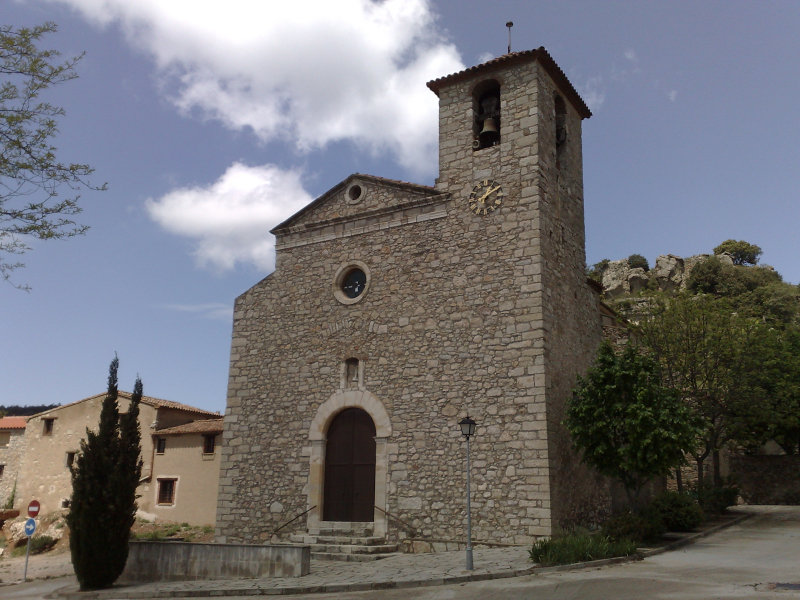
Houses here follow Pyrenean logic: thick stone walls to blunt winter cold, slate roofs angled to shed snow, wooden balconies narrow enough to keep out of the wind yet deep enough for drying tobacco. In Castellciutat the lanes grow so steep that front doors sit level with first-floor windows across the street. The church of Sant Serni, begun in the twelfth century, squats at the top like a referee watching the stone houses wrestle gravity. Inside, the nave is cool and plain; no baroque theatrics, just the smell of beeswax and centuries of burnt incense.
Montferrer offers the best Romanesque shorthand lesson. Its Sant Martí has the classic ingredients—semi-circular apse, squat bell-cot, doorway carved with a zigzag that looks suspiciously Viking—yet stands barely twelve metres long. You can circumnavigate the building in forty paces and still feel you've touched the template for every mountain church between here and Andorra.
Between villages the landscape performs slow costume changes. April turns cereal plots emerald; by late June the same fields shimmer blonde with waist-high wheat. Cherry orchards blossom suddenly, then vanish under netting that makes them resemble industrial-scale bridal veils. The Segre itself slides past, brown and unhurried, feeding irrigation channels that gurgle behind vegetable gardens. Herons stand in the shallows like grey-coated bouncers; if you wait quietly you'll spot kingfishers flashing turquoise beneath the poplars.
Walking Without Waymarks
Official hiking maps exist, but locals still give directions like "take the track behind the transformer until you see the walnut tree struck by lightning". The best strategy is to follow any path that links two villages and simply see what happens. One gentle circuit starts in Aravell, drops to the river, then climbs through hazel coppice to Bescaran in about ninety minutes. Gradient is modest, but the altitude can fool sea-level lungs; carry water even if the day feels cool.
Cyclists find the C-14 secondary road surprisingly quiet before 10 a.m. A 25-kilometre loop south towards Peramola and back uses the old railway bed—now a gravel greenway—so you can ride traffic-free while staring up at the Serra del Cadí's limestone wall. Bike hire is possible in La Seu d'Urgell, ten minutes down-valley, though nobody stocks carbon racers; think sturdy hybrid with tyres that cope with potholes.
Winter brings snow above 900 metres, sometimes lower. Villages stay accessible—gritting crews work fast—but side roads turn glassy. January daytime highs average 7 °C; nights drop to –4 °C. Summer, by contrast, can hit 32 °C in the valley, yet evenings cool enough for a fleece. May and late September offer the kindest balance: warm afternoons, chilly enough at dawn to justify a second coffee.
What Actually Tastes Local
Menus don't shout about Michelin stars; they list what grandmother preserved in September. Expect river trout done simply with almonds, lamb grilled over vine cuttings, and white beans from nearby Cerdanya stewed with black pudding. Restaurants are thin on the ground—each village has perhaps one bar serving food—so it pays to book, especially at weekend lunchtimes when Catalan families drive up from Barcelona.
Calçots, the long spring onions charred over bonfires, appear from February to March. Eating them is messy by design: blackened outer skin peeled away, the sweet inner stalk dipped in romesco sauce, inevitably splattered down your wrist. Locals tackle a dozen in a sitting; visitors may surrender after four. Pair with rough red from Costers del Segre—less famous than Rioja, half the price, and nobody minds if you dribble.
If you're self-catering, the Saturday market in La Seu d'Urgell sells mountain honey, small-production cheeses wrapped in chestnut leaves, and botifarra sausages that travel well in a cool box. British border-hunters note: Andorra lies twenty minutes up the road, but the duty-free booze offers scant saving once Spanish excise rules apply on re-entry.
Getting Here Without Drama
Barcelona El Prat and Toulouse Blagnac both sit roughly two-and-a-half hours away by hire car; Girona adds thirty minutes but fewer flight options. Public transport exists—a twice-daily bus from Barcelona to La Seu—yet buses onward to Ribera d'Urgellet villages are patchy, even on weekdays. A car isn't strictly essential, yet without one you'll spend half the holiday studying timetables that read like suggestions rather than promises.
Driving from Calais clocks in just under ten hours on mostly toll-free motorways after Bourges, assuming you overnight around Orléans. Petrol costs roughly what you'd pay on a British motorway; motorway coffee is worse, but croissants are better. Bring change for Catalan toll tunnels if you detour towards the coast; mountain routes stay free.
Accommodation splits between stone cottages converted for week-long lets and a handful of small guesthouses. None exceed fifteen rooms; some offer only four. Prices hover around €90 per night for a double with breakfast—think strong coffee, tomato-rubbed toast, and locally cured ham that puts supermarket Serrano to shame. Air-conditioning is rare; nights are cool enough that you won't miss it. Wi-Fi can stutter in thick-walled bedrooms, which may be the point.
The Catch in the Idyll
Ribera d'Urgellet isn't postcard-perfect. Abandoned terraces slump beside newly planted apple orchards. Building regulations allow modern breeze-block extensions that clash with their stone neighbours. In August the valley traps heat and agricultural dust; grass turns the colour of weak tea. Sundays every bakery shuts, even in La Seu, so stock up on Saturday evening or breakfast like a monk.
English is spoken patchily—waiters under thirty cope, farmers over fifty don't try. A few Catalan phrases oil the wheels: "Bon dia" for good morning, "gràcies" for thanks. Attempts are met with patience; assumption that everyone understands BBC English is not.
Come expecting grand museums or nightlife and you'll leave within 24 hours. Treat the place as a breathing space where walks start at the front door, lunch lasts two hours, and the loudest noise after midnight is the church clock striking two, and Ribera d'Urgellet makes sense. Bring sturdy shoes, a tolerance for siesta silence, and curiosity about how food tastes when the journey from field to plate can be measured in metres rather than motorway exits. The mountains will still be there tomorrow, doing what they've always done—looking on while people work the thin soil, harvest cherries, and argue over football in bars that haven't changed much since the Romans left.