Full Article
about Albesa
Historic settlement with Roman and medieval remains; set where plain meets mountains
Hide article Read full article
A Brief Walk Through Albesa
Albesa is quick to explore. Park near the centre, in the morning there is usually space without much circling. The old core is compact and can be covered on foot in a short time. The church of the Assumption, Iglesia de la Asunción, stands almost at the end of the main stroll and is the building you will spot most easily from a distance.
This is not a place that demands a detailed plan. A simple walk through the central streets gives a clear sense of what Albesa is about. In twenty or thirty minutes, especially if time is limited, you can take in the main square, the streets around the town hall and the church, and feel you have understood the essentials.
A Working Village in La Noguera
Albesa follows the typical layout of many agricultural villages in La Noguera, a comarca in the province of Lleida. The streets are narrow. Houses sit close together, often sharing walls. Large doorways open directly onto the street, originally designed to allow carts and, today, tractors to pass through.
Some façades still show exposed stone and semicircular arches. Others have been renovated with little interest in preserving older details. The mix gives the village a practical look rather than a nostalgic one.
There are no major monuments or museums that redefine a trip. Albesa is an ordinary village where daily life continues to revolve around farming and the local cooperatives. That connection to the land is visible in the agricultural warehouses on the edges of the centre, in trailers parked along the streets, and in the early morning movement as people head out to work.
The pace is generally calm. Outside specific moments in the calendar, daily life unfolds without much fuss. It is a place that reflects how much of inland Catalonia still functions: tied to the seasons, to crops and to routines shaped by the countryside.
Irrigation Channels and Open Fields
The river Segre lies a few kilometres away. It does not run through Albesa itself, yet its presence is felt in the irrigation channels, acequias, that cross the surrounding fields. Thanks to this network of water, the landscape is not limited to dry crops.
Alongside cereal and almond trees, there are vegetable plots and fruit orchards. In season, asparagus appears among the local produce. In summer, sweet fruit becomes part of everyday life, a direct result of that irrigation system fed by the Segre.
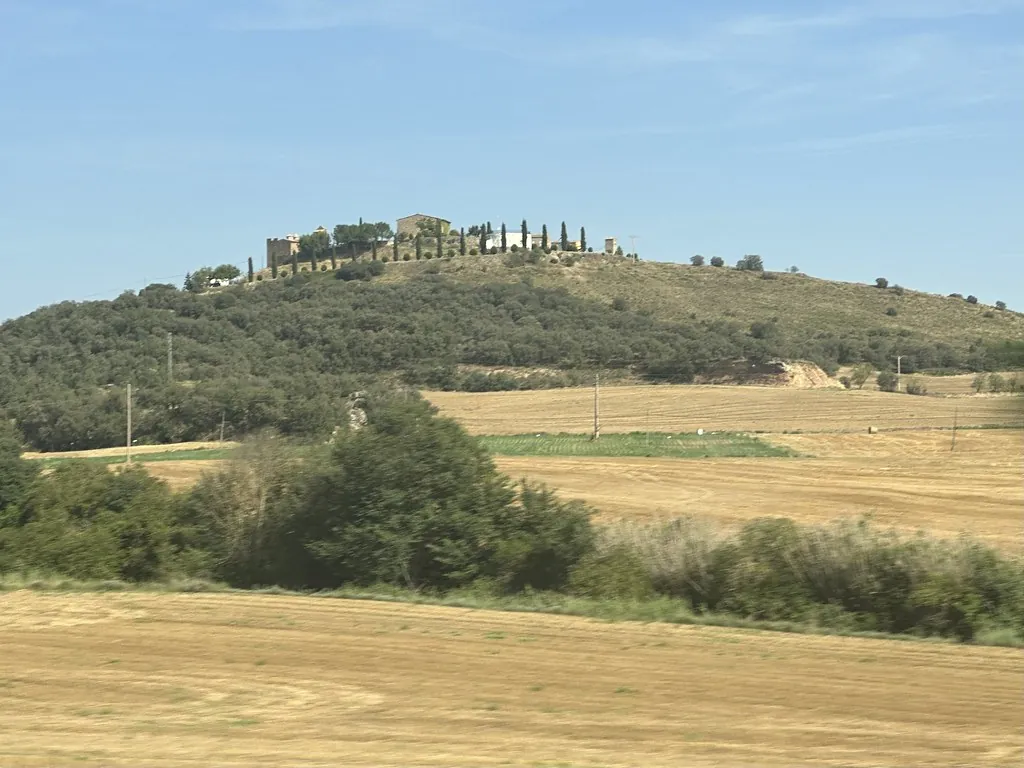
Step just beyond the built-up area and the scenery opens out quickly. Flat agricultural tracks extend between fields. There are no marked walking routes and no birdwatching hides. This is working countryside rather than a curated rural park.
In summer, common birds of open farmland are easy to spot moving between crops. Hoopoes and bee-eaters are among those that pass through or feed in the area. The appeal here is simplicity: cultivated land, irrigation channels and wide skies, shaped by human labour rather than by tourism.
Getting Around La Noguera
Albesa is often more of a short stop than a final destination within La Noguera. From here, secondary roads lead quickly to Balaguer and other nearby villages. The terrain across this part of the comarca is fairly flat, which makes moving around straightforward.
Many people cover these stretches by bicycle or by car without difficulty. Distances are manageable, and the roads are uncomplicated. Albesa fits easily into a wider exploration of the region, especially for those interested in seeing how small agricultural communities connect with one another across the plain.
Its role is practical. It works well as a brief pause between other points in La Noguera, offering a grounded look at rural life rather than a long list of sights.
Food Rooted in the Land
Local cooking revolves around what is grown nearby. When asparagus is in season, it takes centre stage. In summer, sweet fruit from the orchards becomes part of everyday meals. Vegetables from the huerta, the irrigated kitchen gardens, appear regularly on the table, along with straightforward meat dishes.
There is little elaborate preparation. Recipes are domestic, designed to provide a solid meal after hours spent working in the fields. The emphasis is on eating well rather than on presentation or innovation. It is food shaped by availability and habit, closely linked to the agricultural cycle that defines the area.
Festivities and the Rhythm of the Year
The most active moment in Albesa’s calendar is the festa major, usually celebrated around San Miquel, towards the end of September. During those days the village becomes livelier. Events take place in the streets, communal meals are organised and people who live elsewhere often return.
For a short period, the atmosphere shifts. There is more movement, more conversation in the squares and more visible activity in public spaces. Outside the festa major and a few occasional summer events, life remains fairly quiet.
That contrast underlines the village’s character. Most of the year is shaped by routine and work. Then, briefly, the social side takes over, bringing neighbours and returning residents together before things settle back into their usual rhythm.
If You Only Have an Hour
With limited time, a simple plan works best. Walk around the main square and the streets near the town hall. Head towards the Iglesia de la Asunción and take in the layout of the old centre. In less than half an hour you will have formed a clear impression.
After that, leave the centre on foot or by car and follow one of the agricultural tracks that circle Albesa. From there, looking out over fields, irrigation channels and scattered farm buildings, the wider landscape of La Noguera makes more sense.
Albesa does not require much time. If you are expecting major monuments or packed itineraries, this is not the place. If you are curious about how agricultural villages in La Noguera function in everyday terms, an hour is enough to understand what defines it: compact streets, working fields and a life closely tied to the land.