Full Article
about Alòs de Balaguer
Picturesque village tucked into the Segre gorge; perfect for river and nature activities.
Hide article Read full article
A Hillside Village Above the Segre
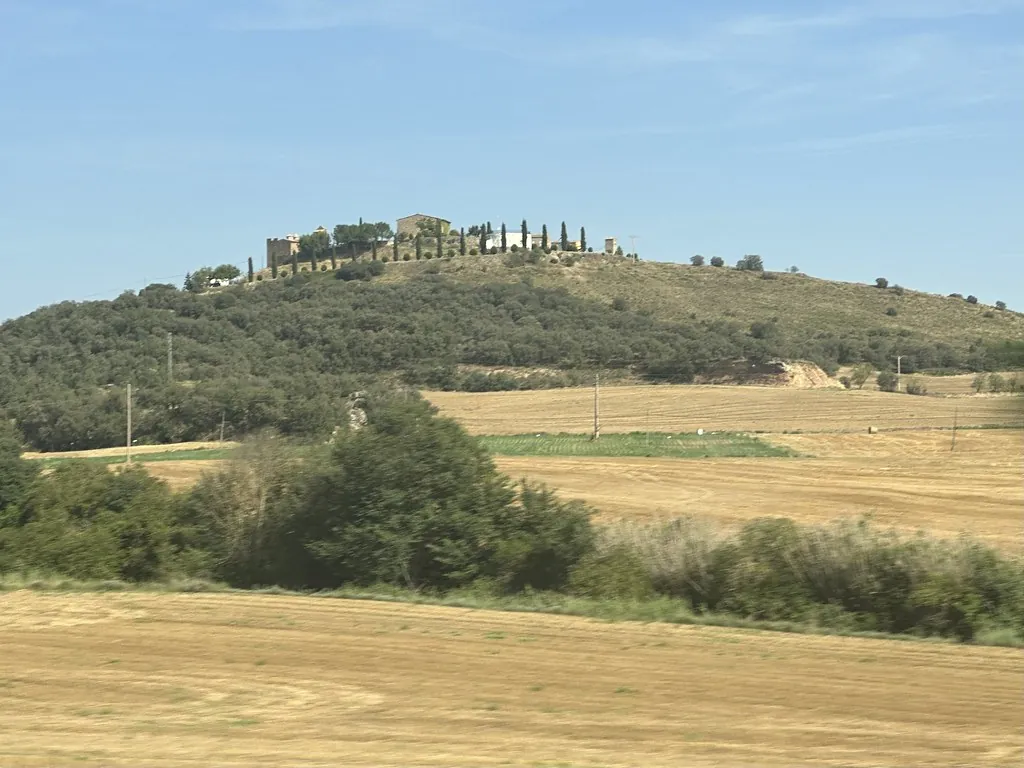
Some places appear almost by accident. You follow secondary roads through the comarca of La Noguera, linking one stretch of countryside to the next, and suddenly a small settlement comes into view, perched on a slope. That is often how people arrive in Alòs de Balaguer.
With just over a hundred residents, this is unmistakably a small village. There are no shop windows competing for attention and very little traffic. Instead, narrow streets climb and dip between solid stone houses that look as though they were built to last for centuries. The village overlooks the valley of the River Segre, and the surrounding landscape alternates between dry farmland, holm oaks and rougher ground that signals the approach of the Montsec range.
Alòs de Balaguer is not somewhere that demands a full day of sightseeing. It suits a slower approach. A short walk, taken without hurry, is often enough to understand its appeal.
Through the Old Streets
The historic centre is compact and easy to explore on foot. The streets are irregular, with stretches that feel more like passageways between houses than conventional roads. Here and there, old wooden doors remain in place. Wrought iron balconies project from thick walls, and in many spots the stonework has barely been altered since it was first laid.
At the heart of the village stands the church of Sant Miquel. The current building is generally dated from the 17th century, although in places like this it is common for earlier layers to lie beneath later structures. The church is simple in design, without elaborate decoration, very much in keeping with rural churches across this part of Catalonia.
What matters most is not a single landmark but the overall setting. A few steps in any direction change the perspective: a steep incline, a shaded corner, a glimpse of the valley appearing between rooftops. The village reveals itself in fragments rather than grand statements.
Paths Into the Countryside
For those inclined to walk a little further, several rural tracks lead out from Alòs de Balaguer into the surrounding fields. There is no need to plan a long hike. Following one of the paths that head towards the farmland is enough to appreciate the setting.
The scenery reflects the interior of La Noguera: almond trees, olive groves and cereal plots interspersed with patches of holm oak woodland. In late winter, when the almond trees blossom, the pale flowers stand out against the dry earth. The contrast can be striking.
Some paths approach small ravines or pass by old agricultural buildings. These are traces of an earlier way of working the land: animal pens, dry stone walls and modest huts that now sit half hidden among vegetation. They hint at the routines that once shaped daily life here.
It is also a good area to look skywards. Birds of prey are frequently seen circling, taking advantage of the rising air currents from the Segre valley. The open landscape and relative quiet make such moments easy to notice.
A Different Rhythm from Balaguer
Anyone arriving from nearby Balaguer will feel the contrast almost immediately. Balaguer, the main town in the area, has markets, squares and the steady movement of everyday life. It sits relatively close to Alòs de Balaguer and offers a busier atmosphere.
In Alòs, the pace slows considerably. Streets are often silent. A neighbour might be chatting in a doorway, but there is little else to interrupt the calm. It is the sort of place where a simple circuit of the village, followed by a pause to look out across the valley, feels entirely sufficient.
It helps to arrive with realistic expectations. Alòs de Balaguer is not a destination packed with attractions to tick off a list. It works better as a peaceful stop within the wider comarca, a way of seeing how smaller communities in La Noguera continue at their own tempo.
Festivities and Local Life
As in many small villages, the patron saint festivities are the moments when Alòs de Balaguer becomes busier. Sant Miquel is the main reference point in the local calendar, although specific dates and celebrations can vary from year to year.
Summer also brings a change in atmosphere. Families who maintain homes here but live elsewhere often return during the warmer months. For a few days, the streets feel livelier. Shared meals and activities organised by residents create a different mood, even if only briefly.
These occasions are not designed as tourist events. They reflect the village’s internal rhythm, shaped by tradition and by the ties that connect people to this place even when they spend much of the year away.
Reaching Alòs de Balaguer
From the city of Lleida, the drive takes a little over half an hour. The usual route heads first towards Balaguer along the C‑13, then continues on local roads that wind into the Segre valley.
The final stretch already feels more rural. Open fields extend on either side, an occasional farm appears in the distance, and the outline of the Montsec begins to emerge on the horizon. By the time the road approaches the hillside where the village stands, the sense of leaving busier routes behind is clear.
Alòs de Balaguer is unlikely to be stumbled upon without consulting a map. Yet for anyone exploring La Noguera by car, making the short detour offers a clearer understanding of the comarca. It shows a quieter side of inland Catalonia, where landscape, stone houses and the slow curve of the Segre valley define the experience more than any headline attraction.