Full Article
about Cabanabona
Quiet rural town with a medieval tower; perfect for switching off
Hide article Read full article
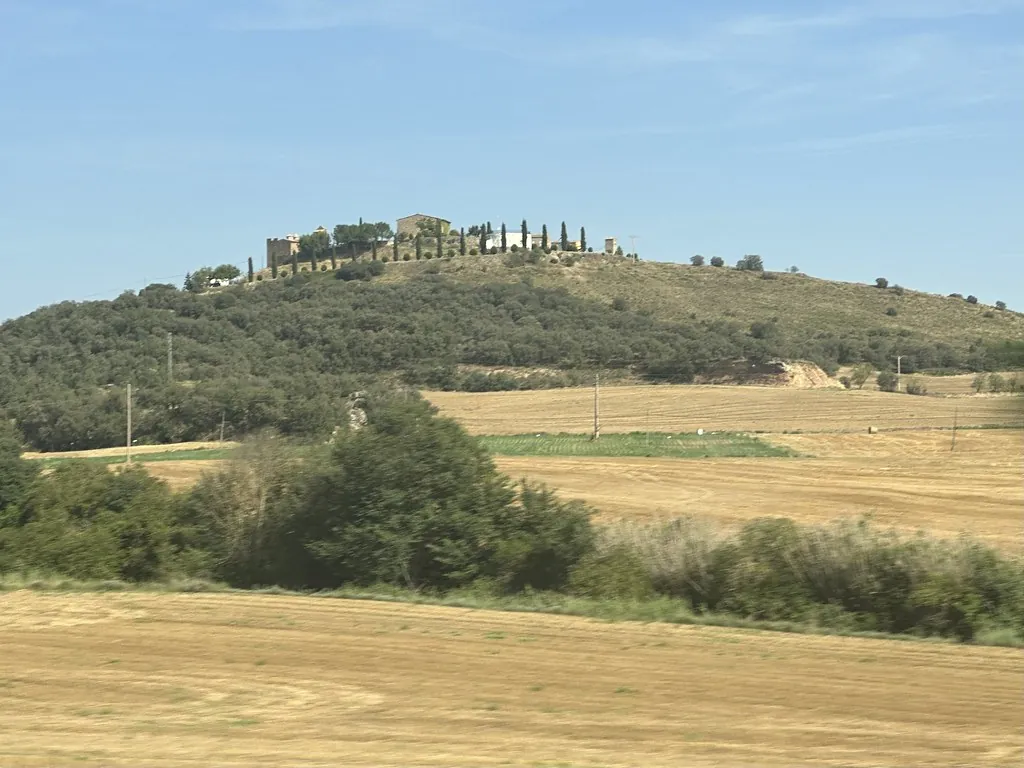
Some villages appear almost by accident. You are driving along the quiet roads of La Noguera, fields stretching out on either side, and then a small cluster of houses rises ahead on higher ground. That is Cabanabona. At first glance, it seems as though very little happens here, and that is precisely why it feels worth pulling over.
Cabanabona is tiny, with roughly seventy residents. There are no shop windows arranged for visitors and no signposts pointing out walking routes every hundred metres. What you see is what you get: stone houses, the occasional large traditional doorway, short streets where the silence feels genuine rather than staged.
Arriving in La Noguera’s Interior
The approach already hints at the pace of the place. The road narrows, cereal fields spread out on both sides, and an isolated masía appears now and then. If you come from Artesa de Segre, the landscape reflects the character of inland La Noguera: rolling terrain that turns dry in summer and green when the rains arrive.
Parking does not require much thought. Space is not an issue. A short walk is enough to get your bearings. There is no need for a map or a detailed plan for the day. Within half an hour, the layout becomes clear and you know where the streets lead and where the land opens out.
This is a village that reveals itself quickly. Its scale makes it easy to understand, yet it never feels arranged for effect. The fields are part of daily life, not a backdrop designed for photographs.
Sant Jordi and the Village Streets
The most recognisable building is the church of Sant Jordi. Its bell tower rises above the houses and works as a clear reference point as you move through the centre. The current structure appears relatively modern compared with other rural churches in the area, although the site has functioned as the heart of the village for centuries.
A small network of streets surrounds it, some with a gentle slope. Large wooden doors, thick stone walls and façades that show practical alterations carried out with whatever materials were available all form part of the scene. The architecture does not try to impress. Its purpose has always been to withstand winters and summers in this part of Lleida province.
Stand still for a moment and everyday sounds gradually come into focus. A conversation carries across from one end of a street to the other. A car passes occasionally. Dogs announce that someone has arrived. Nothing feels arranged for visitors, and the rhythm does not change because an outsider is walking through.
Fields, Tracks and Open Space
Open countryside surrounds Cabanabona. Agricultural tracks leave the village and disappear between plots of cereal, almond trees and areas of low scrub.
These are not marked trails like those found in natural parks. They are working tracks that farmers continue to use to reach their land. If you decide to wander further out, it helps to pay attention at junctions because many of the paths look alike.
Walking here has a simplicity that can be refreshing. The colour of the land shifts with the seasons. In spring, green tones dominate. In summer, the fields turn golden and the heat intensifies. Wind is common in this part of Lleida, and when it blows the crops move in slow waves across the landscape.
The area also attracts cyclists who prefer secondary roads. Traffic is light, the straights are long and small villages appear every few kilometres. It is the sort of terrain where the journey itself becomes the focus rather than any particular landmark.
Eating in the Surrounding Villages
Cabanabona itself offers very little in terms of places to sit down for a meal. In nearby villages, however, there are traditional bars of the kind found throughout rural Catalonia. Their menus tend to feature substantial dishes: pulses, grilled meat in colder weather and local cured sausages.
The food matches the setting. Ingredients are straightforward, portions are generous and meals can stretch out if the day allows it. There is no sense of hurry, and conversation often lasts longer than expected.
A Place That Does Not Seek Attention
Cabanabona does not try to impress. Visitors who arrive expecting a long list of attractions may find that a single hour is enough to walk its streets.
Yet it offers something that many more heavily promoted destinations have lost: ordinariness. The houses are lived in. The fields continue to be worked. Daily routines do not adjust to the presence of travellers.
It resembles a roadside stop on a long journey. It was never the final destination, yet the pause becomes part of the memory of the trip. Cabanabona works in much the same way. It is not somewhere to take ten photographs in quick succession. It is a brief pause in the middle of La Noguera, a small interval between stretches of road and open country. At times, that is exactly what appeals.