Full Article
about Camarasa
Municipality where the Segre and Noguera Pallaresa meet; known for its reservoir and rock climbing.
Hide article Read full article
Where the Segre Slows Down
At midday, on the edge of the Camarasa reservoir dam, the sun cuts sharp outlines into the cliffs and slips through the branches of the pine trees. The water, dark blue with metallic flashes when the wind picks up, barely moves. For a few seconds everything falls quiet, apart from the distant hum of a car on the road. Camarasa presents itself without fuss: rock, water and the river Segre, which has been carving its way through these walls for centuries.
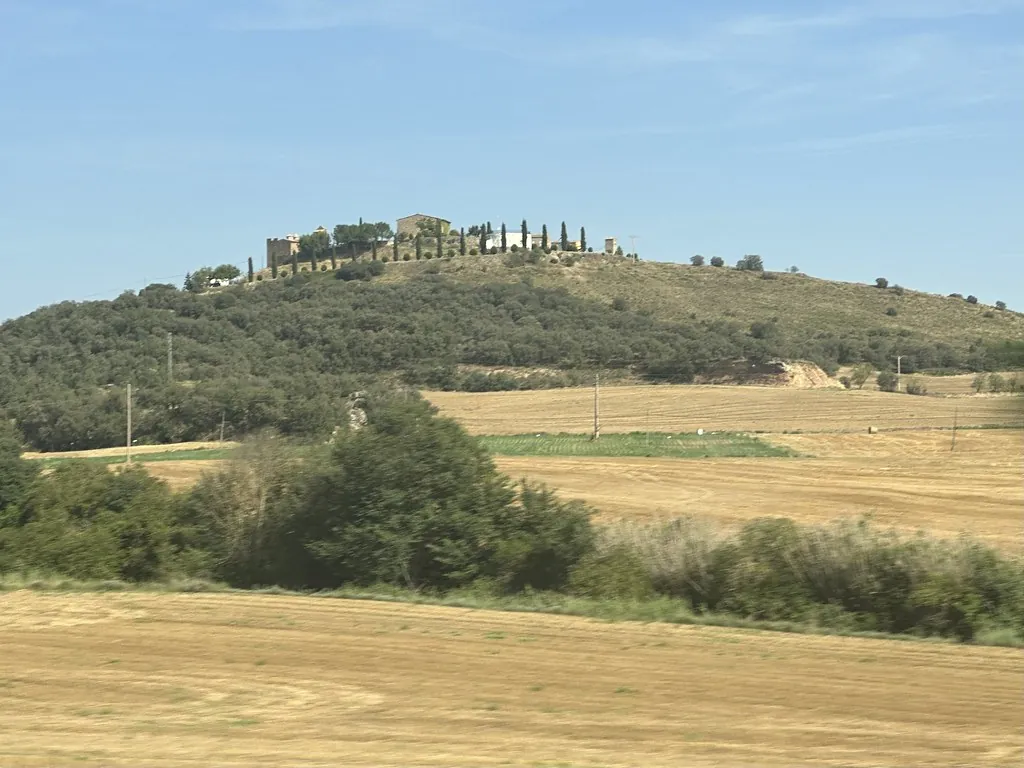
The village stands on a hill overlooking the reservoir and the gorge of the Segre. From below, the houses appear tightly packed, stepping down the slope in layers. There is no grand façade or monumental entrance. The setting does most of the talking.
The Old Quarter Above the Water
Climbing towards the centre brings you into narrow streets that slope down towards the reservoir. There are worn stone doorways, balconies with simple railings and a few pointed windows that hint at a time when walls stood here and the passage along the river needed watching. The whole historic core is compact. A short walk is enough to cross almost all of it.
During the week the atmosphere is usually calm, even subdued at certain hours. There are few information panels and no obvious signposted routes within the village itself. The best approach is to wander without a fixed plan, pausing at the gaps between houses where the shine of the reservoir suddenly appears.
At the highest point there is a small open space where the church of Santa María stands. It was built in the modern period over earlier structures, according to what is commonly said in the village. The bell tower acts as a reference point while moving through the cobbled streets. A glance upwards is enough to regain your bearings.
Paths Down to the Reservoir
Tracks and footpaths leave the built-up area and descend towards the water. The reservoir completely transformed this stretch of the Segre when the dam was constructed at the beginning of the 20th century. Where the river once ran narrower and faster, it now widens into a calm sheet of water bordered by limestone walls.
Early in the day the light comes in low and defines the layers of the mountain with clarity. In summer it is worth taking care when approaching the shore. Some sections have loose stones and slopes that can feel awkward under thin footwear. Access points are natural rather than engineered, and the terrain has not been levelled for easy strolling.
The shift from village streets to open rock happens quickly. A few minutes after leaving the last houses behind, the soundscape changes and the scale of the landscape becomes more apparent.
The Congostos of the Segre
A few kilometres from the village centre lie the congostos del Segre, narrow gorges where the river squeezes between vertical walls. Over time, erosion has cut corridors into the rock. From above, they look like long cracks running through the mountain.
There are natural viewpoints in the area that reveal the depth and shape of the landscape. They are not always clearly signposted, yet several forest tracks lead to points where the valley suddenly opens out and the proportions of the place become clear. The sense of height and enclosure is striking without needing any dramatic framing.
On the nearby paths it is common to hear birds and the dry snap of branches under boots. This is not an urban park environment. Some routes are stony, and on hot days the sun falls directly for hours at a time. Shade can be limited depending on the section.
The river remains the central presence, even when it is not fully visible. Its course has determined the form of the cliffs and continues to define how the landscape is experienced.
Quiet Water in Summer
When the heat arrives, the reservoir changes pace. In the calmest areas kayaks and boards move slowly across the surface. Even so, access remains largely natural, with little built infrastructure. Each person tends to find their own corner among rocks or small coves rather than heading for a defined beach.
Fishing is also common at dawn and towards evening. In these waters people usually catch trout and introduced species such as black bass. Hours pass in silence, eyes fixed on the line resting over the still surface.
Despite the summer activity, the scale of the place never feels exaggerated. The water absorbs sound, and distance between groups helps preserve a sense of space.
A Village Rhythm
Camarasa retains much of its agricultural character. In some shops you can find local produce such as olive oil and cured embutidos, as well as mushrooms in autumn. In this part of Catalonia, mushrooms often end up in tortillas or simple stews once the season arrives.
Outside the busier months it is sensible to adjust expectations around daily rhythms. At midday the village becomes very quiet, and not everything stays open all day. In summer the opposite can happen around certain parts of the reservoir, which may be busier than the size of the village would suggest.
Life here follows patterns shaped by light and temperature more than by a fixed timetable. The quietest hours can feel almost suspended, particularly when the streets empty and the only movement comes from shifting shadows on stone.
When Camarasa Shows Its Best Side
Two moments tend to work especially well in Camarasa. One is sunrise, when the reservoir lies completely still and the rock faces shift gradually from grey to orange. The change is slow and continuous, and the water reflects each variation.
The other comes with winter fog. On those days the water almost disappears beneath a white layer, leaving only the ridgelines of the cliffs visible above it. The landscape reduces itself to silhouettes and soft contrasts.
Camarasa is not a place that tries to attract attention. It rewards time and observation: the texture of the limestone, the echo of the Segre in the congostos, the way light moves across the reservoir as the day unfolds. The essentials are simple, and they remain consistent. Rock, water, river, and a village that watches from above.