Full Article
about Foradada
Known for the Salgar sanctuary in a spectacular gorge.
Hide article Read full article
A village shaped by the land
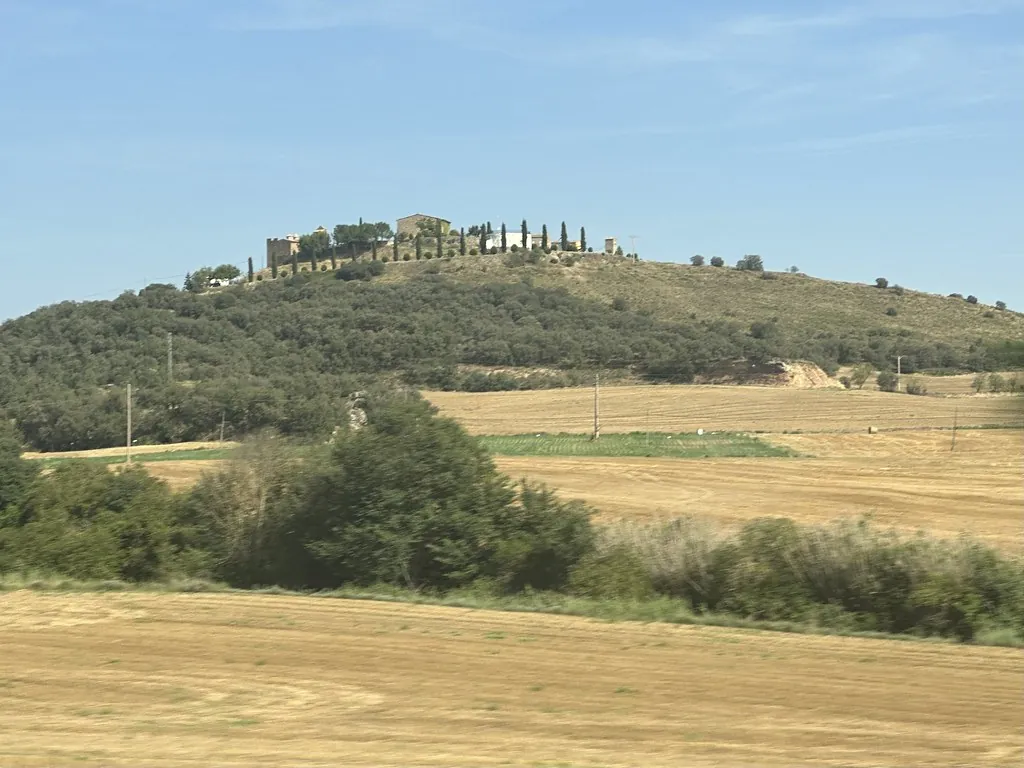
Foradada is the sort of place you might drive through without stopping if you are not paying attention. Then you lower the window, take in the view, and something clicks. Dry farmland stretches out in every direction, a tractor moves slowly across a field, and it becomes clear what this place is about. Tourism in Foradada has little to do with queues or souvenir shops. Life here still revolves around the land and the people who work it.
The village has around 200 inhabitants and sits slightly above the Segre valley. It belongs to the comarca of La Noguera, in inland Lleida, where the landscape barely changes for kilometres. Fields of cereal, almond trees and the ochre tones typical of dry terrain define the surroundings. There are no grand monuments or carefully staged viewpoints competing for attention. Instead, Foradada offers a direct sense of how daily life unfolds in this part of Catalonia when tourism is not the main driver.
A place best understood on foot
The parish church of Sant Pere is the most noticeable building on arrival. It does not dominate the skyline, yet it clearly marks the centre of the village. Its structure combines older elements with later modifications, something common in small rural settlements where buildings have been adapted over time as needs changed.
The rest of the village can be explored quickly. Streets are short, houses are built of stone or finished with whitewashed walls, and windows tend to be small. Anyone familiar with villages in inland Lleida will recognise the pattern. Homes were designed to withstand cold winters and hot summers, prioritising practicality over decoration. Some doorways still feature stone arches, and there are roofs with aged tiles that hint at how long these houses have stood.
There is no monumental old quarter to single out. What matters here is the overall layout: how the houses cluster around the church, and how, within a few steps, the built space gives way directly to open fields.
Dry fields and traces of past work
The landscape around Foradada is dominated by dry farming. Cereal crops occupy much of the year, while almond trees bring a noticeable change towards the end of winter. When they bloom, the fields briefly take on shades of white and pink, altering the look of the area for a short time before returning to their usual tones.
Old الزرا terraces supported by dry stone walls can still be seen in places. They are not large or dramatic structures, but rather small agricultural steps that reflect the manual effort once invested here over decades. These details quietly tell the story of how the land has been shaped.
Some plots have been left fallow over time, while others serve as grazing ground for sheep and goats. It is common to see flocks moving slowly along rural tracks, part of the everyday rhythm of the area rather than a staged rural scene.
Walking without urgency
For those who enjoy walking, the simplest plan is often the best: leave the village by any of the agricultural paths. There is no formal network of signposted routes, but wide dirt tracks connect fields, scattered farmhouses and small rises in the terrain that offer open views of the valley.
Some paths lead down towards the area of Salgar, while others climb gently to nearby hills where the landscape opens out further. These are not demanding routes, nor especially long ones. They are the kind of walks taken without keeping a close eye on the time.
One small detail stands out. Because the area sees relatively little traffic, birds of prey are often visible overhead. Harriers and kites glide across the sky, taking advantage of the air currents over these open plains.
Quiet roads for cycling
The secondary roads around Foradada attract another kind of visitor: cyclists. These are routes with little traffic that link the village to other small settlements in La Noguera.
Gradients are generally gentle, more about covering distance than tackling long climbs. That said, summer brings strong sunlight and very little shade. Early starts are the most practical option for those planning to cycle in the area.
Eating and planning your time
Foradada is a very small municipality, and that is reflected in the services available. It is not a place where a day is spent moving between attractions or stopping frequently at cafés.
A straightforward plan tends to work best: arrive, take a relaxed walk through the village, spend some time on the surrounding paths, then continue on to other villages in the comarca for a meal or additional stops.
Within local homes, aspects of rural life remain very present. Olive oil from local harvests, homemade cured meats and simple seasonal dishes are still part of daily life. These are not always accessible to visitors passing through, but they offer a clear sense of how things function here.
Summer gatherings
As in many small villages, the social calendar is concentrated in summer. Festivities are traditionally held between July and August, when many former residents return for a few days.
Events are usually organised in the square or near the church. They include shared meals, music and religious celebrations. Nothing on a large scale, more a series of gatherings where most people know each other.
That atmosphere perhaps says more about Foradada than anything else. It is a place where the pace is set by the land, where the landscape is not arranged for visitors, and where everyday life continues much as it has for years.