Full Article
about Ivars de Noguera
Town near the Santa Ana reservoir; surrounded by irrigated orchards.
Hide article Read full article
Ivars de Noguera occupies a transitional space in the comarca of La Noguera. The flat, open fields of the Segre valley begin to fold here, rising into the first slopes of the Pre-Pyrenean foothills. This geography has dictated its character: a compact village of some three hundred inhabitants, where the streets give way abruptly to cultivated land.
Life is oriented towards Balaguer, the comarca capital a short drive south for services and commerce. In contrast, the rhythm in Ivars is set by the agricultural calendar, a slower pace evident in the quiet plazas and the broad, work-oriented houses.
The structure of dryland farming
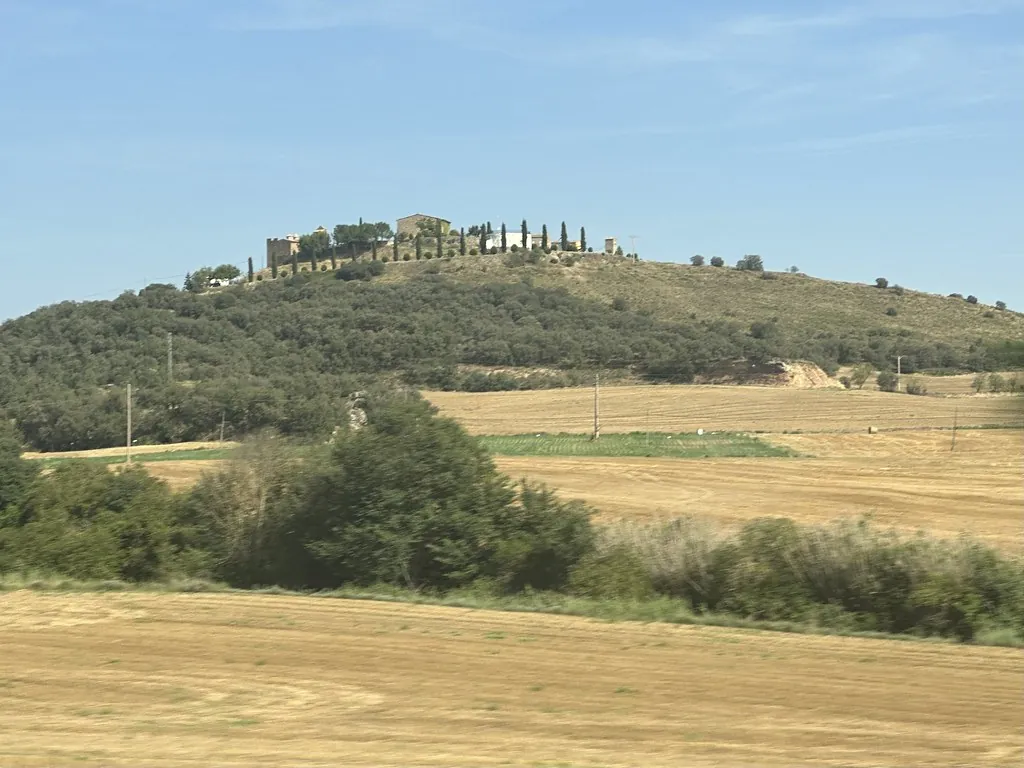
The landscape is defined by dry farming. Cereal fields and almond groves cover the reddish earth, organized by a network of dry stone walls. These walls, built without mortar from cleared fieldstones, are among the oldest human marks on the terrain. They parcel the land into plots that have been worked for generations.
In late winter, the almond blossom briefly softens the austerity of the scene. For the rest of the year, the palette is one of earth tones, broken by the green of irrigated patches near the village. This is not a decorative landscape; it is a working one, shaped by necessity and climate.
Sant Pere and the village outline
The parish church of Sant Pere anchors the village. Its construction is generally placed in the 16th century, with later modifications visible in the masonry and roof lines. The interior is simple, housing a Baroque altarpiece with carvings and panels that reflect local devotional customs of its time.
Its bell tower is the vertical marker in the skyline, visible from the fields. For centuries, its call organized the communal day. It still defines the silhouette of Ivars when approached from any direction.
Domestic architecture and street patterns
There are no grand monuments. The interest lies in the domestic architecture, built for utility. Streets follow the gentle contours of the land, not a planned grid. Look for the stone doorways with worn lintels, the functional iron balconies, and the thick masonry walls on older houses.
Many homes are broad, with interior courtyards that once served as workspaces for tool storage or processing harvests. The architecture speaks plainly of a life where home and farmstead were integrated.
Paths and perspectives
A web of unpaved agricultural tracks extends from the village limits. They connect to isolated farmsteads and neighbouring villages like Algerri or Castelló de Farfanya. Walking or cycling them provides the truest sense of the territory.
These are exposed paths, with little shade. In summer, the heat is considerable. The compensation is an unobstructed horizon. From slightly elevated points within the municipality, your gaze can travel across the Segre plain to the silhouette of the Pre-Pyrenees in the north.
Birdlife is that of farmland: skylarks, swifts, and the occasional kestrel hovering over fallow fields. The openness makes their movements easy to follow.
Calendar and community
The festa major in August acts as an annual reunion. Former residents return, and scheduled events mix with informal gatherings in the plaza. It is a social event more than a tourist one.
Other dates punctuate the year, often tied to saints' days or harvest cycles. In a community this size, these gatherings maintain a tangible social function.
Practical notes
The drive from Lleida takes roughly thirty-five minutes, passing through Balaguer. The final approach is via local roads through farmland.
The village core is easily walked in twenty minutes. To venture onto the agricultural tracks, a bicycle or car is advisable. What you find here is a clear example of a pueblo agrícola: its form, its rhythms, and its identity are inseparable from the dry fields that surround it.