Full Article
about La Baronia de Rialb
Large pre-Pyrenean municipality with the Rialb reservoir and scattered Romanesque hermitages.
Hide article Read full article
A Landscape Rewritten by the Reservoir
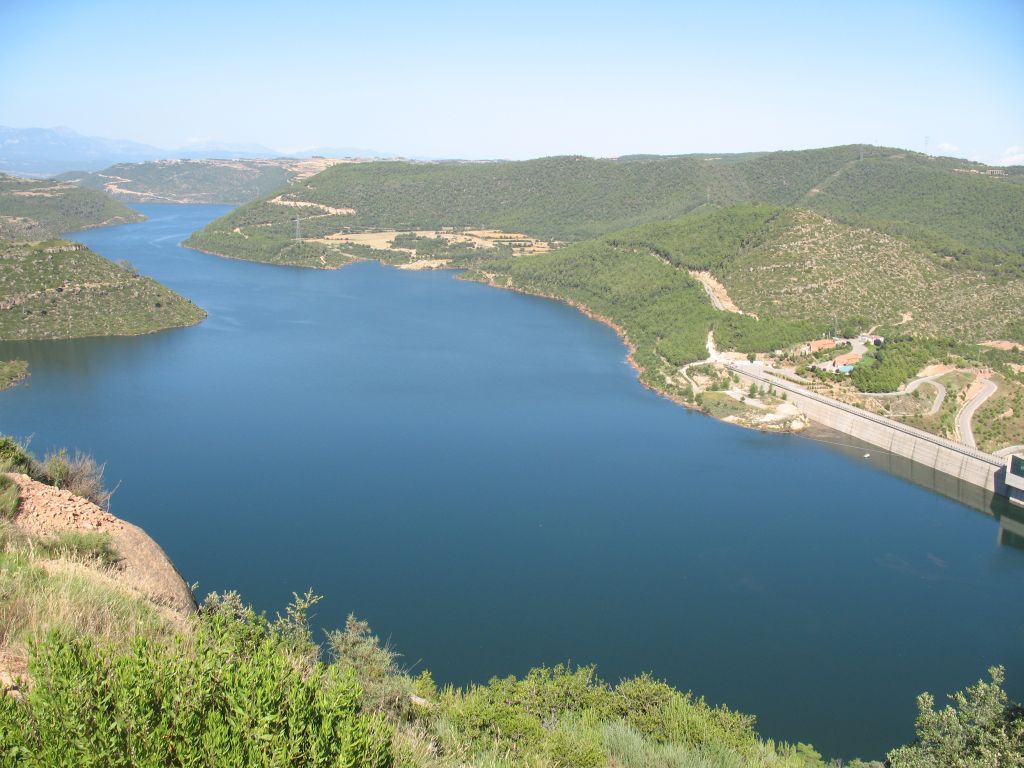
Tourism in La Baronia de Rialb revolves around a relatively recent feature: the reservoir that now fills much of the former Segre valley in this part of La Noguera, in Catalonia. Before the water arrived, the landscape looked very different. Dry farmland stretched across the slopes, scattered masías dotted the terrain, and small settlements were linked by rural tracks.
The construction of the dam at the end of the 20th century altered the territory in a visible way. It also changed how people move through it. What was once a cultivated valley became a broad sheet of water edged by wooded hills.
Today the municipality remains large but sparsely populated, with just over two hundred residents spread across several small centres and isolated houses. This dispersion defines the character of La Baronia de Rialb. There is no single main village concentrating daily life. Instead, the municipality is made up of small pieces scattered along the slopes that encircle the reservoir.
A Municipality of Small Settlements
La Baronia de Rialb is, in effect, the sum of former villages and masías that were gradually brought together under one municipal administration. The topography helps explain this structure. The area consists of gentle hills, ravines and sloping ground where terraces were historically carved out for cultivation.
Gualter is usually the best-known of these centres. The parish church stands there, with parts dating back to the Romanesque period, although the building has undergone later alterations. It is not a grand monument. Instead, it acts as a historical reference point for the valley. For centuries it was one of the religious focal points of the area.
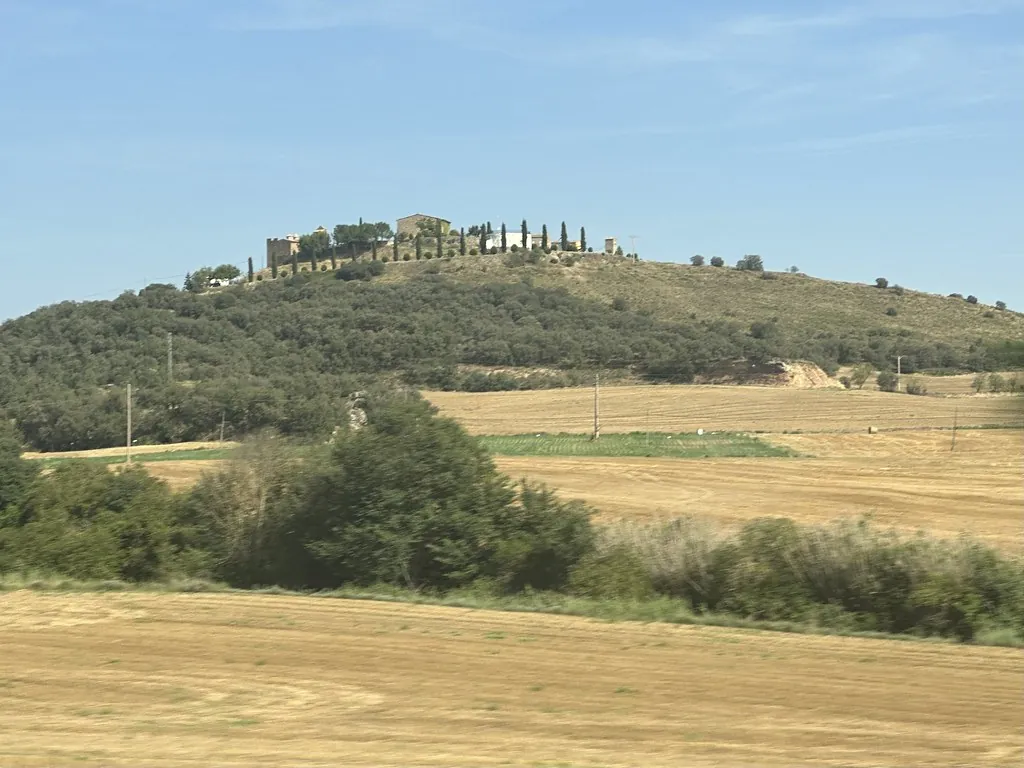
In the surrounding countryside, stone masías are still visible. Some remain inhabited, others stand empty. Many follow the same rural model: simple volumes, thick walls and few openings, built to withstand the climate rather than to display ornament. They form part of a landscape shaped as much by practical needs as by geography.
The Reservoir and the Submerged Valley
The Rialb reservoir now dominates the image of the municipality. Its construction submerged former agricultural plots and several historic paths that once followed the course of the Segre river. Anyone walking along the present shoreline might not immediately realise that terraces and small structures lie beneath the surface.
Water levels fluctuate depending on the time of year. When they drop, traces of the old valley sometimes reappear. Stone boundaries and sections of former tracks emerge in certain spots. These remains are discreet, yet they help to reconstruct the memory of the landscape before the dam.
The presence of the reservoir has introduced new uses. In some areas, activities such as kayaking or light boating take place. Anglers are also a common sight along the more accessible shores, particularly on quiet weekdays. The atmosphere tends to be calm, with open views across the water framed by wooded slopes.
Tracks Through Mediterranean Woodland
Much of the municipality can be explored via rural tracks. Some follow routes that once connected masías and small villages. These are not high mountain trails but broad paths that cross holm oak woods, pine forests and areas where former fields can still be recognised.
Routes around the reservoir offer a clear sense of the relief. From certain hilltops, the scale of the water becomes apparent, as do the slopes descending towards the shore. Distances should be considered carefully in summer. Shade is not always plentiful and stretches between settlements can be long.
Secondary roads attract little traffic, which appeals to cyclists. The terrain, however, demands frequent climbs and descents. The landscape never remains flat for long, and that constant change in gradient defines the experience of travelling through La Baronia de Rialb.
Despite the size of the municipality, encounters with other visitors are limited. Many routes unfold in near silence, between forest and water. The interest here lies less in individual landmarks and more in understanding how the terrain has evolved in recent decades.
Interior Cuisine and Seasonal Produce
The culinary tradition of this part of La Noguera is rooted in straightforward ingredients. Cured embutidos, pa amb tomàquet, grilled meats and stews linked to the agricultural calendar form the backbone of local cooking. Pa amb tomàquet, bread rubbed with tomato and dressed with olive oil and salt, is a staple throughout Catalonia and appears frequently here as well.
Autumn often brings enthusiasm for mushroom gathering in nearby woods, when conditions allow. Níscalos, known in English as saffron milk caps, and other varieties are found with relative frequency in damper parts of the hills. Game dishes also have a presence during the corresponding months.
This is not cuisine designed for display. It is food intended to provide sustenance after long days working the land. The rhythm of the seasons still influences what appears on the table.
Practical Considerations Before Visiting
Getting around La Baronia de Rialb almost always requires a car. The settlements are spread out and public transport is very limited.
The territory is extensive in relation to its small population, so checking a map before planning any route is advisable. Some rural tracks may be in uneven condition, especially after rainfall.
In return, there is a consistent sense of space. Large concentrations of visitors are rare, and many paths run quietly between woodland and water. The appeal of La Baronia de Rialb lies in reading the landscape and recognising the recent history of a valley that changed completely when the reservoir arrived.