Full Article
about La Sentiu de Sió
Quiet village on the banks of the Sió; hermitage on a hill
Hide article Read full article
A small stop in the landscape
Some villages barely register on the map, the kind you almost notice in the rear-view mirror before you see them ahead. La Sentiu de Sió fits that description. It sits in the Noguera region of Catalonia as a quiet pause rather than a destination built around big attractions. What stands out here is the stillness, something you feel as soon as you park and step out.
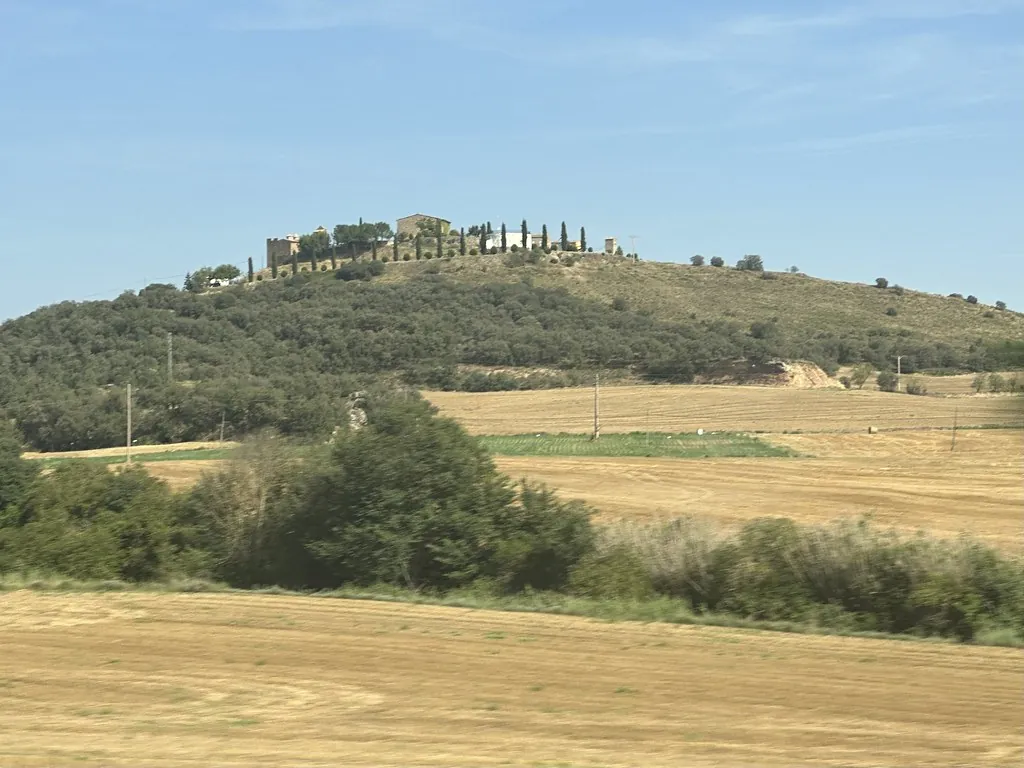
The village gathers around its church and a handful of short streets. Close by runs the Sió river, modest and almost silent. All around stretch open fields, mostly cereals for much of the year, alongside almond trees that shift the look of the landscape when in season. Life here follows the rhythm of agricultural work more than any visitor calendar.
A compact village centre
La Sentiu de Sió is easy to explore on foot. A slow half-hour walk is enough to cross the village and return to where you started.
The houses still reflect their agricultural roots. Many show exposed stone, narrow doorways and small balconies. On those balconies, you might spot plant pots, old tools or a chair set out in the sun. This is not a monumental place, yet it feels lived in, with a sense that daily life continues here throughout the year.
At the centre stands the church of Sant Miquel, visible from different points around the village. The current building appears to be the result of successive alterations over the centuries, which is common in this part of Catalonia. It remains the focal point for local celebrations and gatherings tied to the village calendar.
Fields and paths beyond the houses
Once you leave the built-up area, the surroundings change quickly. Agricultural tracks begin almost immediately, leading through cultivated plots that cover much of the municipality.
These are simple dirt paths, mainly used by farmers. Anyone who enjoys walking without a fixed plan can follow one and let it wind through the fields. Along the way, small rural structures appear: animal enclosures, dry-stone walls, agricultural storage buildings that have been added over time.
It helps to have a basic sense of direction. A downloaded map on a phone is usually enough, as many of these paths cross through or alongside private land and can intersect in ways that are not always obvious.
The presence of the Sió river
The Sió flows past the village on its way towards the plains of Lleida. It is not a large or particularly powerful river, but it has long played a key role in irrigating the surrounding land and supporting the agricultural landscape.
Along its banks, stretches of riverside vegetation still remain. Reeds, rushes, shrubs and other plant life create small pockets where wildlife gathers. This is not a place set up for long riverside walks. It is better suited to a short pause, somewhere to sit for a while and take in the view without many people around.
Quiet routes for walking or cycling
The network of minor roads in the area is calm and lightly used. Routes connect La Sentiu with nearby villages, offering gentle terrain that appeals to cyclists looking for low traffic.
There are no major climbs or steep gradients. Instead, the setting is defined by open countryside, the occasional isolated farmhouse and a silence broken now and then by a passing tractor or car.
Summer brings strong sun and very little shade. Early starts make a noticeable difference for anyone planning to walk or cycle during the warmer months, as midday heat in the Noguera can be intense.
Food rooted in the land
Cooking in this part of Catalonia stays closely tied to local produce. Dishes often centre on slow-cooked legumes, cured meats from the comarca and olive oil produced nearby. The style is hearty and straightforward, typical of inland Lleida.
La Sentiu de Sió is not a place to seek out a wide dining scene. Meals follow the same pattern found across many villages in the region: simple, homemade food with little emphasis on presentation or variety.
Birds over fields and water
With a bit of patience and a pair of binoculars, there is plenty of birdlife to notice near the river and across the fields. Depending on the time of year, herons, storks or even a kingfisher moving quickly along the water’s edge may appear.
There are no dedicated observation points or facilities for birdwatching. The experience is informal, based on moving slowly through the landscape and paying attention.
Local celebrations
Village life gathers around its own calendar. Festivities linked to Sant Miquel take place towards the end of September and form the main annual celebration. Other events and activities are often tied to the agricultural cycle.
These are not festivals designed to draw large crowds. They remain local gatherings where most people know each other. Visitors who happen to be there at the right time simply join in rather than observe from a distance.
A brief stop in the Noguera
La Sentiu de Sió is not somewhere to spend hours moving between monuments. It works better as a short stop that offers a sense of how this part of the Noguera functions. Open fields, small settlements and a way of life closely linked to the land define the experience.
A brief walk through the village leaves an impression that is hard to pin down. It feels ordinary in many ways, yet that everyday quality is exactly what gives it its character.