Full Article
about Les Avellanes i Santa Linya
Large municipality with karst landscapes and mountain salt pans; great for climbing and nature.
Hide article Read full article
A Small Municipality at the Edge of the Montsec
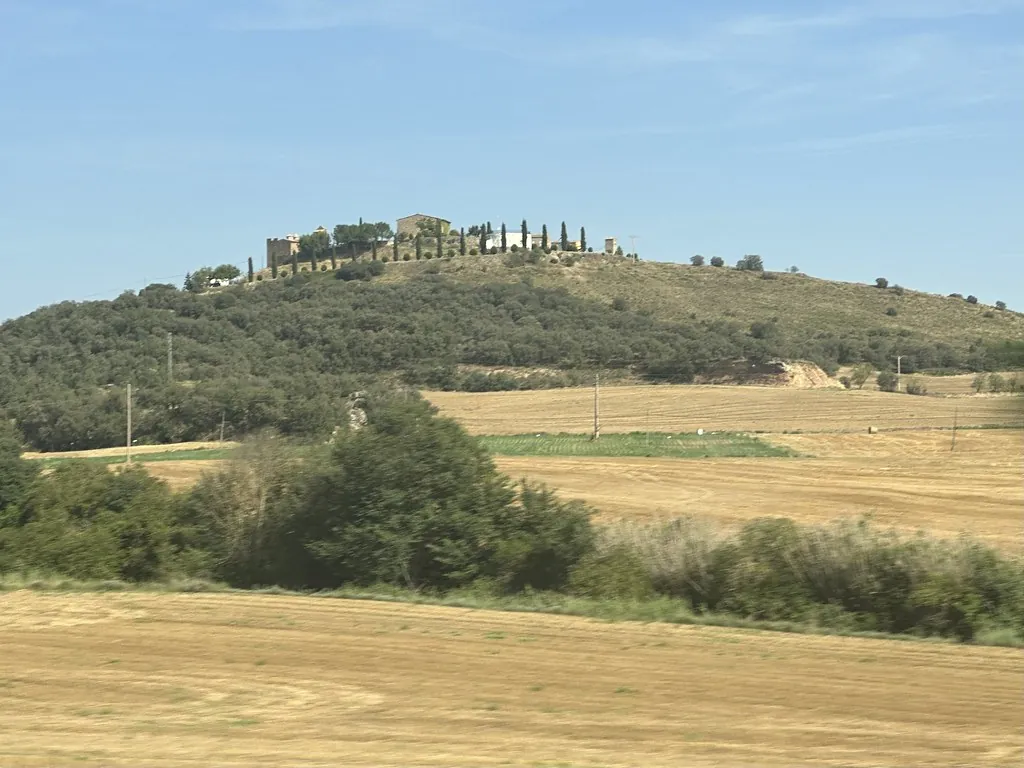
Les Avellanes i Santa Linya lies in the comarca of La Noguera, in the province of Lleida, where the agricultural plain begins to rise towards the first rock faces of the Montsec range. It is a small municipality of just over four hundred inhabitants, made up of scattered hamlets set among ravines, dry farmland and rocky slopes. The outline of the sierra is almost always in view, shaping both the landscape and the way people have settled here over time.
This is a place where geography explains history. The transition between open plain and limestone ridge has determined land use, settlement patterns and even strategic importance in earlier centuries. Today it feels quiet and sparsely populated, yet the terrain carries clear traces of long human occupation.
Dry farming has left a visible mark. Olive trees, almond groves and cereal fields occupy terraces supported by stone retaining walls. These stepped plots follow the contours of the land, creating a patchwork that changes colour with the seasons. Beyond the cultivated areas, cliffs and natural rock shelters hold much older evidence of human presence, placing this municipality in a discreet but meaningful position within inland Catalonia.
Monastery and Village Architecture
The most prominent historic site is the monastery of Santa María de les Avellanes. Founded in the 12th century, it was closely linked for centuries to the history of the county of Urgell, a medieval political entity in this part of Catalonia. Several members of the comital lineage were buried here, underlining its importance at the time.
The complex preserves its medieval church, altered at different moments in subsequent centuries, and the cloister around which monastic life was organised. Beyond specific artistic details, what stands out is its former role as a centre of power in what was then a frontier zone between Christian and Muslim territories. In that context, monasteries were not only religious institutions but also key actors in consolidating control and structuring the surrounding land.
Santa Linya itself is a very small settlement. Its parish church retains sections of Romanesque masonry, although the building has been modified over time. The houses, built from local stone, follow the typical pattern of villages in the interior of La Noguera: compact volumes, limited openings and short streets that adjust to the uneven ground. The overall impression is of architecture shaped by climate, available materials and the need for solidity.
Prehistoric Shelters and Vertical Rock
The ravines near Santa Linya contain rock shelters with schematic cave paintings. These form part of the Levantine rock art of the Mediterranean arc, recognised by UNESCO. The paintings are simple in form, depicting human figures, animals and abstract signs. Their simplicity does not lessen their value. They point to prehistoric communities who used these natural shelters and left visual traces of their presence.
Conservation of these paintings is delicate and access is usually regulated. The rock faces that protect them are exposed to natural erosion, and careful management is necessary to ensure their survival.
The limestone walls of Santa Linya have also become well known in the world of sport climbing. Large overhanging cliffs rise above the surrounding terrain, with hundreds of routes opened since the late 20th century. Climbers from different countries spend periods here, drawn by the continuity of the lines and the quality of the rock. The scale of the walls contrasts sharply with the small size of the village below.
Rural Paths Beneath the Montsec
The Montsec defines the horizon with an abrupt line of pale rock. From the rural tracks that connect the different hamlets of the municipality, the contrast between the mountain range and the agricultural plain stretching towards the Segre is clear. The sense of openness is strong, particularly on higher ground where the view extends across fields and towards the distant river valley.
There are footpaths that follow old working routes between cultivated plots and small patches of Mediterranean woodland. These are not long-distance signposted trails, but traditional paths that once linked farmhouses, animal enclosures and individual parcels of land. Walking here offers a direct sense of how daily life was organised around agriculture and livestock.
In hot weather it is important to carry water. Much of the terrain is open, with limited shade, and the dry climate dominates for a large part of the year. The landscape can appear austere, especially in summer, yet it has its own coherence shaped by centuries of adaptation to limited rainfall.
The ravines and cliffs also favour birds of prey. Griffon vultures are relatively common, often seen circling on the thermal currents rising from the Montsec. In some sectors, scarcer species have been recorded. Watching these large birds glide above the rock faces adds another dimension to the experience of the area.
Practical Notes for Visiting
Les Avellanes i Santa Linya is located around twenty kilometres north of Balaguer, reached by local roads that cross agricultural zones. The monastery of Santa María de les Avellanes and the hamlet of Santa Linya concentrate most of the main points of interest within the municipality.
Services are limited, which is typical of villages of this size in inland Catalonia. The environment remains dry for much of the year, and facilities are not extensive. Anyone planning to walk the rural paths or approach the climbing areas should arrive properly prepared.
What defines Les Avellanes i Santa Linya is the meeting of cultivated plain and limestone mountain, of medieval monastery and prehistoric shelter, of small-scale farming and internationally known climbing walls. It is a municipality where landscape and history are closely intertwined, and where the presence of the Montsec is a constant reference point.