Full Article
about Oliola
Town with a curious stone bell field; rural setting
Ocultar artículo Leer artículo completo
The church bell strikes noon, yet only two cars pass through Oliola's main street. At 452 metres above sea level, where the drylands of Catalonia's Noguera comarca stretch towards distant horizons, time operates differently. The village's 200 residents have learned that haste serves little purpose when summer temperatures hit 38°C and winter fog can isolate these hills for days.
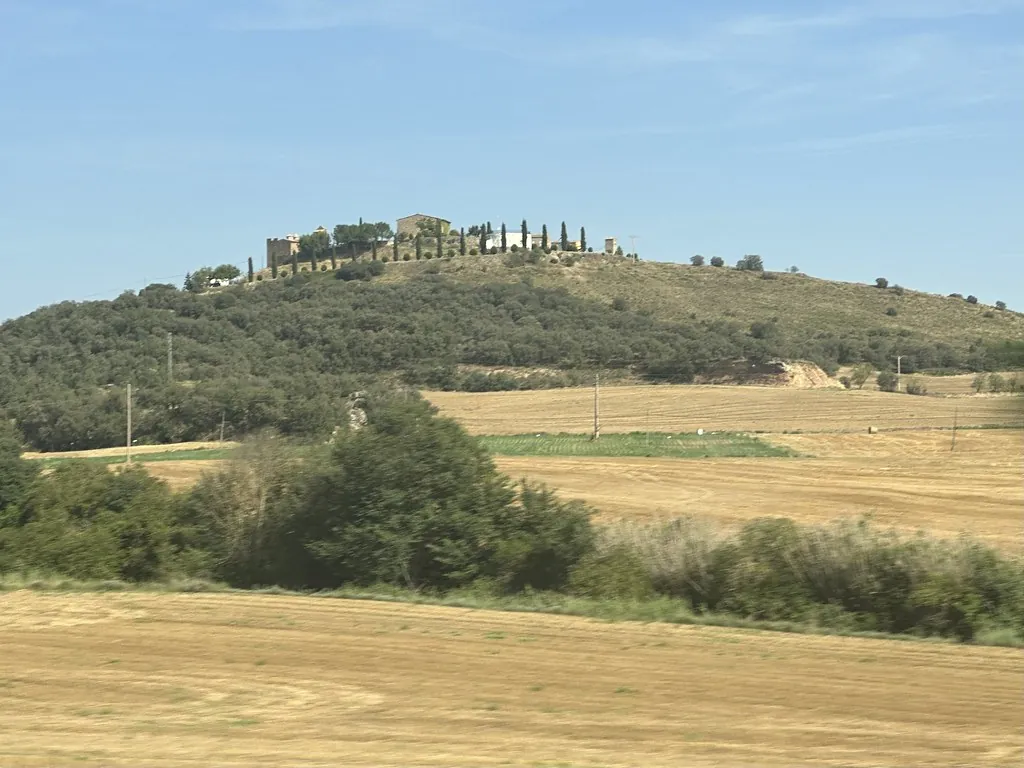
Stone houses, their ochre walls absorbing centuries of Mediterranean sun, climb the hillside in irregular terraces. Weathered wooden doors, some dating from the 1700s, remain closed against the midday heat. Through gaps in the masonry, narrow alleys reveal glimpses of almond groves and cereal fields that shift from emerald to gold with the seasons. This is agricultural Catalonia at its most uncompromising—beautiful precisely because it makes no concessions to visitors.
The Architecture of Survival
Oliola's layout tells stories of drought, poverty, and persistence. Houses huddle together, sharing walls to conserve precious shade. Windows remain small, originally designed to keep interiors cool during scorching summers when water arrives by truck rather than tap. The parish church, rebuilt multiple times since its medieval foundations, stands as the village's only significant landmark. Its bell tower serves practical purposes beyond worship—historically warning of approaching storms or celebrating the olive harvest that once defined local prosperity.
Walking these streets demands attention to detail. Above one doorway, a stone carved with grape vines hints at abandoned vineyards. Another entrance bears the date 1847, when phylloxera hadn't yet devastated European wine production. The village museum doesn't exist—history lives in these architectural fragments, freely observable to those who pause rather than photograph and move on.
Modern intrusions remain minimal. Satellite dishes cling discreetly to southern walls. One house displays solar panels, installed after a government subsidy scheme. Yet electricity cables still run overhead, and mobile reception vanishes entirely near the church square. This technological patchwork reflects rural Spain's uneasy relationship with progress—embracing necessity while maintaining distance from change for change's sake.
Walking Through Contrasts
The landscape surrounding Oliola embodies Catalonia's climatic extremes. Dry stone terraces, built by hand over centuries, support almond and olive trees whose roots penetrate limestone fissures searching for moisture. Between these permanent crops, farmers rotate wheat and barley, creating a patchwork that appears natural but results from millennia of human intervention. Wild boar, increasing as rural populations decline, raid these terraces nightly—farmers compensate by harvesting earlier, accepting lower yields rather than investing in expensive fencing.
Footpaths radiate from the village like spokes, following ancient routes between fields. The GR-171 long-distance trail passes within three kilometres, but local tracks prove more rewarding. One route climbs to an abandoned shepherd's hut, its roof collapsed but walls intact, offering views across the Segre valley towards the Pyrenees. Another path descends to seasonal streams where eagle owls hunt at dusk. These walks require proper footwear—the limestone becomes treacherous when wet, and summer heat demands carrying at least two litres of water per person.
Spring transforms this apparently barren landscape. Between March and May, orchids appear in forgotten corners. Wild asparagus pushes through terrace walls, collected by villagers who know precisely which patches to monitor. The air fills with pollen from cypress trees, triggering allergies in unsuspecting visitors. By late June, everything returns to survival mode—plants either dormant or protected by thorns, animals active only during brief dawn and dusk periods.
Eating What the Land Provides
Local cuisine reflects agricultural reality rather than tourist expectations. The village's single bar serves coffee from 7 am, filling with farmers discussing rainfall statistics and EU subsidy applications. Food appears only by prior arrangement—typically Thursday through Sunday, depending on the owner's other commitments. The menu never changes: escudella (a hearty stew containing pork, beans, and seasonal vegetables), followed by trout when available from nearby reservoirs, or rabbit cooked in village-produced olive oil.
Wine arrives from cooperatives in neighbouring towns—the altitude and aridity that make Oliola challenging for visitors actually benefits grape growing, producing concentrated flavours prized by Catalan sommeliers. The local olive oil, pressed in Artesa de Segre, carries DOP Les Garrigues certification. Its peppery finish surprises British palates accustomed to milder Italian varieties. Purchase directly from farmers by asking at the bar—expect to pay €12-15 for five litres, considerably less than UK specialty shops charge for inferior products.
For self-catering, Lleida city (45 minutes by car) offers supermarkets, but village purchases support the remaining community. The bakery van arrives Tuesdays and Fridays at 11 am—fresh pa de pagès (rustic bread) sells out within twenty minutes. Local eggs, available from the house with blue shutters opposite the church, cost €2 per dozen. Place money in the honesty box, a system that continues working because everyone knows everyone, and social exclusion represents the ultimate penalty.
When to Visit, When to Stay Away
April provides optimal conditions—temperatures reach 22°C, wildflowers carpet abandoned terraces, and daylight extends until 8:30 pm. The village festival, held during the first weekend of May, attracts former residents from Barcelona and Lleida. Accommodation becomes impossible to find within thirty kilometres, but the atmosphere proves worth the logistical challenge. Traditional dancing continues until dawn, powered by locally-distilled marc rather than commercial spirits.
August presents difficulties. Temperatures regularly exceed 35°C, and the village's single fountain often runs dry. Most residents retreat to coastal family homes, leaving Oliola virtually abandoned. What appears as authentic rural life actually represents seasonal migration patterns common across interior Spain. The few remaining pensioners sit behind closed shutters, emerging only for essential supplies.
Winter brings alternative challenges. Snow falls rarely but fog proves persistent, reducing visibility to metres and making mountain roads treacherous. Heating costs force many households into single-room living—guests expecting rustic charm might find themselves sharing kitchen spaces with entire families cooking, eating, and socialising around the only efficient wood burner. This intimacy, either heart-warming or claustrophobic depending on perspective, defines winter village life.
Access requires realistic planning. No train stations serve the Noguera comarca—Barcelona to Lleida high-speed services connect with infrequent buses reaching Artesa de Segre, still 12 kilometres from Oliola. Car rental becomes essential, preferably including GPS offline maps since mobile data proves unreliable. The final approach involves narrow mountain roads where meeting oncoming traffic requires reversing to designated passing places—a skill British drivers might not have practised since their driving test.
Oliola offers no souvenirs beyond memories and perhaps a bottle of olive oil. It provides something increasingly rare: a place where human rhythms adapt to geographical constraints rather than attempting their reversal. Visitors seeking entertainment should continue to Barcelona or the Costa Brava. Those prepared to abandon schedules, carry water, and engage with residual communities will discover why some Spaniards still choose this demanding existence over urban alternatives.