Full Article
about Ponts
Key crossroads to the Pyrenees; famous Rancho festival
Hide article Read full article
The bells of Sant Pere strike eight while the sun has yet to touch the Segre. From the road bridge, the river looks like a sheet of mercury sliding between poplars. Near the old flour mill, a lone angler sets up his rod without hurry. The air carries the smell of damp earth and fresh bread escaping through a half-open door. This is when Ponts makes sense, as the town wakes slowly and the traffic noise has not yet rolled in from the main road.
Many travellers pass through on their way elsewhere. Few stop for more than a short while. Yet stepping just a couple of streets away from the road is enough to notice a different pace.
A walk to the watchful hill
The walk up to the castle usually starts in the Plaça Major, where arcaded porticoes keep a band of shade even when the sun is high. The paving stones have been worn smooth by centuries of footsteps.
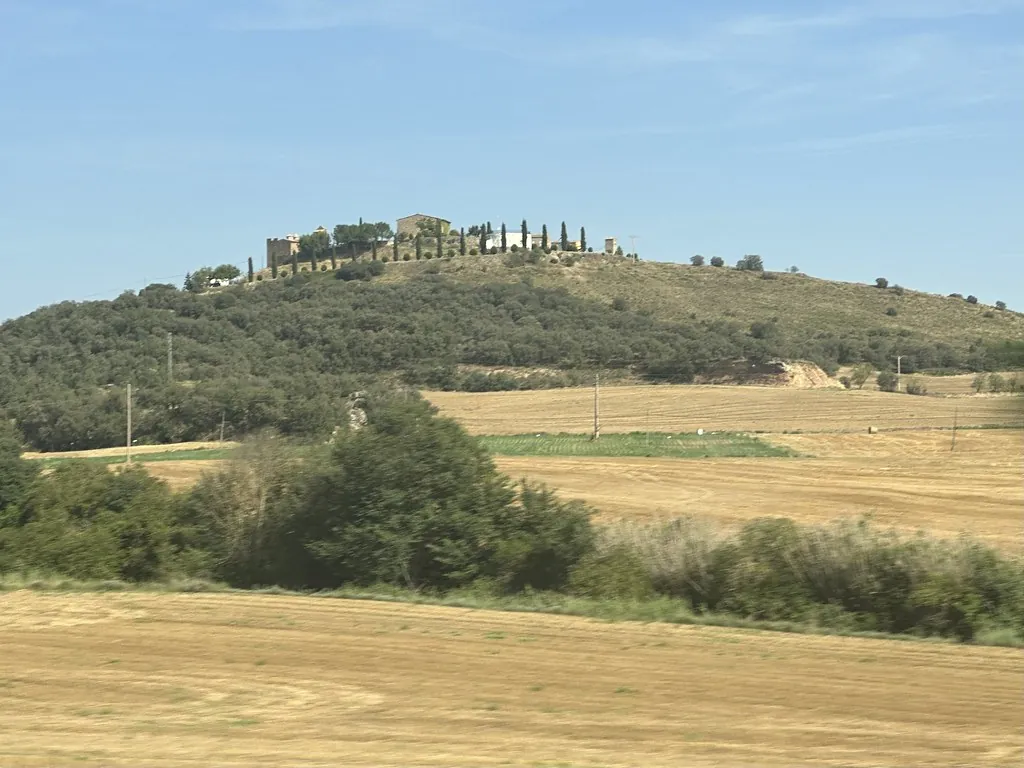
At the top stand the remains of the castle, enough to understand why it was built here. The promontory commands the river crossing and the routes that cut through the valley. From these ruins the whole town is visible: roofs pressed close together, the Romanesque bell tower of Sant Pere rising above the trees, and beyond them the irrigated fields tracing green rectangles beside the Segre.
For centuries this point controlled movement between territories. Today it’s a quiet lookout. Late in the afternoon, light falls across the valley from the side and the breeze often carries the scent of damp soil.
Back down in the centre, daily life continues at ground level. Conversations stretch out on benches under those arcades. Cars pass slowly. It does not take long to feel that the town moves to its own rhythm once you’re away from the through road.
The taste of a Lleida winter
When cold air drops from the hills in winter, many kitchens in Ponts turn to cardo con alubias y carne de cerdo. Cardo, a type of thistle cultivated in irrigated fields around the town, is milder than the wild variety. It simmers gently with white beans and pieces of black butifarra sausage and panceta, which gradually melt into the broth.
It is a substantial stew, the sort that fogs up kitchen windows while the pot bubbles away.
On Sundays, coca de Ponts often appears on the table. The base is thin, crisp at the edges, topped with onion, flaked salt cod and pine nuts. It comes out of the oven with a scent that hovers between sweet and savoury, drifting into the street when a window is left open.
Food here reflects what’s around: irrigated plots near the Segre, cold months that call for slow cooking.
Following stone crosses into open fields
On the edge of town begins the route of les Creus de Terme. It covers roughly eight kilometres along agricultural tracks linking several stone crosses placed centuries ago to mark boundaries.
The path crosses open fields and low rises. In summer it is best tackled early or later in the day; shade is scarce and the sun beats down on pale soil. Autumn brings a different feel. The air tends to be clearer, and freshly cut fields release a dry scent of straw.
The crosses themselves appear suddenly at the side of the track. Some are worn by erosion, others lean slightly. They were not designed to impress. They served as markers.
Near one cross, La Blanca, the view opens towards the Llobregós valley. The river is heard before it is seen, a steady murmur rising through riverside trees. Out here, instead of passing vehicles, there is wind across fields and that distant sound of water.
When October turns sweet
By mid-October the atmosphere shifts. During its torró fair, central streets fill with stalls and air turns thick with warm honey and toasted hazelnut.
Copper cauldrons can still be seen during these days, where they stir honey and egg white before it cools and sets into nougat. It’s one of liveliest moments here.
Even so, those who prefer quiet may find weekdays in autumn or winter more appealing. At those times streets return to their usual tempo: neighbours chatting on benches in square, smoke rising straight from chimney as evening falls.
August brings opposite mood. Ponts fills with people in transit heading towards Pyrenees. Centre grows noisier; short climb uphill is enough to leave that behind.
Ponts does not demand long list of sights to justify stop. Its appeal lies in small shifts of light over Segre, in hilltop that watches valley, in stew that steams on winter stove. For those willing pause rather than pass through, town reveals itself without fuss.