Full Article
about Preixens
Municipality with a castle and riverside landscape of the Sió; quiet area
Hide article Read full article
A village shaped by the plain
Tourism in Preixens begins with its setting and the reasons behind it. This small municipality in La Noguera sits on the flat land that follows the course of the river Segre, an agricultural strip that for centuries has acted as a corridor between inland Lleida and the first ridges of the Pre-Pyrenees. With fewer than 400 inhabitants today, the village still reflects the logic of rural settlements that grew around cereal farming and scattered farmhouses, known as masías.
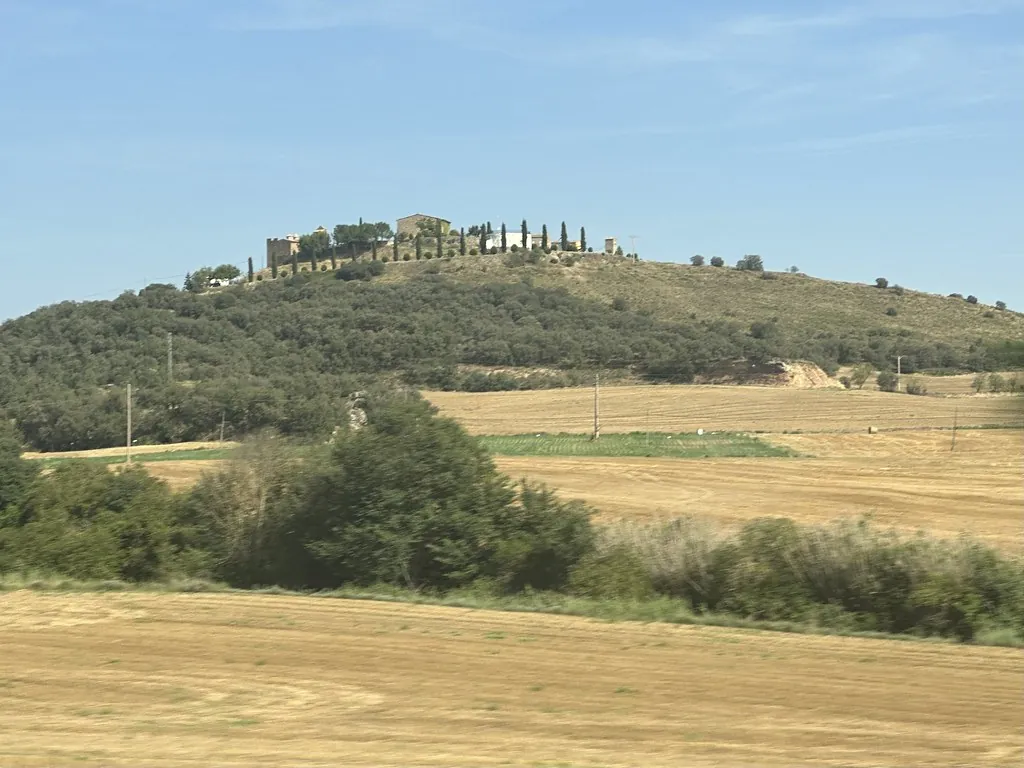
The landscape is not dramatic at first glance, yet it explains almost everything about the place. The open plain dictates distances, work, and movement. Fields stretch out in broad sections, and the village appears as a compact cluster within them rather than a dominant feature. Preixens belongs to a network of small settlements that developed in relation to the land, not apart from it.
From medieval origins to a working settlement
Preixens appears in written records during the Middle Ages, when this part of La Noguera formed part of the territory linked to the old County of Urgell. After the Christian conquest campaigns of the 11th century, the area was reorganised into small agricultural communities tied to local lordships. The village emerged within this process of repopulating and cultivating the Segre plain.
That origin still defines its structure. The settlement remains compact, surrounded by open farmland that has always been its economic base. There is no sense of later expansion reshaping the layout into something different. Instead, the original pattern continues, with the built core clearly distinct from the fields that sustain it.
This continuity helps explain why Preixens feels cohesive rather than layered with contrasting periods. Changes have taken place, but they tend to adapt what already existed rather than replace it.
The centre: Santa María and the streets around it
At the heart of the village stands the parish church of Santa María. The current building reflects a series of extensions and alterations carried out over time, something typical in settlements of this size. It does not present itself as a major monument. Its role is more practical and spatial, acting as the central reference point around which the village is organised.
The square and nearby streets gather the oldest houses. Many of them feature wide entrances designed for carts, a reminder of how closely daily life was tied to agricultural work. Simple iron balconies appear on upper floors, adding small details rather than decoration in any grand sense.
Walking through the centre makes the agricultural origins immediately visible. Traditional houses combine stone with later construction, and many include adjoining spaces such as yards or storage areas. These elements point to the importance of small-scale livestock keeping alongside crop cultivation.
There is no monumental historic quarter in the usual sense. What exists instead is a consistent group of buildings that together explain how people have lived here across generations. The interest lies in that overall coherence rather than in individual landmarks.
Fields, paths and the presence of the Segre
The surroundings of Preixens complete the picture. The plain is largely given over to dry farming, especially cereal and almond trees. Agricultural tracks cut across the land, linking plots and leading towards isolated masías that punctuate the wider area.
The river Segre flows nearby, introducing small pockets of riverside vegetation into an otherwise dry landscape. It is not a dramatic river at this point in its course, yet it remains a constant presence. Its influence has shaped local agriculture over time, even when it does not dominate the view.
A network of rural paths connects the municipality with neighbouring villages in La Noguera. Many follow older routes once used for moving livestock or transporting grain to local markets. Today they can be explored on foot or by bicycle without difficulty. Orientation matters, though, as several tracks cross similar-looking fields and it is easy to lose a clear sense of direction.
These paths extend the experience beyond the built village. The settlement itself is only part of the story, while the surrounding land provides the context that makes it understandable.
Traditions that still mark the calendar
The rhythm of the year in Preixens remains linked to traditional celebrations. The main festival usually takes place in August, bringing together residents who live in the village as well as those who have moved elsewhere but return for the occasion. It functions as a point of reunion rather than a large-scale event.
Religious celebrations connected to Santa María are also maintained. For centuries, these observances helped structure the agricultural calendar, marking periods of work and rest in line with the seasons. That connection between belief and farming cycles has not entirely disappeared, even as lifestyles have changed.
A short visit, a wider understanding
Preixens is a small and quiet place. Visitors will not find a single standout attraction that defines the experience. The interest lies in how the elements fit together: the layout of the village, the surrounding fields, and the long-standing relationship with the Segre valley.
The visit itself is brief if limited to the built centre. Streets can be covered in a short time, and the church of Santa María provides a natural focal point. To understand the village more fully, it makes sense to follow the tracks that lead out into the countryside. The landscape offers the key to interpreting everything else.
Preixens does not present itself as a destination of highlights. It works instead as a clear example of how a rural community has developed in response to its environment and maintained that structure over time.