Full Article
about Torrelameu
Known for its cuisine and the church; near the Noguera-Segre confluence
Hide article Read full article
A village shaped by its fields
Some places explain themselves within minutes. Torrelameu is one of them. Search for tourism in Torrelameu and the first thing that stands out is not a landmark or a grand square, but the agricultural landscape that surrounds it. Open fields stretch out in every direction, straight rural tracks cut through the land, and the pace of life follows the rhythm of farm work rather than the clock.
The village lies in the comarca of La Noguera, a county in the province of Lleida, just a few kilometres from the city of Lleida itself. It is small, with around eight hundred residents. There are no streets designed with visitors in mind. Instead you find large gateways built to store machinery, yards where a tractor may be parked, and houses that have evolved slowly over the years without much fuss. It is the kind of place where daily life still feels directed towards the people who live there.
The centre and the wider landscape
The heart of Torrelameu revolves around the parish church of the Asunción. It is not a building that demands constant photographs, yet it provides a clear reference point when starting to explore the village on foot. From here, the streets branch out towards the edges of the settlement and quickly open onto wide views of the flattest part of La Noguera.
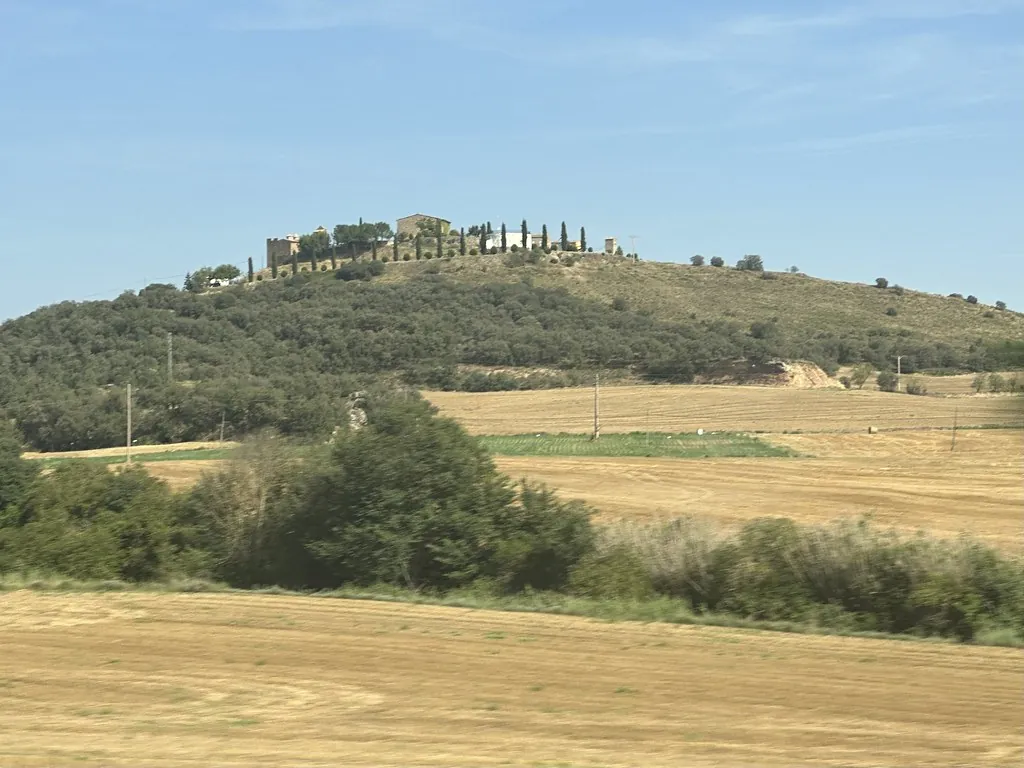
This is an orderly agricultural landscape. Fields are laid out in neat plots, linked by service roads and irrigation channels. Those channels are a reminder of how water transformed this area. In spring the fields turn a vivid green. By summer, the colours shift to yellows and ochres, as though the intensity has been gently turned down.
A slow walk reveals details that say more about Torrelameu than any information board could. Old barn doors remain in place. Small vegetable gardens sit close to houses. There are irrigation ponds and agricultural warehouses that have been doing the same job for decades. None of it is presented as heritage. It is simply part of everyday life.
On foot or by bike across La Noguera’s plain
Torrelameu is not about dramatic viewpoints or headline walking routes. Its appeal lies in flat terrain and kilometres of rural tracks. For anyone who enjoys walking or cycling without steep climbs, that simplicity is part of the attraction.
The surroundings can be explored along agricultural paths that connect fields and working farms. These routes are straightforward, with hardly any change in elevation. It is the sort of landscape where conversation flows easily because there is no constant uphill effort.
Cycling follows the same pattern. Secondary roads and paved rural lanes create a quiet network across the plain. At times the only sounds are the wind and an occasional passing car. During fruit season, it is common to see small improvised stalls on farms or outside houses selling freshly picked produce. There is nothing elaborate about them, just a table, crates filled straight from the field, and someone ready to explain which plot the fruit has come from.
Nearby runs part of the irrigation canal system that crosses much of this area of Lleida. The Canal d’Urgell, which converted many dry fields into irrigated land, is central to the agricultural history of the region. Its presence helps explain why the landscape looks as it does today, with productive plots replacing what was once largely dry farmland.
Food as an expression of the land
In a village like Torrelameu, food is not packaged as a tourist attraction. It is simply what has always been eaten here. The foundations are vegetables from local gardens, olive oil, meat and, when the season allows, plenty of fruit.
In winter, homes still prepare substantial spoon dishes, the kind of hearty meals designed for colder days. At other times, recipes tend to be straightforward, with the quality of the produce taking precedence over elaborate techniques. The cooking reflects the agricultural setting: practical, filling and closely tied to what the land provides at any given moment.
A summer visit, or a trip towards the end of the agricultural season, often coincides with fruit being sold directly by local producers. The scene is uncomplicated. A table set up outside, boxes just harvested, and a brief explanation of which finca, or farm plot, the fruit comes from. It offers a direct link between field and table that is easy to understand even for those unfamiliar with rural Catalonia.
Festivities on a local scale
The annual festivities usually take place in August and are traditionally dedicated to Sant Jaume and Santa Anna. These are village celebrations in the most literal sense. Events are simple, there is music, communal meals are organised, and neighbours who have known each other for years gather together.
There are no large stages or programmes designed to attract big crowds from outside. Instead, this is the time of year when people who now live elsewhere return for a few days. The population temporarily increases and the streets regain a touch of bustle before settling back into their usual calm.
A pause in the plain
Torrelameu works best when understood as a quiet stop within the plain of La Noguera. It does not offer major monuments or a long checklist of sights. What it does offer is an opportunity to observe how agricultural villages in the province of Lleida function in everyday terms.
Spending a few hours here makes sense for travellers interested in rural life rather than headline attractions. The fields, the irrigation channels, the parish church of the Asunción and the seasonal rhythm of work together sketch out a place that continues to follow its own calendar. In Torrelameu, the landscape is not a backdrop. It is the main story.