Full Article
about Olesa de Montserrat
Famous for its Passion play and olive groves.
Hide article Read full article
First Impressions Beneath Montserrat
Tourism in Olesa de Montserrat has something slightly unexpected about it. You arrive assuming it is simply another town at the foot of Montserrat, and within minutes you realise that here, the olive tree sets the tone.
In autumn the clue is immediate. Step off the FGC train and there is a faint scent in the air, like freshly pressed olive oil. It is hard to say exactly where it comes from, yet it drifts through the streets and settles into the atmosphere of the place.
This is not a conventional mountain postcard. Olesa feels lived-in rather than staged. Everyday life is visible, unpolished and active. Montserrat rises dramatically nearby, but the town does not rely on that backdrop alone.
Getting Your Bearings
There is a small trick to navigating Olesa for the first time. You leave the station, glance up at Montserrat as it suddenly fills your view, take the quick photo, and think it is time to wander.
That is when the gentle confusion begins.
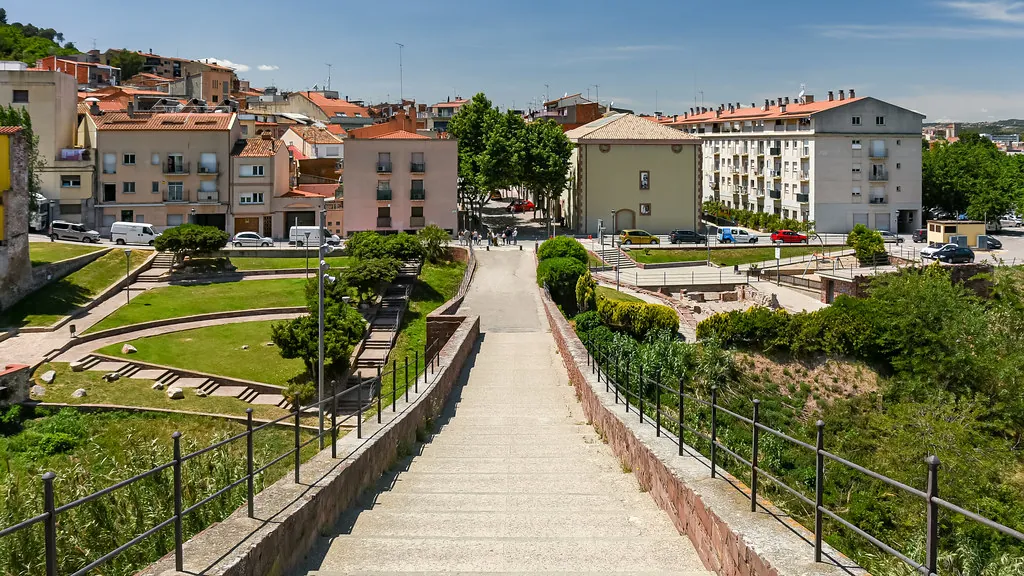
The old quarter was not designed for straight lines or easy orientation. Streets climb, dip, twist without warning. A turn leads to a square, another to an open car park, and you may not be entirely sure how you arrived there. It is nothing serious, though it can feel slightly disorientating at first.
A simple solution is to head towards the Plaça Major. On Saturday mornings there is usually more activity, and this is where the town seems most recognisably itself. Ask anyone about “La Passió” and they will point you in the right direction. Everyone here knows where it is.
The Performance That Defines the Town
La Passió de Olesa is one of those events that is difficult to grasp without seeing it. At its core, it is a vast theatrical representation of the life of Jesus, staged here for centuries. A significant part of the town takes part.
The scale is striking. Actors, extras, technicians and long-time helpers add up to an enormous number of participants. Entire families have been involved across generations. Children begin with small roles and, as years pass, remain connected in some way to the production.
The atmosphere is what sets it apart. It does not feel like a show assembled for visitors. It resembles a huge communal performance, created by a town that takes the responsibility seriously. When someone mentions that this year they are playing a Roman, an apostle or a background figure, it is said with a pride that is hard not to notice.
For anyone unfamiliar with the tradition, a “Passion” play recounts the final days of Jesus’ life. In Olesa, that tradition has become woven into local identity. It is less about spectacle and more about continuity, about keeping something alive through shared effort.
Landscapes That Shift Underfoot
Those who come for walking will find more than enough terrain around Olesa. The landscape changes quickly once you leave the centre behind.
Ribes Blaves is probably the best-known route. A few kilometres from town, the scenery transforms into grey-blue earth and eroded walls. There is a sense of walking across something ancient. In fact, it is a large geological fault visible to the naked eye, which is unusual so close to inhabited areas. The ground itself tells a story measured in millions of years.
Another well-known route climbs towards Sant Salvador de les Espases. The name sounds as if it belongs in a medieval novel, yet it refers to a hermitage perched along a ridge. The ascent has its slope, and it demands some effort. At the top, the reason for its popularity becomes clear. Montserrat stands opposite, appearing almost within reach, while the valley of the Llobregat opens below.
Go early and the silence carries weight. It is occasionally broken by cyclists pushing their way up the paths, breath echoing in the still air.
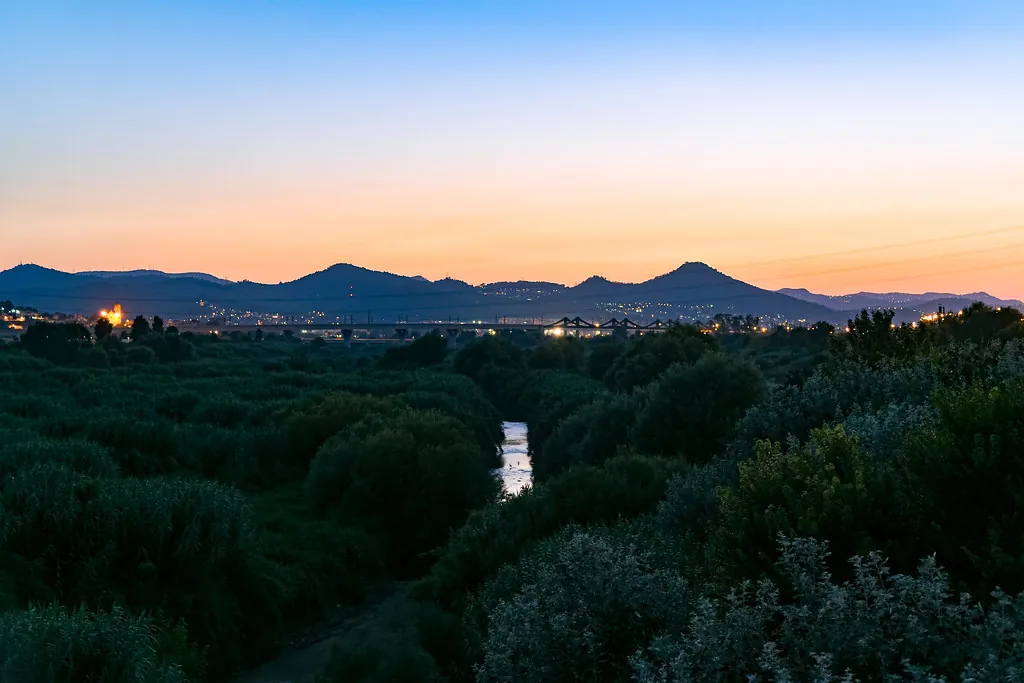
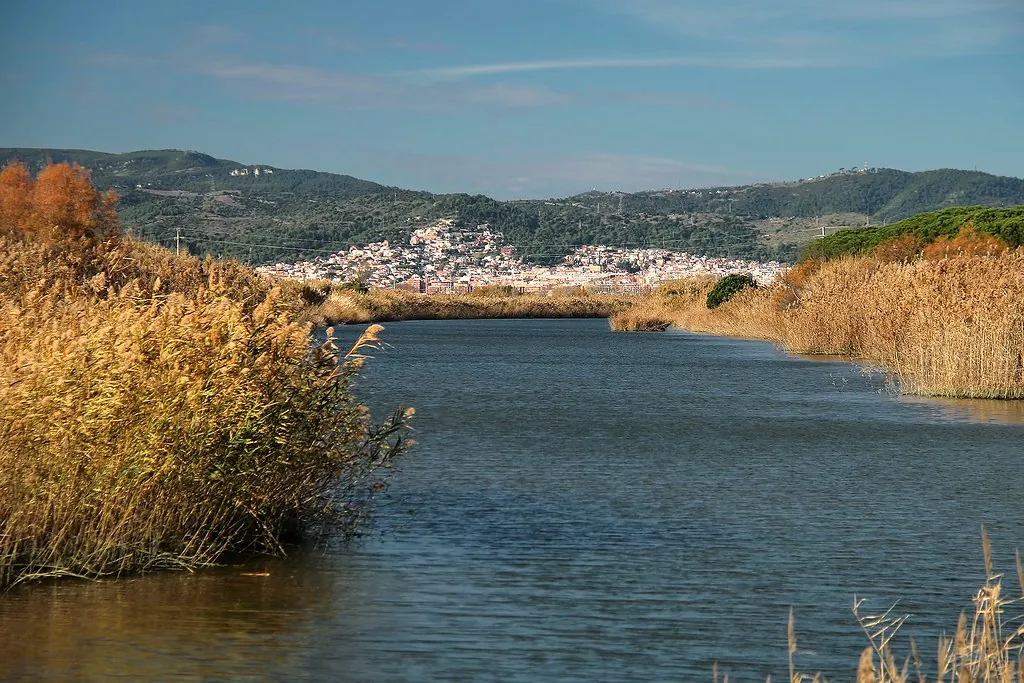
Olesa’s surroundings offer contrast rather than spectacle. Within a short distance you move from compact streets to open views, from olive groves to bare rock. The mountain is always present, though it never overwhelms the character of the town itself.
Olive Oil and Seasonal Sweets
If one element defines Olesa more than any other, it is olive oil. The local variety, known as palomar, enjoys a strong reputation in the area. Each autumn the town holds a fair dedicated to the new oil. People come to taste, to compare notes, to debate flavour and aroma. It feels less like a tourist attraction and more like a shared ritual centred on the harvest.
Food traditions follow the calendar.
During carnival, coca de llardons appears in bakeries and homes. It combines sweet dough with small pieces of pork crackling and pine nuts. On paper it sounds unusual. In practice, it tends to disappear quickly from the tray.
When autumn festivities arrive, panellets take over. These almond sweets are found across Catalonia at that time of year. After sampling a few, it becomes easier to understand why many locals balance indulgence with a walk in the hills.
These dishes are not presented as culinary theatre. They are part of the rhythm of the year, as expected as the olive harvest or the staging of La Passió.
A Short Escape with a Clear Season
Olesa is not a place that demands several days of exploration. It works well as a short escape from Barcelona: a stroll through the centre, a route into the hills, something to eat before heading back.
If there is a season that stands out, it is autumn. The olive oil campaign is under way and the mountain paths are more forgiving for walking. Summer can bring intense heat, which changes the pace of any visit.
From Barcelona, Olesa is easily reached by FGC train in under an hour, depending on the service. It is close enough to manage without a car and far enough to feel like a proper break from the city.
It is wise to check the time of the last train back. As evening falls, Montserrat turns pink in the fading light. It is easy to linger longer than planned, watching the colour shift across the rock. That is often the moment when Olesa feels most itself: quiet, grounded, with the mountain close and the scent of olives still hanging faintly in the air.