Full Article
about Vidrà
Isolated village in a spectacular mountain-and-forest setting; Bellmunt sanctuary
Hide article Read full article
A village spread across the hills
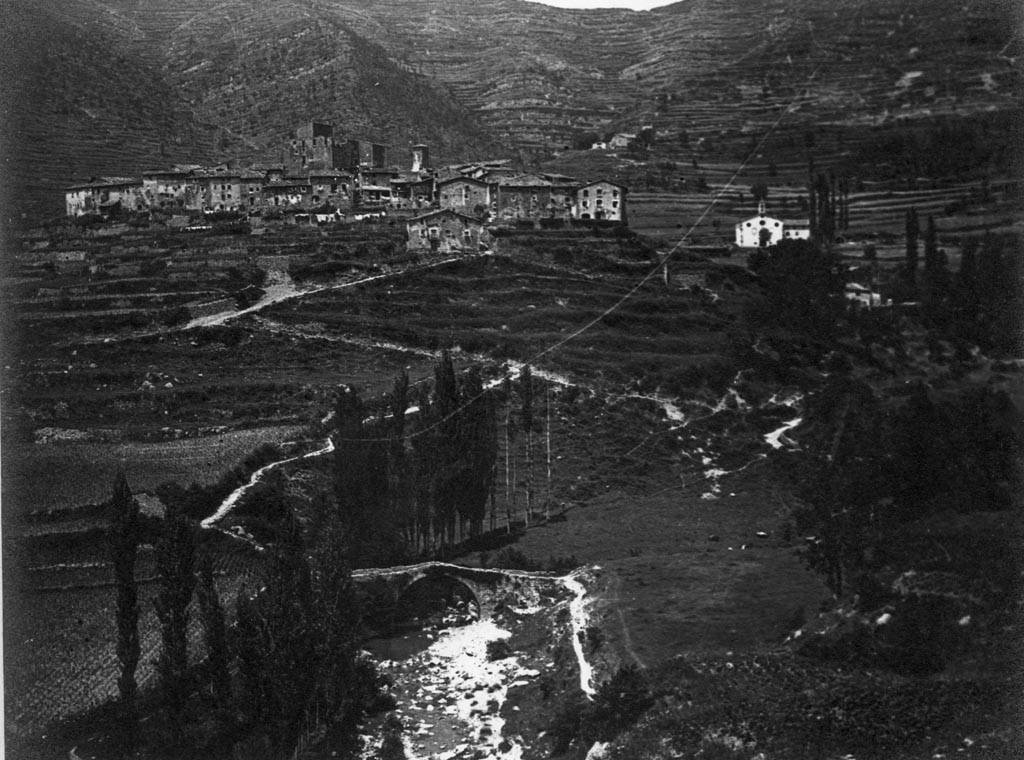
Vidrà sits in the comarca of Osona, on the northern side of the Collsacabra range, close to the boundary with Ripollès. With just over 150 residents and a very large municipal area, it lies at almost 1,000 metres above sea level. That mix of sparse population and wide territory defines the place from the outset. Rather than a compact village, it feels like a lived-in landscape.
Life here has long revolved around scattered farmhouses, known locally as masías, and mountain livestock farming. The terrain does not lend itself to extensive crops, but it suits pasture and woodland. Beech and oak trees dominate the slopes, alongside grazing land where cattle remain part of everyday life. Winters can be harsh, and fog often settles in the valleys, a familiar feature in this part of Osona.
Around Sant Martí and beyond
The small centre where the town hall stands is organised around the church of Sant Martí de Vidrà. Its origins are Romanesque, although the building seen today reflects changes from different periods. Some traces of the earlier structure remain visible, especially in the apse and sections of stonework where different construction phases can be distinguished.
Vidrà does not follow the typical pattern of a central square surrounded by streets. Houses are spaced apart, with vegetable plots, barns or small meadows between them. Walking along nearby paths, traditional masías come into view. These rural buildings feature stone entrances, sloping roofs and extensions added over time as needs evolved. Many are still working farms, so they are best observed from public paths.
Much of what draws people to Vidrà lies outside the built-up area. The surrounding landscape shifts noticeably with the seasons. In autumn, the beech woods stand out, while in spring the meadows around the farmhouses turn intensely green. Small streams descend from the hills, creating modest waterfalls that vary depending on recent rainfall.
Walking through a wooded terrain
Exploring Vidrà is best done on foot. A network of forest tracks and footpaths links the village with nearby masías and mountain passes. Many of these routes have old origins, once serving as the main connections between valleys before modern roads existed.
Some sections are wide and easy to follow, others become slippery after rain. In shaded areas, mud can linger for days. Proper footwear is advisable, and distances can feel different here compared to open, flatter landscapes. The density of the forest changes the sense of scale.
Wildlife is not always immediately visible, yet signs of it appear regularly. Tracks of wild boar can often be seen along the edges of paths, and birds of prey glide above the meadows.
Local rhythms and traditions
As in many small villages in the area, the calendar revolves around the summer festa major, usually held in August. This is the main annual celebration, bringing together residents and families who maintain ties to Vidrà even if they now live elsewhere. The atmosphere is simple and centred on the local community.
Throughout the year, activity often shifts towards nearby towns in Osona. Agricultural fairs, markets and rural gatherings take place there, reflecting the broader economic and social life of the region.
Getting there and getting around
Vidrà is located about 30 kilometres from Vic. The approach follows mountain roads, with bends and some narrow stretches along the way. The journey from Vic typically takes around three quarters of an hour.
In winter, it is worth checking road conditions, particularly after cold nights, as ice is not uncommon in higher areas. The village itself is small and can be covered quickly on foot. What takes time is exploring the network of paths that extend into the surrounding countryside.