

Full Article
about Castell de Mur
Home to one of Catalonia’s best-preserved Romanesque castles, set on a hill.
Ocultar artículo Leer artículo completo
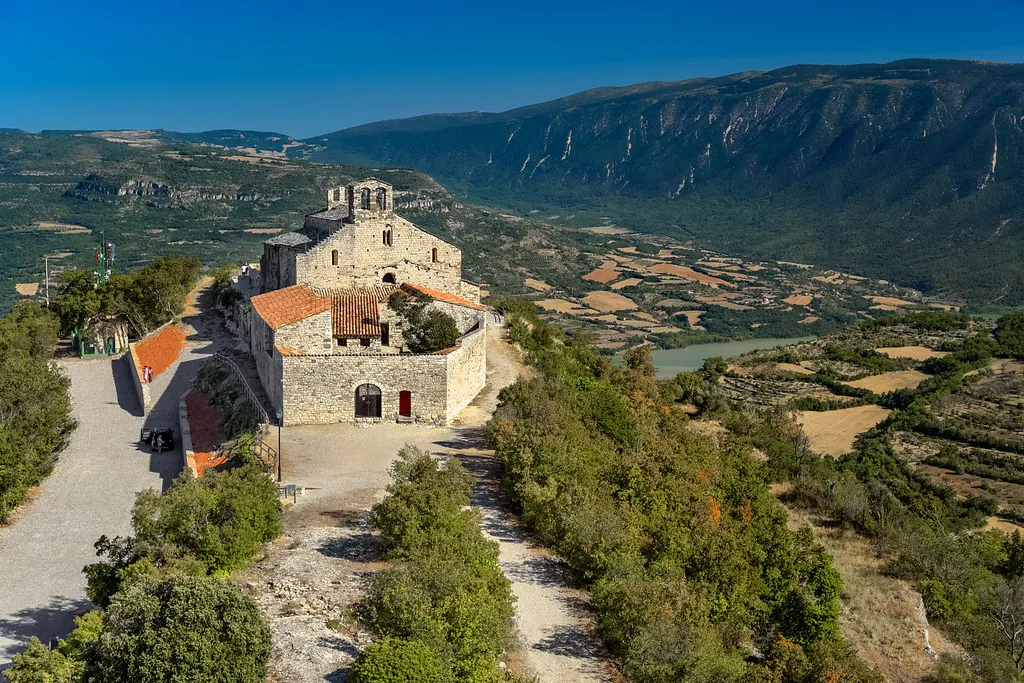
The last mobile-bar signal dies at the hair-pin above Cellers. From here to Castell de Mur it’s just the Noguera Pallaresa river glinting 300 m below and the sound of griffon vultures tearing thermal air. What looks like a smudge of ochre on the skyline is actually stone: the 11th-century castle that still gives this scatter of mountain houses its name and its reason for being.
Nine hundred metres up, the village feels higher than it sounds. Mornings arrive sharp, even in May, and the air carries pine resin rather than the usual Catalan mix of sea salt and diesel. The paved high street lasts barely two minutes; at its end a tractor shed replaces the souvenir shop that never arrived. That absence is the point. Castell de Mur survives on almonds, kitchen gardens and the handful of grandchildren who return each August rather than on coach parties or cruise-ship spill-over.
Getting up, getting in
The final four kilometres from the C-147 are single-track, tarmac nibbling at cliff edge. Passing places are signed “PAS”, painted on half-buried oil drums. A normal hatchback copes, but leave the caravan in Cellers; the castle turn-off includes a 16 per cent ramp and a gate that swings open only when the guard has finished coffee. Brits who ignore the warning on Google Reviews spend their day reversing round hair-pins while Audis queue behind.
Entry to both castle and collegiate church of Sant Miquel has to be arranged the previous afternoon. Ring the Tremp tourist office (+34 973 65 10 20), give your name, and a key is left in a coded box bolted to the stone. Weekend visitors who forget this routine end up photographing a locked wooden door and blaming “Spanish bureaucracy” on TripAdvisor.
Inside, the keep is stripped to walls, but English Heritage veterans will recognise the floor plan: a triangular enceinte hugging the crag, arrow slits aimed down-river toward the only approach. Metal walkways clank over the void; bring a torch because the upper stair is pitch-black at noon. From the parapet the Terradets reservoir appears as a shard of bottle-green between limestone jaws, empty of kayaks until late June when the adventure outfitters from Cellers open for business.
A church without queues
Sant Miquel is lower, calmer, darker. Two fat candles flicker beneath an 11th-century fresco of St Michael weighing souls; the blue pigment has oxidised to turquoise, the red has blistered like sunburnt skin, yet the gold leaf on the archangel’s wings still catches stray shafts of sun. Because the fresco survives in situ instead of behind museum glass, you notice details the MNAC catalogue skips: the tiny devil with a set of brass scales, a merchant’s face scratched out during some long-forgotten feud. The caretaker, usually a woman in an apron from the house opposite, will unlock the bell tower if asked; the ladder is steep, the view north toward the Montsec ridge worth the wobble.
Below the church the village performs its daily shrug. Bread arrives at 10:15 in a white van that double-parks, horn blaring. Old men shuffle dominoes onto a card table outside the bar-which-is-also-the-grocery. Children’s voices echo from the school’s single classroom; enrolment this year is twelve. There is no cash machine, no estate agent’s window, no menu chalked in Comic Sans. What you get instead is a fifteen-minute loop of alleyways where laundry flaps from wrought-iron balconies and cats reclaim the sun-warmed stones.
Water, rock and sky
Castell de Mur turns its back on the coast; the nearest beach is two hours away in Lleida. Here the landscape is vertical. Below the village the river has been dammed to form the Terradets reservoir, a 15-minute drive down the switch-backs. British families base themselves at Hotel Terradets for the pool-sized relief it offers after a hot climb; mornings are spent on stand-up paddle boards or guided via-ferrata routes that spider across the cliff opposite the hotel. The water is chilly until July, but the shade arrives early when the sun slips behind the canyon wall, so children can paddle without turning lobster.
Walkers head the other way, up. A way-marked path leaves the castle gate, contours through holm-oak, then climbs 600 m to the Capolatell summit. The round trip takes three hours, just enough to earn a sandwich and to watch lammergeiers tilting their diamond tails over the void. Spring brings orchids and the smell of thyme; October turns the oak brush copper and makes the perfect excuse for a fleece. Snow can fall by December, and the last 4 km of road becomes a bob-run. If you’re on a winter break, carry chains and accept that the key-box may be empty; the guard sometimes decides the risk isn’t worth the effort.
What to eat when there’s no restaurant
Castell de Mur itself has no formal dining room. The bar opens at seven for coffee and serves bocadillos until the bread runs out. For anything more ambitious you drive eight minutes to Guàrdia de Noguera where Restaurant Terradits grills mountain lamb over vine shoots and pours a Costers del Segre red that sits stylistically between Rioja and Rhône. Vegetarians survive on escalivada (smoked aubergine and peppers) and the local goat cheese, tupí, which tastes like a milder Glastonbury goat’s cheddar beaten into a pot with olive oil and thyme honey.
Buy supplies before you leave Tremp: market day is Tuesday, stalls set up round the grey cathedral. Look for greyish sausage called llonganissa de pallars, less fiery than chorizo and brilliant with scrambled eggs. A 250 g wedge of tupí costs about €6; the cheesemaker wraps it in waxed paper and writes the date in biro. If you’re self-catering, pack a corkscrew; Spanish supermarkets sell decent wine but never include the screw-pull.
The honest verdict
Castell de Mur is not “undiscovered” – Spanish school parties arrive in May, and August weekends fill with Barcelona families who know the key routine. Still, foreign licence plates remain rare enough that the tractor driver will wave you past. Come for the eagle-view, the silence after ten, the sense that mainland Europe can still feel empty. Don’t come for craft-beer taps, soft-play zones, or anywhere to spend a rainy afternoon beyond the hotel lounge. Check the forecast, phone ahead for the key, and fill the tank in Cellers because the village pump closed in 2019. Manage those three things and the place will reward you with a kind of stillness the Costas lost decades ago; get them wrong and you’ll spend the day hungry, locked out and wondering why you left the coast.