Full Article
about Conca de Dalt
Large municipality with spectacular caves and charming villages like Rivert.
Ocultar artículo Leer artículo completo
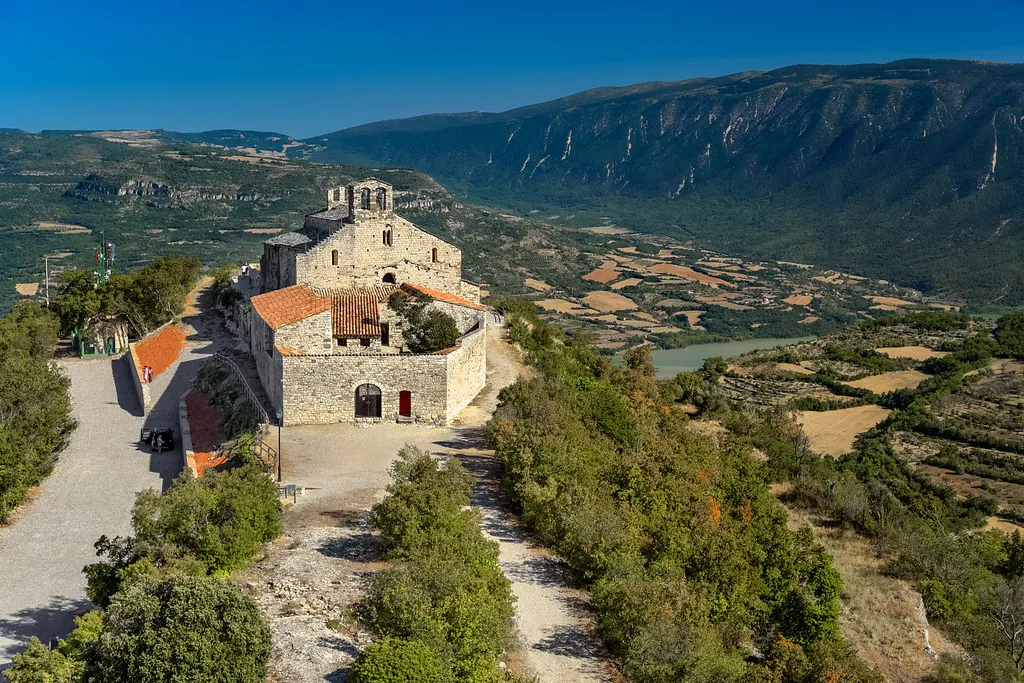
The church tower at Sant Pere d'Aramunt appears to float above morning mist, its weathered stones catching first light while the reservoir below remains in shadow. This is Conca de Dalt's daily theatre: fourteen stone hamlets scattered across ridges and ravines, where 436 souls maintain what their grandparents built at 500 metres altitude. No single village centre exists here—just a municipality spread thin across Pyrenean foothills, each cluster of houses clinging to whatever flat ground the mountains permit.
Stone Churches and Empty Houses
Romanesque architecture dominates these valleys, though not in the cathedral sense. Each hamlet built its own modest church between the 11th and 13th centuries, using local limestone and whatever architectural knowledge travelled across the passes. Sant Cristòfol at Claverol retains its original carved capitals. Sant Martí d'Hortoneda still shows medieval fresco fragments where damp hasn't reached. Sant Serni de Baiasca stands isolated on a promontory, its apse cracked from centuries of freeze-thaw cycles yet structurally sound.
These aren't museum pieces. Doors remain unlocked. Local families still carry flowers for Sunday services, though congregations might number twelve including the priest. The churches work as orientation points for walkers—their towers visible across valleys where Google Maps shows blank space.
Between these active villages lie the abandoned ones. Vilamitjana keeps its street pattern intact though roofs collapsed decades ago. Sensui's stone terraces now support only wild herbs. Walking through these empty quarters reveals the region's recent history: families left for Barcelona and Lleida factories during the 1960s, never returned, and mountain winters completed the demolition work.
Reservoir Views and Forest Tracks
The Sant Antoni reservoir transformed this landscape in 1913. What had been a narrow river valley became a water body stretching 15 kilometres, its turquoise depths covering medieval mills and forcing hamlets to rebuild higher up. The dam serves Barcelona's drinking water, controlled from a functionalist tower that looks distinctly out of place beside Romanesque chapels.
Forest tracks circle the water, climbing through holm oak and Scots pine. Marked trails connect Aramunt to Hortoneda (3.2 kilometres, 200-metre ascent) and onward to Claverol, forming a half-day circuit with reservoir views. The paths follow mule tracks—stone-paved in sections, eroded elsewhere. Hiking poles help on descents where winter rain has washed away substrate.
Mountain biking works better here than road cycling. Asphalt stops at hamlet entrances; everything beyond is gravel or concrete agricultural tracks. The climb from La Pobla de Segur to Conca de Dalt gains 400 metres over 12 kilometres—manageable on an e-bike, character-building on a standard machine. Puddle depth after rain can surprise: these tracks service forestry vehicles, not tourist traffic.
When Eagles Circle and Restaurants Close
Birdlife rewards early starts. Golden eagles hunt the ridge thermals from 9am onwards. Griffon vultures arrive later, riding afternoon updrafts. The rare lammergeier occasionally visits from higher Pyrenees colonies—local farmers know the distinctive silhouette and will point out flight paths if asked, usually in Catalan with expressive hand gestures.
Food requires planning. Conca de Dalt contains no hotels and perhaps three restaurants, their opening hours tied to local work patterns rather than tourist demand. The one in Aramunt serves traditional pallaresa cuisine—mountain stews, local lamb, wild mushrooms when in season—Thursday through Sunday lunchtimes only. Calling ahead isn't merely advisable; it's essential. The proprietor might close early if no bookings materialise by noon.
Better accommodation exists down-valley at La Pobla de Segur or Tremp, both twenty minutes' drive and served by Barcelona-Lleida trains. These small towns offer proper hotels with English-speaking staff, evening restaurants, and petrol stations that stay open past 6pm. Day-tripping from here makes practical sense unless you've arranged private rental accommodation within Conca de Dalt itself.
Winter Silence, Summer Revival
Climate varies significantly with season. Summer temperatures reach 30°C in the valley bottoms, though ridge walks catch cooling breezes. August brings the only genuine crowds—returning families for village fiestas, plus Barcelona second-home owners. Even then, "crowded" means perhaps fifty people at the Saturday market.
Winter transforms everything. Snow falls intermittently above 600 metres from December through March. Roads stay passable—the regional government maintains gritting services—but walking tracks ice over. Many hamlets feel deserted; some restaurants close entirely January through March. The silence becomes absolute, broken only by church bells and the occasional chainsaw as residents stock firewood.
Spring and autumn provide the sweet spots. April brings wildflowers to abandoned terraces. October lights the beech forests across the reservoir. Temperatures sit comfortable for walking—15 to 20°C—and accommodation rates drop below summer pricing. Most importantly, local people have time to talk, sharing directions to ruined villages or explaining which forest tracks lead to eagle nesting sites.
Getting There, Getting Lost
Access requires private transport. Barcelona airport sits 200 kilometres south—drive time three hours via A-2 and C-13 motorways. Lleida, halfway, makes a sensible stop for supplies. Public transport reaches La Pobla de Segur twice daily from Barcelona, but Conca de Dalt's hamlets lie five to fifteen kilometres uphill from the railway station. Taxi services exist but require advance booking; many drivers won't ascend rough tracks to individual settlements.
Navigation needs backup methods. Mobile coverage drops in valleys. Paper maps remain essential—the Catalan government's 1:25,000 series covers the area accurately. GPS coordinates for specific churches help when tracks divide at unmarked junctions.
The territory rewards patience. Visitors expecting facilities will frustrate quickly. Those comfortable with self-sufficiency—carrying water, packing lunch, accepting that shops close unpredictably—find a landscape where medieval churches mark working communities, where eagles hunt above abandoned terraces, and where the Pyrenees gradually surrender their harsh grandeur to Mediterranean foothills. Just remember to phone before setting off for that restaurant lunch.