Full Article
about La Torre de Cabdella
Municipality of Vall Fosca; cable car
Hide article Read full article
A valley that wakes up slowly
The first sound you notice, before the sun crests the ridge, is water. It’s not a river’s rush, but the steady, metallic trickle through a sequia, an irrigation channel cut into the hillside. Then a wooden door groans on its hinges, and a diesel engine labours up the road into the Vall Fosca. The air smells of cold stone and, if the wind is right, woodsmoke from a kitchen fire. The houses here are built from a dark, almost blue slate, their roofs made from the same material, so they seem to grow from the mountain itself.
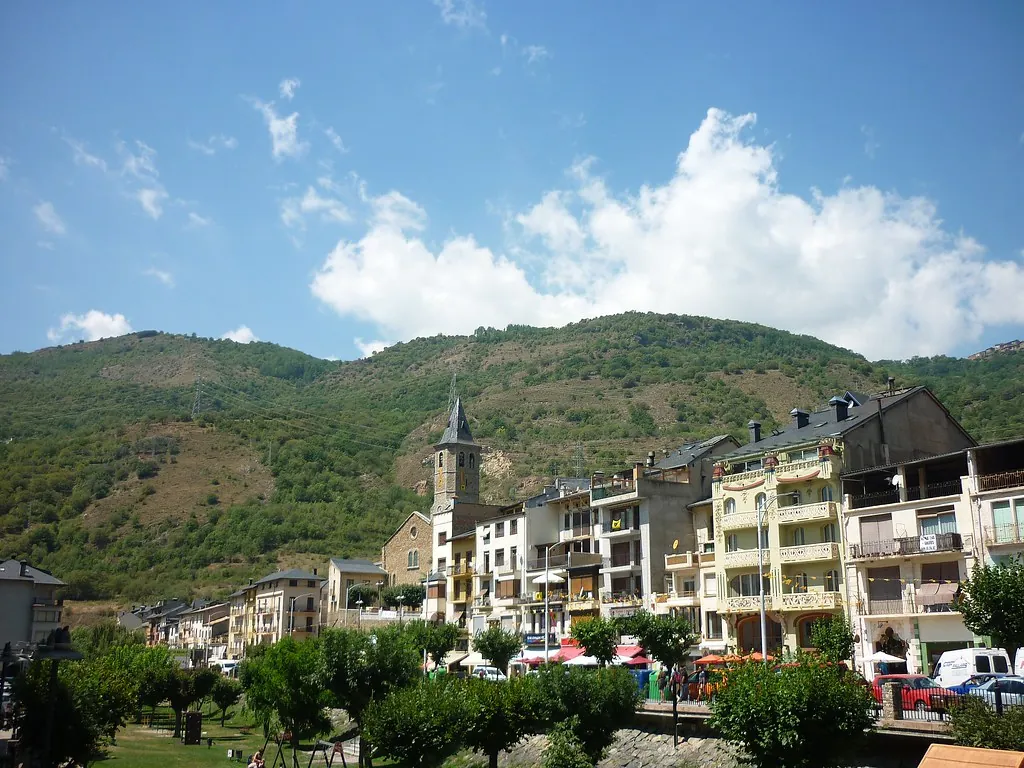
La Torre de Cabdella is less a town and more a scattering of stone. It’s a municipality holding villages like Oveix, Paüls, and Espui, each separated by hay meadows and pockets of pine. Look closer and you’ll see the other constant: small concrete weirs, iron pipes running along cliffs, channels diverting stream water. This valley has been plumbed for over a century, its water sent down to generate light for Barcelona long before the road was properly built.
The landscape holds this duality without fuss. Hydroelectric conduits run beside old livestock paths; a power station sits in a village as if it were another barn. It all just belongs.
Come July or August, the rhythm shifts. By ten in the morning, a line of cars snakes up the single road towards the lakes. If you want stillness, you have to move with the dawn.
The hum in the mountain
In Capdella village, the old power station is now the Museu Hidroelèctric. Inside, it’s cool and smells of machine oil and damp concrete. The original turbines are still there, enormous iron things that hum with a latent vibration even when switched off. You don’t need to understand volts or alternating current to feel the ambition of it—to imagine dragging this machinery up here by mule and cart.
The real scale of the project reveals itself further up the valley at the Sallente reservoir. Here, a transport system—a kind of inclined railway—can lift you several hundred metres in minutes. It runs in summer, but dates are fickle; you must ask at the information point in Capdella. When you step off at the top, the air has thinned and cooled. The valley opens into a bowl of rock where lakes sit like pieces of scattered sky.
Stone and bell
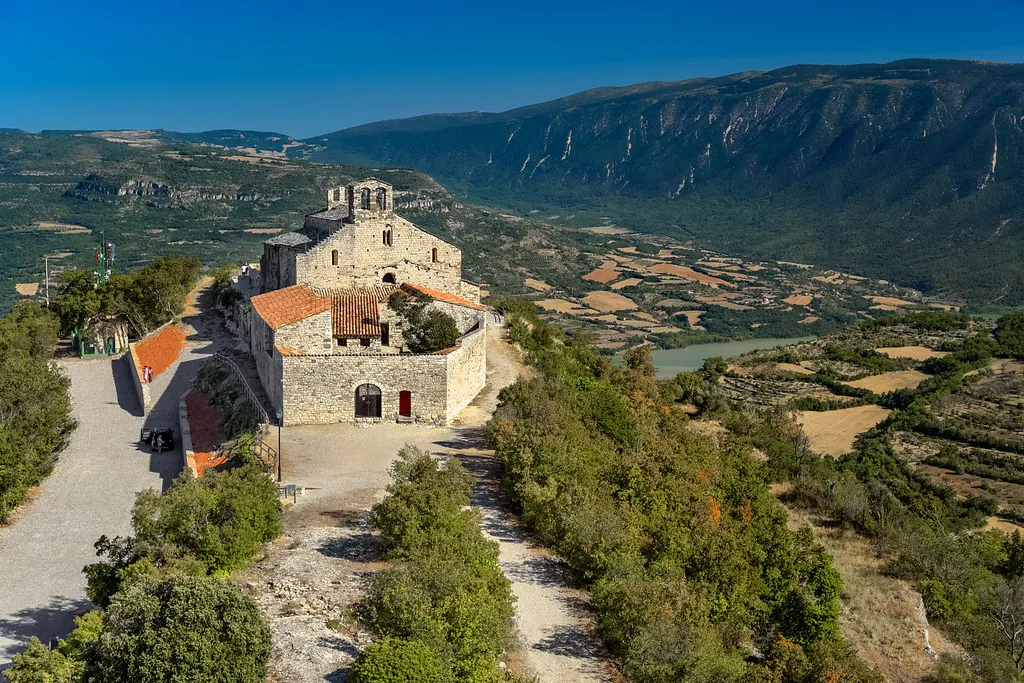
The church of Sant Martí in La Torre has a Romanesque core, though you can see where later hands added to it. Its bell tower is the spine of the day. The sound at noon is deep and slow, rolling across the valley floor to hit the opposite slope.
There’s no single sight to check off. The smaller villages are for drifting. In Oveix or Paüls, you might follow a path behind a house and find a vegetable garden by the river, tomatoes staked with hazel branches. Neat stacks of split beechwood lean against every wall. Even in high season, these hamlets keep their quiet.
Parking is an afterthought here. Streets narrow to stairways. It’s easier to leave your car where the tarmac ends and walk in.
Above the treeline
The upper Vall Fosca bleeds into the Aigüestortes park. The shift is abrupt: one moment you’re in pine forest, the next you’re on open granite, walking past lakes so clear you can see the stones on their beds twenty feet down.
Spring here is loud with meltwater. Every gully has a temporary waterfall. By late September, the noise subsides, replaced by the scent of damp leaves and the yellow glow of poplar trees along the streams. These autumn days, when the high pressure settles in, are perhaps the best time for walking.
From Sallente lake, paths climb to refuges and a chain of estanys. Many are natural; others are held by century-old dams. The walk connects them all—the glacial hollows and the human adjustments—without drawing a line between.
On foot
You can spend a week here and not run out of path. Some routes simply connect villages, following old ways through fields where you step aside for a farmer on a tractor. Others are serious ascents onto ridges above 2500 metres.
The waymarks are clear, but this is high mountain country. A sunny start can turn to thick fog by noon, obscuring cairns and turning lakes into featureless grey voids. Always carry a map and know when to turn back.
If you visit in August, be on the first shuttle up to the lakes. By midday, the car parks are full and the sense of space diminishes. Afternoon storms are frequent; you can watch them build over Pic de Subenuix from around two o’clock.
Winter brings a different silence. There are no ski lifts, but when snow covers the lower trails, you can follow them on snowshoes up to where the valley closes in. Check conditions with locals first; some avalanches sweep down those open slopes above Espui.
La Torre de Cabdella reveals itself in slowness. In watching afternoon light turn the slate roofs copper, or in hearing that evening trickle of water in the sequies once more. Time isn’t told by the clock here, but by where the shadow falls on Mont-ros peak