Full Article
about Llimiana
Cliff-top village with spectacular views over the Terradets reservoir.
Hide article Read full article
A village that moves at its own pace
Some places slow everything down without trying. Llimiana does exactly that. You park, look around, and it becomes clear that nothing here is in a hurry. Tourism in Llimiana is simply that: a small village in the Pallars Jussà where the landscape matters more than any plan.
Around 130 people live here. Stone houses, narrow streets, and a noticeable quiet define daily life. It is not a place of packed schedules or busy shopfronts. It feels closer to sitting on a bench and looking out over the valley, realising time has passed without checking your phone.
The road in and a first look around
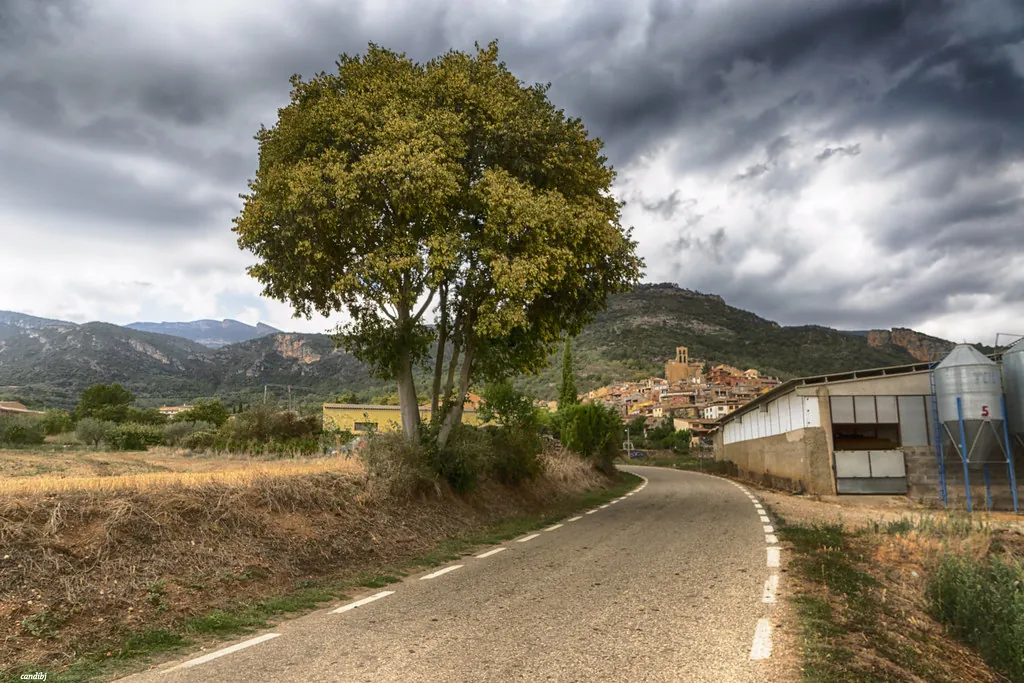
Llimiana stands at roughly 770 metres above sea level, set in an open position above the surrounding land. The road reaches the village without major difficulty, though it includes the usual bends found in this part of the Pre-Pyrenees. Nothing extreme, but it rewards a steady approach.
On arrival, the layout feels unchanged. Streets remain tight, houses are built close together, and thick walls define the architecture. It does not come across as a place reshaped for visitors. It continues to function as it always has, with the option to step in briefly and observe.
Walking through the centre does not take long. In about half an hour, most of it has been covered. That brevity works in its favour rather than against it.
A natural viewpoint over the embalse de Sant Antoni
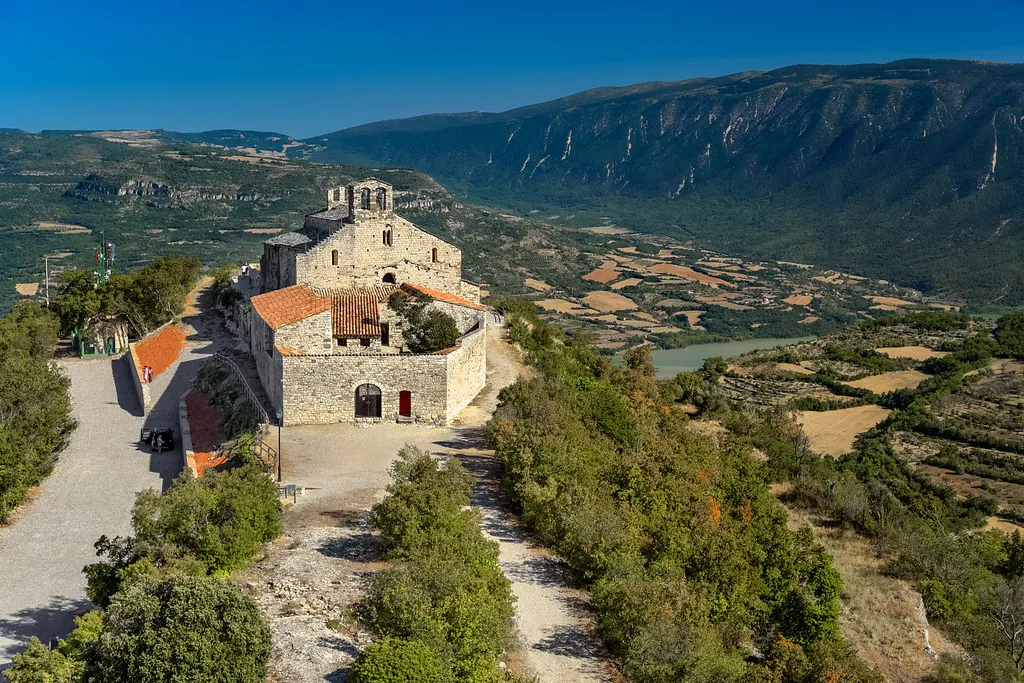
Llimiana makes the most sense when you notice its position. From several points in the village, the view opens out towards the embalse de Sant Antoni. The reservoir sits in the distance like a wide, reflective surface placed across the valley.
Near the edge of the built area, natural viewpoints appear. These are not formal viewing platforms. The land simply drops away, and the valley unfolds ahead.
Beyond the water, the outline of the Montsec comes into view. It forms a strong line of rock cutting across the horizon. It is the sort of landscape that invites a pause, if only to take in the scale and understand the setting.
Sant Pere and traces of the past
At the centre of the village stands the church of Sant Pere. Its style is simple Romanesque, with grey stone walls and a bell gable that can be recognised from a distance.
It is not a monumental structure. Instead, it gives the impression of a building designed to last for centuries without decorative excess. Stone, balanced proportions, and little more define its character.
Inside, the same approach continues. The space is restrained. Wood and stone dominate, with light entering gently. Nearby, prehistoric remains have been found in rock shelters in the area. These traces point to a much earlier human presence in this part of the Pallars, long before Llimiana itself existed.
Walking the surrounding landscape
The municipality is surrounded by holm oaks, Mediterranean scrub, and occasional patches of pine. Paths leaving the village often follow old routes. For centuries, they connected small communities, fields, and hermitages.
These are quiet trails. The most common sounds come from footsteps on the ground or birds near the reservoir.
From Llimiana, it is also possible to plan longer outings towards the Montsec area or head to the congosto de Mont-rebei. There, the river has carved a very narrow passage between rock walls. Many people combine both in a single day, though it helps to judge time carefully.
The secondary roads of the Pallars attract cyclists as well. They are narrow and carry little traffic, better suited to enjoying the surroundings than chasing speed.
Traditions and everyday life
Llimiana continues to operate as a small village. The Fiesta Mayor dedicated to Sant Pere usually brings together residents and those with family ties to the area. Processions, traditional music, and gatherings in the square shape the celebration. It is not designed to impress on a large scale, but it feels rooted in place.
During summer, activities sometimes appear that relate to traditional trades, along with small markets where local producers sell what they have worked on throughout the year.
Food follows the same straightforward approach. Mountain cooking dominates, with cured meats, local olive oil, and hearty dishes in colder months. It is direct and without complication.
Is it worth the trip? For anyone looking for a packed itinerary, probably not. For those who prefer to stop, walk for a while, and take in the landscape at a slower pace, Llimiana fits well. It does not try to impress. It simply exists as it is, and that can be enough.