Full Article
about Sarroca de Bellera
Gateway to Vall Fosca; cliff-top village with devil’s bridge
Hide article Read full article
Sarroca de Bellera es como llegar a casa de un familiar mayor un domingo por la tarde. No hay nada preparado para tu visita, la televisión está puesta y la vida sigue su curso. Tú eres el que ha aparecido. Eso, en un pueblo del Pallars Jussà con poco más de cien habitantes, es exactamente lo que encuentras: calles vacías, el sonido de un tractor a lo lejos y la sensación clara de que estás de paso en un lugar con sus propios asuntos.
No vengas buscando tiendas de souvenirs o carteles explicativos. Aquí las casas son de piedra oscura, con tejados de pizarra y ventanas pequeñas, diseñadas para aguantar el frío a 1.100 metros, no para hacer bonito. El silencio es el normal de la montaña, roto por algún perro o una puerta al cerrarse.
La iglesia y el casco antiguo: solidez, no espectáculo
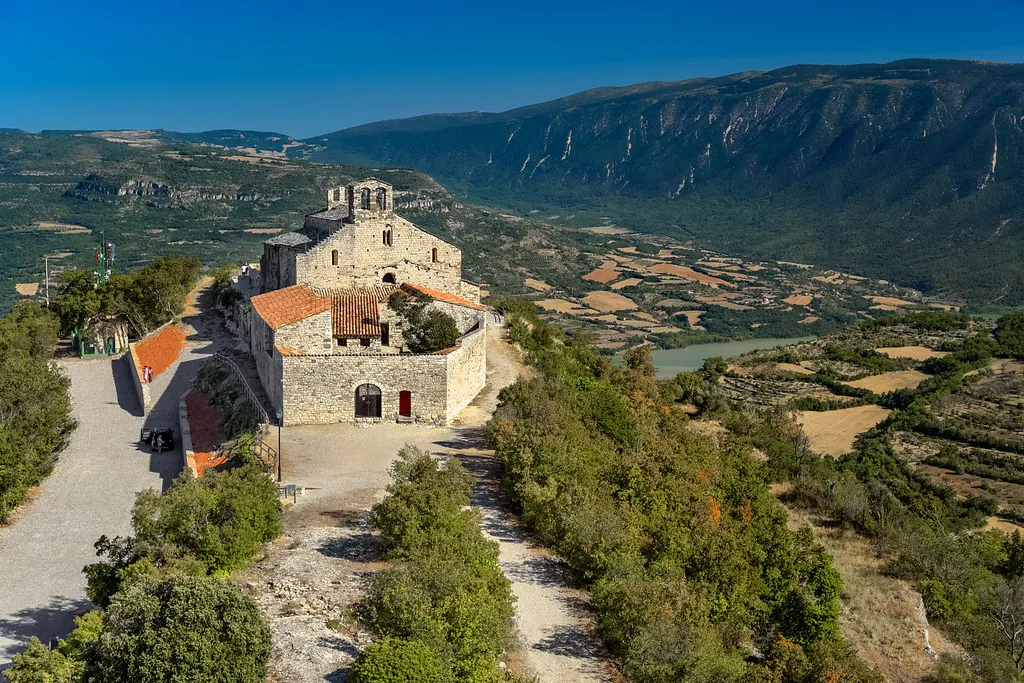
La iglesia de Sant Martí es el edificio que más llama la atención. No es enorme ni especialmente decorada; es robusta. Tiene unas paredes gruesas que hablan de románico (se la data entre los siglos XI y XII) y una torre del campanario que parece clavada ahí desde siempre. Da la sensación de que estaba aquí mucho antes de que hubiera carreteras para llegar.
Dentro se pueden ver restos de pinturas murales, bastante desgastadas por el tiempo. Eso si está abierta, cosa que no siempre pasa en pueblos tan pequeños. Es uno de esos detalles que te recuerdan que no estás en un museo.
El núcleo antiguo se recorre en menos de una hora si vas rápido, pero conviene hacerlo lento. Fíjate en los dinteles de las puertas, gastados por siglos de uso, o en algún escudo borroso en una fachada. No hay nada señalizado; es como husmear en la historia sin vitrina.
Bordas, prados y esa luz del Pallars
Al salir del pueblo, el paisaje se abre. Aparecen las bordas, esas construcciones tradicionales de piedra para el ganado o los aperos. Algunas están medio caídas; otras siguen en uso. Son la prueba física de cómo se ha vivido aquí: de la agricultura y la ganadería.
Los prados se mezclan con bosques y las cuestas suben hacia las sierras. No hay un mirador oficial con barandilla; la vista es continua y amplia. En un día claro, los Pirineos al fondo parecen estar al alcance de la mano. Es ese tipo de paisaje que no te cansas de mirar.
Senderos (de los de verdad) y bicis para fuertes
Aquí no hay senderos perfectamente balizados con colores fosforitos. Hay caminos tradicionales, pistas forestales y veredas que conectan Sarroca con otras aldeas del municipio o con los pastos altos.
Algunos paseos son suaves, ideales para andar sin más pretensión. Otros se ponen serios según ganas altura y te metes en el bosque. El terreno manda.
Para los ciclistas, las carreteritas secundarias son una tentación por lo vacías que están… hasta que recuerdas dónde estás. Las subidas son largas y constantes; esto no es terreno para rodar suave.
Si vas tranquilo y en silencio, es posible ver fauna: un rebeco en alguna pedrera, buitres o águilas planeando sobre las laderas. No es un safari organizado; son encuentros fugaces que pasan cuando bajas el ritmo.
Comida contundente: para gente que trabaja
La cocina aquí es directa y pensaba para reponer fuerzas. El cordero es habitual. Los embutidos caseros también, herederos de la matanza tradicional. Cuando baja el termómetro aparecen los guisos potentes.
Un plato muy local es el trinxat, una mezcla de patata, col y carne típica del invierno. Sencillo pero con fundamento. Los quesos del Pallars Jussà suelen tener carácter fuerte (muchos son de oveja o cabra), pero no siempre son fáciles de encontrar si solo pasas unas horas. Es producto local en sentido estricto.
Fiestas y vida local: San Martín manda (pero en verano)
La celebración principal gira alrededor del patrón, San Martín, que toca en noviembre. Pero como pasa en muchos pueblos pirenaicos, la fiesta grande suele trasladarse al verano, cuando vuelve la gente que vive fuera. Entonces la plaza se anima, hay comidas comunitarias y se recupera por unos días un bullicio ya perdido.
El resto del año, Sarroca funciona como lo que es: una pequeña comunidad donde el día a día transcurre sin aspavientos. No hay programa continuo de actividades ni “experiencias”. Si buscas eso, tu visita será corta. Si lo que valoras es observar cómo sigue funcionando un pueblo donde la piedra, el pasto y esa luz clara de montaña marcan todavía el ritmo, entonces le habrás pillado el punto