Full Article
about Senterada
Where two rivers meet; gateway to the Vall Fosca
Hide article Read full article
Senterada: Un pueblo que no se ha enterado de que es pequeño
Senterada está a unos 25 kilómetros de Tremp, en el Pallars Jussà. Viven unas 160 personas, pero esa cifra te la dice poco. Es uno de esos sitios donde el término municipal es más una idea que un núcleo compacto: un puñado de aldeas desperdigadas por el valle, como Llesp o Montcortès, que funcionan más como vecindarios separados por campos que como un pueblo al uso.
Llegar aquí tiene ese punto de ir a ver a un familiar mayor. No esperes tiendas de souvenirs ni carteles con flechas. Espera calles donde el sonido más común es el de tus propios pasos, casas de piedra con tejados de losa que parecen crecer del suelo y, sobre todo, silencio. El tipo de silencio que hace que bajes la voz sin darte cuenta.
Las iglesias: piedra, no postal
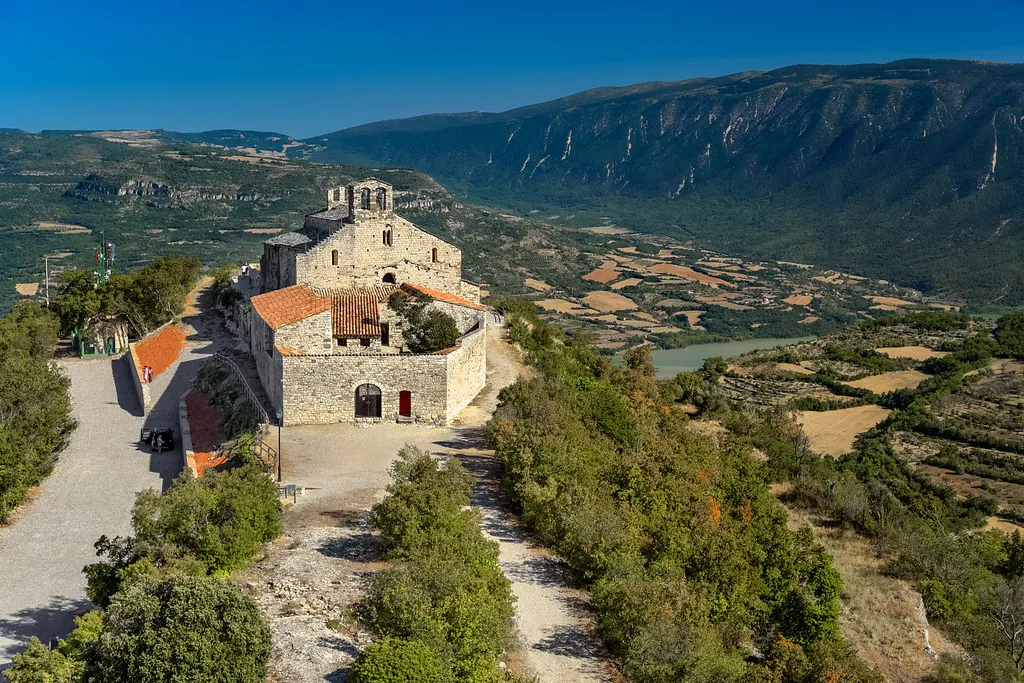
Si algo une a estas aldeas son sus iglesias románicas. Olvídate de catedrales; estas son del tipo funcional y austero, construidas para la gente del valle. La de Sant Martí de Llesp es de las más antiguas. Es pequeña, de una sola nave, y dentro aún se ven restos de pinturas murales desvaídas. No es espectacular, pero entrar tiene ese peso tranquilo de los lugares que llevan siglos en uso.
La de Sant Pere en Montcortès es distinta. Tiene una torre cuadrada que sirve como faro visual desde media ladera. Si subes un poco por detrás del pueblo (sigue el camino que parece llevar a ningún sitio), te das cuenta de su verdadera función: era el punto de referencia para todo el que trabajaba en esos campos. Aquí el románico no es arte histórico; era la señalización del siglo XII.
Pasear sin rumbo (es la única manera)
Recorrer Senterada no tiene checklist. Tienes que cambiar el chip y fijarte en lo pequeño: los dinteles de piedra bien labrada en una puerta ahora cerrada, los balcones de madera carcomida por el sol en Llesp, los abrevaderos junto al camino. En Montcortès, las calles se enrollan en cuesta hasta la iglesia.
No son pueblos-museo. Ves corrales de piedra seca que siguen usándose para leña, huertos escalonados en la ladera y fuentes donde todavía se llena una botella. El encanto, si se le puede llamar así, está precisamente en eso: en que nadie se ha molestado en ponerles un cartel explicativo.
Un paisaje que no necesita filtros
El entorno es puro Prepirineo interior: barrancos secos, bosques de pino silvestre y esas lomas peladas salpicadas de bordas abandonadas. Las vistas anchas llegan desde cualquier punto alto. Hacia el sur se recorta la sierra del Montsec, y al norte se intuye la mancha azul del embalse de Sant Antoni.
Aquí no verás miradores con barandillas. Te topas con la vista porque sí, desde una curva del camino o al salir de una callejuela. Y suele estar vacía. El sonido habitual es el viento y, con suerte, el planeo circular de los buitres leonados buscando corrientes térmicas.
Cómo organizar la parada (sin organizar nada)
Si vienes por la zona –quizá hacia el Valle de Arán o haciendo la carretera entre Tremp y Sort–, merece un alto. Mi fórmula probada: para primero en Llesp, pasea sus dos calles principales hasta la iglesia. Después, coge el coche y sube a Montcortès (son minutos). Allí déjate llevar por las cuestas. No hay pérdida; todo lleva a la plaza o a las afueras. En una hora tranquila has captado la esencia del lugar.
Lo mejor suele ser lo inesperado: encontrar abierta la puerta de una ermita, una senda entre huertos que invita a caminar cinco minutos más, o simplemente sentarte en un banco de piedra a no hacer nada. Senterada funciona así: te da lo justo para desconectar, pero sin pretender entretenerte.
Para llevarse puesto
Este no es un destino final. Es una pausa respiratoria entre curvas de carretera comarcal. Vienes, caminas, ves cómo vive un valle que ha reducido su ritmo sin dramatismos, y sigues tu camino. Se agradece encontrar sitios así: que existen sin necesidad de gustarte, y a los que puedes volver dentro diez años para encontrarlos exactamente igual. O casi