Full Article
about Alins
High-mountain municipality that includes Pica d'Estats; a paradise for hikers and nature lovers.
Ocultar artículo Leer artículo completo
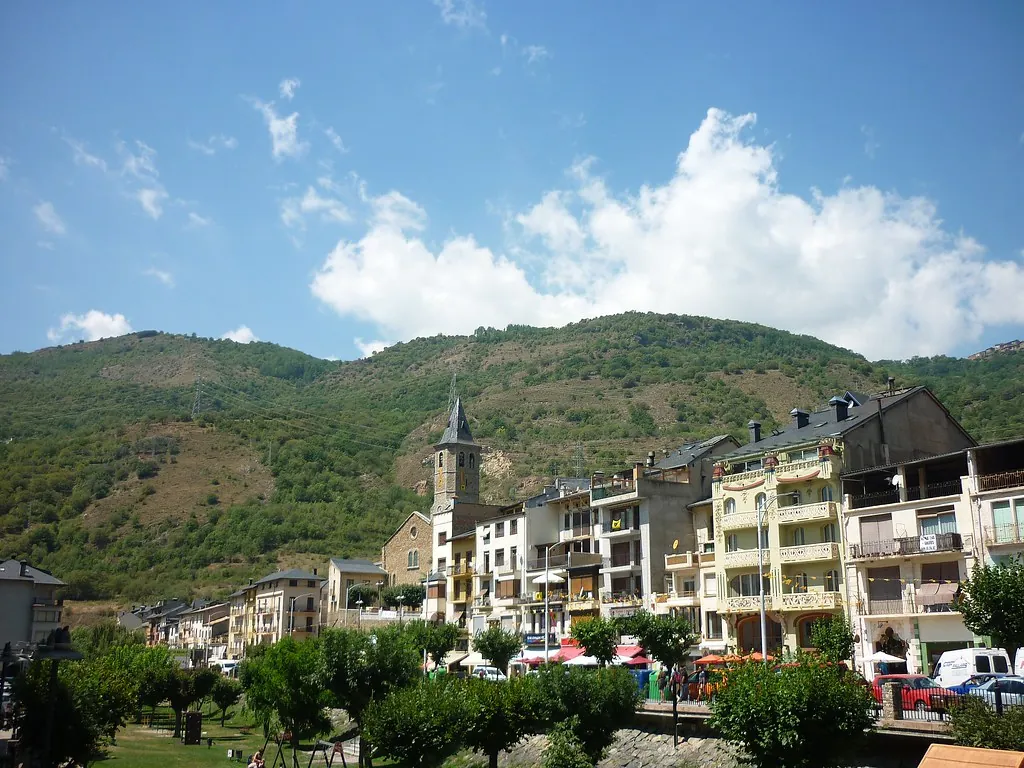
The church bell in Alins strikes thirteen. No one hurries to correct it; the village has kept its own time since the 12th-century slate roofs went on. At 1,048 m, the air is thin enough to make a Londoner light-headed after the first climb from the single-track road, and quiet enough to hear a red kite’s wings cut the sky above the Noguera de Vallferrera.
This is the Pallars Sobirà, the uppermost wedge of Catalan Pyrenees that guidebooks usually skip on the dash to Andorra. Alins—282 souls spread across five hamlets—works as its unshowy headquarters. Stone, timber and black slate are not postcard props; they are what survives when the thermometer scrapes –15 °C and three metres of snow press down on roofs. The village’s highest building is not a hotel but the Romanesque tower of Sant Pere, still holding medieval fresco fragments behind a wooden door that sticks in July humidity.
Stone, Water and the Memory of Pasture
Walk downhill from the church and the lane dissolves into a pack-horse track that once carried salt from the Segre valley to France. Slate gutters run with snow-melt even in June; the water tastes faintly of iron and costs nothing. Houses here face south-east, backs turned to the north wind, woodpiles stacked chest-high like defensive walls. Most doors stay unlocked—part habit, part the knowledge that the nearest traffic light is 40 km away in Sort.
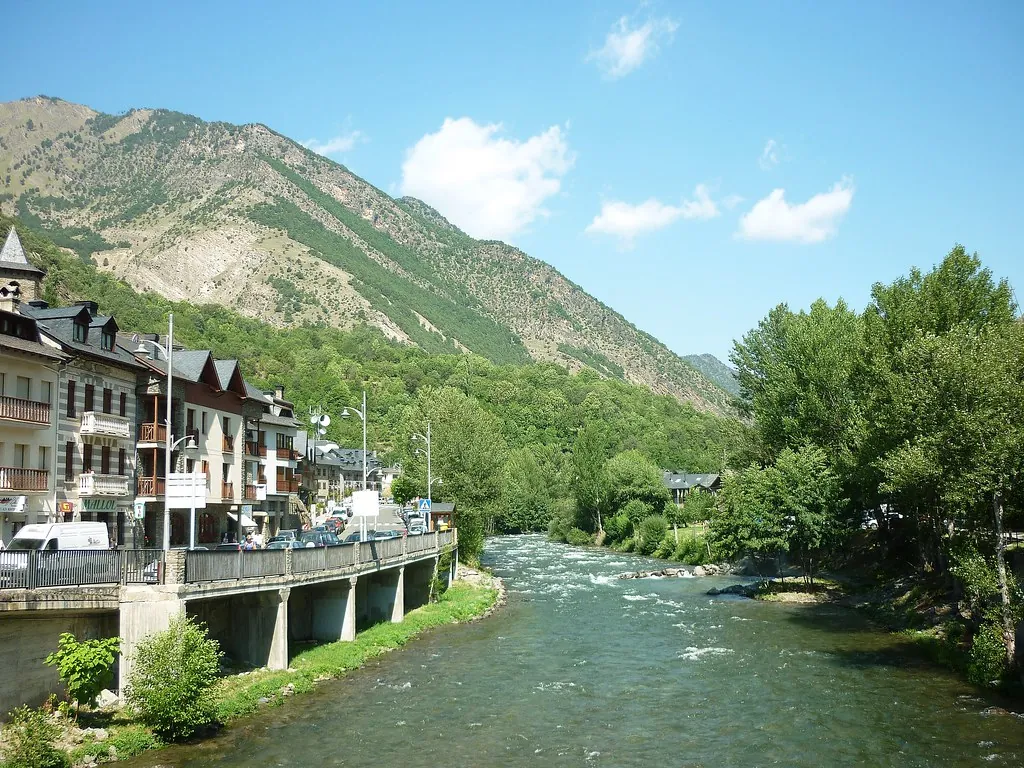
Across the river, the valley opens into the Ferrera corridor, a glacial trough now colonised by black pine and small meadows that still belong to someone’s great-aunt. Abandoned barns, or bordes, dot the slopes; their stone weights keep the shingle roofs from taking off in winter gales. A slow wander to the almost-empty hamlet of Araós (2 km on a farm track) delivers the village’s best lesson: architecture that apologises to no one and needs no interpretation board.
Maps, Weather and the Peak that Owns Catalonia
Serious walkers treat Alins as a launch pad rather than a destination. The GR-11 long-distance path passes within 8 km, and local waymarks lead to cirques where ibex outnumber people. The headline summit is Pica d’Estats—3,143 m, the roof of Catalonia—whose standard route starts at the Vallferrera refuge, a 25-minute drive south on a road that turns to dirt after the last farmhouse. Allow eight hours return, carry water above the snowline even in August, and start early: afternoon storms build faster here than in the Lake District and carry more lightning.
Lower ambitions are well served. A two-hour loop from the church climbs through Scots pine to the meadows of Planell de Mont-roig, gaining 350 m and losing the mobile signal entirely. Spring brings acid-green beech buds and the risk of late snow patches; October trades daylight for beech copper and the smell of rotting chestnuts. Neither season charges an entry fee.
Where to Sleep, Eat and Fill the Tank
Accommodation runs to three small pensions and a handful of self-catering houses booked through the village cooperative. The smartest option is the Hotel Saloria, eight rooms carved out of an 18th-century manor, heated by a single woodstove that the owner feeds until 11 p.m. Doubles from €70 including breakfast: strong coffee, pa amb tomàquet, and local honey that tastes of rosemary. Evening meals need ordering by 4 p.m.; the €18 menú del día might be river trout with almonds or rabbit stew, but never both. Vegetarians get eggs, chips and the same salad—requesting quinoa produces a polite shrug.
The only grocery shop opens 9–1, closes for lunch, then reappears at 5. Bread arrives frozen and is baked on site; the cheese counter holds tupí, a ewe-milk affair matured in olive oil that spreads like Boursin but bites like Stilton. Bring euros—no card machine and the nearest ATM is 25 km away in Esterri de Cardós. Fill the petrol tank in La Seu d’Urgell before the mountain road; the village pump closed in 2019 and the next garage is a nail-biting 50 km downstream.
Winter Rules, Summer Truce
Between December and March the C-142b becomes a curling sheet. Snow tyres or chains are compulsory; the plough reaches Alins centre by 10 a.m. but upper hamlets can wait until after lunch. Day-trippers head to Tavascan (15 km) for Nordic skiing or to Port-Ainé (45 km) for downhill pistes, then retreat to Alins for silence and €1.20 cañas of Estrella. In summer the same road carries camper vans whose drivers look surprised to find the tarmac narrower than their wing mirrors; passing places are signed, but Catalan politeness dictates the downhill vehicle reverses.
Mobile coverage is patchy. Vodafone and EE drop to 3G in the lanes; WhatsApp voice messages arrive in clumps when the wind turns. Download offline maps before leaving Sort and expect to navigate by stone crosses and instinct above the tree line. The village Wi-Fi—installed in 2021—works on a single bench outside the town hall until 9 p.m., when the router is unplugged to save electricity.
Festivals without the Fuss
The fiesta mayor lands on the second weekend of August, when population swells to maybe 500. There is a communal barbecue, a sack race for toddlers, and a disco that finishes at 2 a.m. sharp because the generator belongs to the council. June brings falles de Sant Joan: locals drag pine trunks down from the forest, light them on the river beach, and jump over the flames for luck—health-and-Safety would have a field day, but no one has lost an eyebrow since 1997. These events are advertised only on a hand-written sheet taped to the church door; visitors are welcome, photographers tolerated, stag parties stared into submission.
Leaving Without the Hard Sell
Alins will not sell you a fridge magnet. It offers instead the sound of meltwater under slate, the smell of sun-hit pine resin, and a night sky dark enough to read Orion’s belt as Morse code. Come prepared—cash, snow chains, offline maps—and the village repays with space to think. Forget the checklist: the bell will still strike thirteen tomorrow, and no one will mind if you sleep through it.