Full Article
about Baix Pallars
Gateway to Pallars, with Lake Montcortès and the medieval village of Gerri de la Sal
Ocultar artículo Leer artículo completo
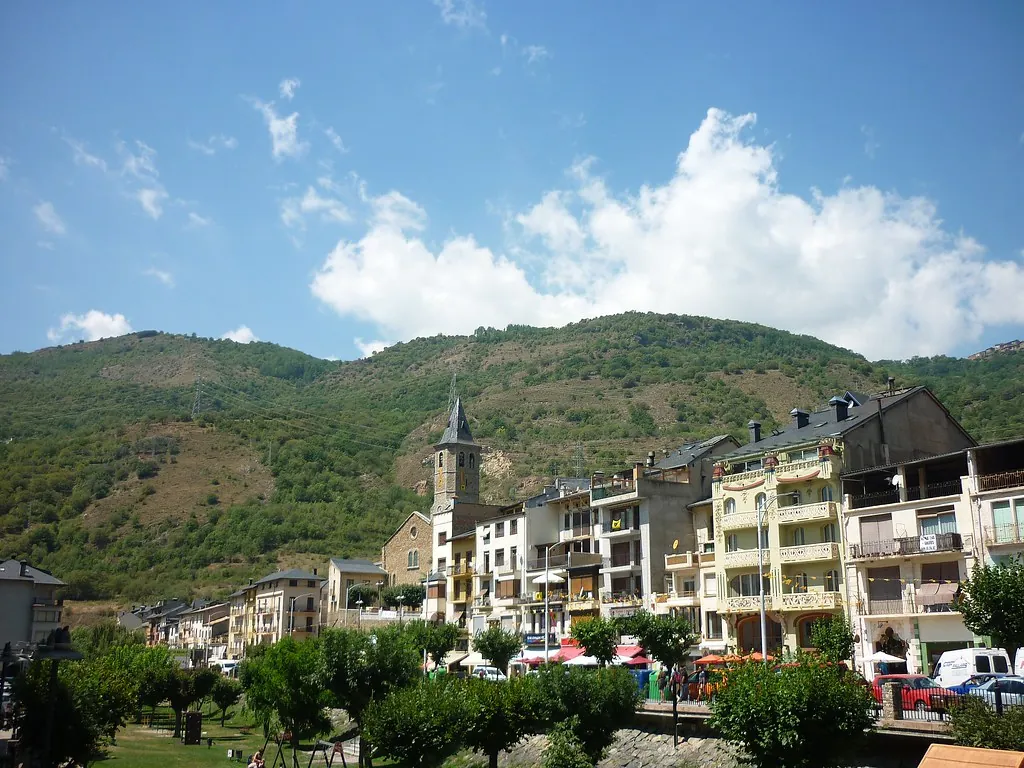
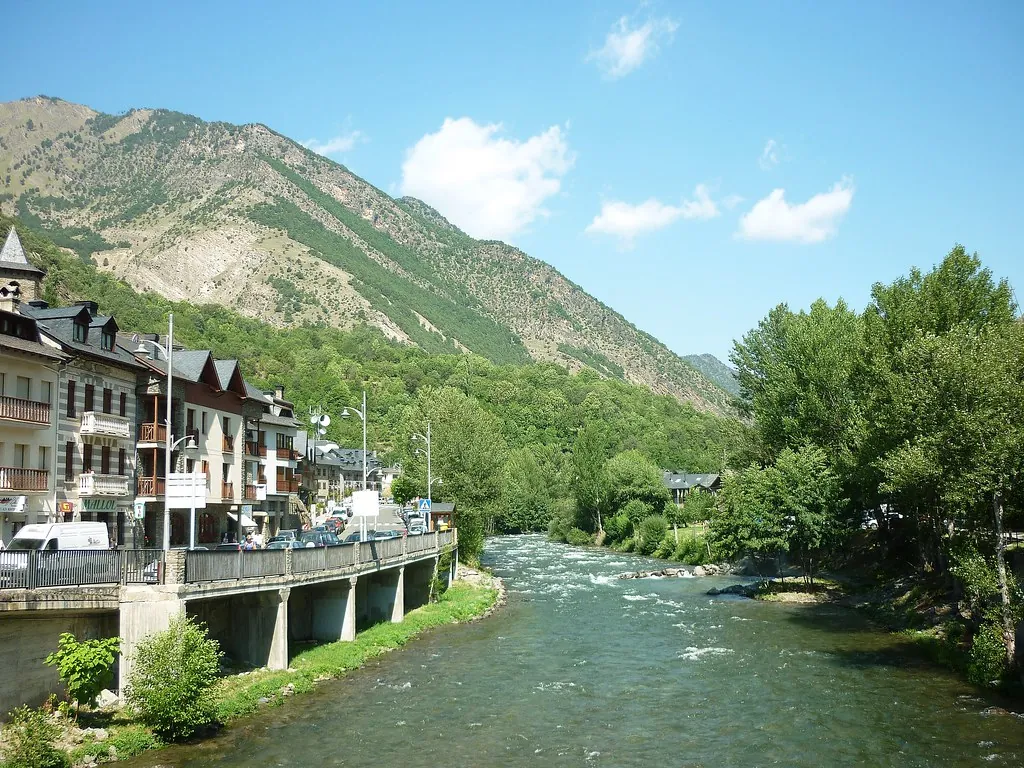
The church bell in Gerri de la Sal strikes noon, echoing off stone walls that have heard little else since the salt pans closed seventy years ago. Below, the Noguera Pallaresa river slides past at walking pace, carrying snowmelt from peaks that stay white until June. At 600 metres above sea level, Baix Pallars sits low enough for olives yet high enough for chestnuts to prosper—a halfway house between valley languor and mountain severity.
Administratively one municipality, Baix Pallars is really a string of hamlets scattered along a fold in the Pre-Pyrenees. The 349 permanent residents live in places most Spaniards would struggle to place on a map: Oveix, Peramea, Montcortès. Houses huddle against winter wind, roofs weighted with thick slate tiles that could shrug off a Welsh storm. Streets are barely two cars wide; traffic noise is the occasional tractor heading to hay meadows higher up. British visitors who know the Lake District will recognise the rhythm—stone, water, livestock—but here the sun stays out long enough to ripen figs against south-facing walls.
Romanesque Without the Coach Park
Gerri’s monastery church commands a loop in the river like a defensive afterthought. Built from the eleventh century onward, Santa María still shows Civil War bullet scars on its sandstone apse. Inside, three aisles end in a semi-circular choir whose acoustics turn a murmured "hello" into choral resonance. There’s no gift shop, no audio guide, and the door is kept unlocked by trust and neighbourly vigilance. Donations drop into a wooden box that smells of incense and old coins.
Smaller churches repeat the pattern every few kilometres: sword-shaped bell gables, single portals rounded to shed snow, fresco fragments fading above altars that have served perhaps eight families for eight centuries. None charges entry; all are kept spotless by women who know every grave in the adjoining cemetery. If you arrive during the five-minute window when the key-holder is away shopping, wait. Someone will send a grandchild to fetch her.
Walking on Medieval Payroll
The old salt road once carried mule trains from Gerri’s evaporation ponds to Toulouse and Barcelona. Today the same track, now stone-pitched and graded for tractors, makes a perfect half-day circuit. Start at the monastery, cross the iron footbridge, and climb gently through oak and Scots pine. After forty minutes the path crests a ridge revealing the entire valley: hay meadows patch-worked green and gold, villages no larger than a London square, the river a silver thread stitching it together.
OS-style mapping is unavailable at 1:25 000; instead, download the free Pallars Sobirà gpx before leaving Wi-Fi range. Signposts exist at major junctions but assume local knowledge—if the arrow says “Tírvia 3 h”, it means Catalan farming pace, not British fell-runner speed. Allow time to drop into Oveix for water from the fountain carved 1876, still fed by a gravity spring that never fails even in August drought.
Summer heat can hit 35 °C by two o’clock. Retreat to the river then; smooth granite pools south of Gerri stay deep enough for a swim that takes your breath away—literally, the water barely tops 14 °C. No lifeguards, no changing rooms, just kingfishers and the occasional cow leaning over the opposite bank to watch.
Fuel for Legs and Engines
The sole village shop doubles as bakery and off-licence, opening 8–1 and 4–7 except Thursday afternoon when it doesn’t open at all. Stock up on pa de pagès, a crusty round loaf that stays edible for three days, and a block of local tupí, sheep cheese matured in olive oil. Anything fancier requires a 25-minute drive to Sort, where the supermarket sells PG Tips at import prices and the petrol station accepts British credit cards without muttering.
Meals follow mountain logic: heavy at midday, lighter at night. Trinxat—cabbage, potato and streaky bacon pressed into a cake—tastes like bubble-and-squeak with Spanish swagger. River trout arrives simply grilled, flaked with almonds, a safe option for children who think garlic suspicious. Wild-boar stew (civet de jabalí) arrives dark as Oxford gravy, thickened with chocolate and red wine. Vegetarians face slim pickings; request escalivada (smoked aubergine and peppers) and expect it served as a starter, main course and side salad simultaneously.
Seasons That Make Their Own Rules
April brings blossom and the first plausible T-shirt days; nights still dip to 7 °C, so pack a fleece. May and June are goldilocks months: empty trails, daylight until nine, countryside loud with cuckoos that sound identical to their Cotswold cousins. July turns serious—Spanish schools break up, apartments fill with cousins from Lleida, and the village bakery runs out of croissants by nine. August is hotter than most of Andalucía; the river becomes a moving picnic, and locals retreat indoors between 1–4 pm with the same dedication as Seville.
Autumn sneaks in during mid-September. Vines that have shaded terraces drop leaves overnight, revealing bunches of moscatell grapes you can pick at eye level. By late October the first snow dusts the ridge above 1 500 m; driving requires headlights at five. Winter itself is surprisingly busy—Gerri fills with French anglers testing the catch-and-release trout season—yet a week of heavy snow can isolate the valley. The bus from Lleida becomes a ski-rescue shuttle, tyre-chains clanking on the ascent to Port-Ainé.
Getting Here, Getting Out
Public transport stops being funny after Barcelona airport. Take the AVE to Lleida (one hour), then the pre-booked ALSA coach towards Andorra. Ask the driver for “Gerri” and he’ll drop you on the main road; the village lies two kilometres downhill with no pavement. Miss the 16:30 departure and you’re spending the night in Lleida’s functional but uninspiring bus station hotel. Car hire is simpler: collect at the airport, reach Gerri in three hours including a coffee stop at Solsona where medieval archways overhang the main street.
Mobile reception flickers between 3G and nothing; Vodafone roams on a local carrier that works fine in the square but dies inside stone houses. Download Google Maps offline, screenshot your accommodation directions, and remember that “twenty minutes away” in local speech means twenty minutes driving uphill in a vehicle that already has 200 000 km on the clock.
The Last Bar Doesn’t Do Cocktails
Evenings wind down fast. The single bar closes when the last customer leaves—usually around 11 pm unless someone’s uncle is celebrating a saint’s day. No one serves espresso martinis; order a copa of local rancio wine, a fortified amber liquid that tastes like dry Madeira and costs €2. Conversation drifts in Catalan; switch to Spanish and they’ll meet you halfway. English is rare, though the butcher spent a season in Slough twenty years ago and still supports Manchester United.
Leave the valley quietly. Pack out your rubbish—recycling banks are at the entrance to each village, labels only in Catalan. If you promised to send photographs of the fiesta, follow through; the post office in Sort will sell you the correct stamp and point you towards the single letterbox that still collects daily. Baix Pallars gives you space, silence and stone that predates the Reformation. It asks in return that you don’t treat it like a theme park. Most winters the snow arrives, the road empties, and the bell in Gerri keeps the only reliable timetable.