Full Article
about Espot
Main gateway to Aigüestortes i Estany de Sant Maurici National Park; ski resort
Hide article Read full article
A Small Village with One Clear Focus
Tourism in Espot revolves around one thing: access to the Parque Nacional de Aigüestortes i Estany de Sant Maurici. Almost everything here connects in some way to the national park or, in winter, to the ski station above the village.
If you arrive by car, parking is the first practical issue to consider. The centre has narrow streets and very few spaces. In high season they fill quickly, and you often end up leaving the car in the upper part of the village or in the designated areas at the entrance.
Winter brings a different set of challenges. Snow can make access roads more difficult and some valley roads may close or require chains. It is worth checking the situation before heading up. In summer, the problem is not snow but numbers. There are simply too many cars for such a small place.
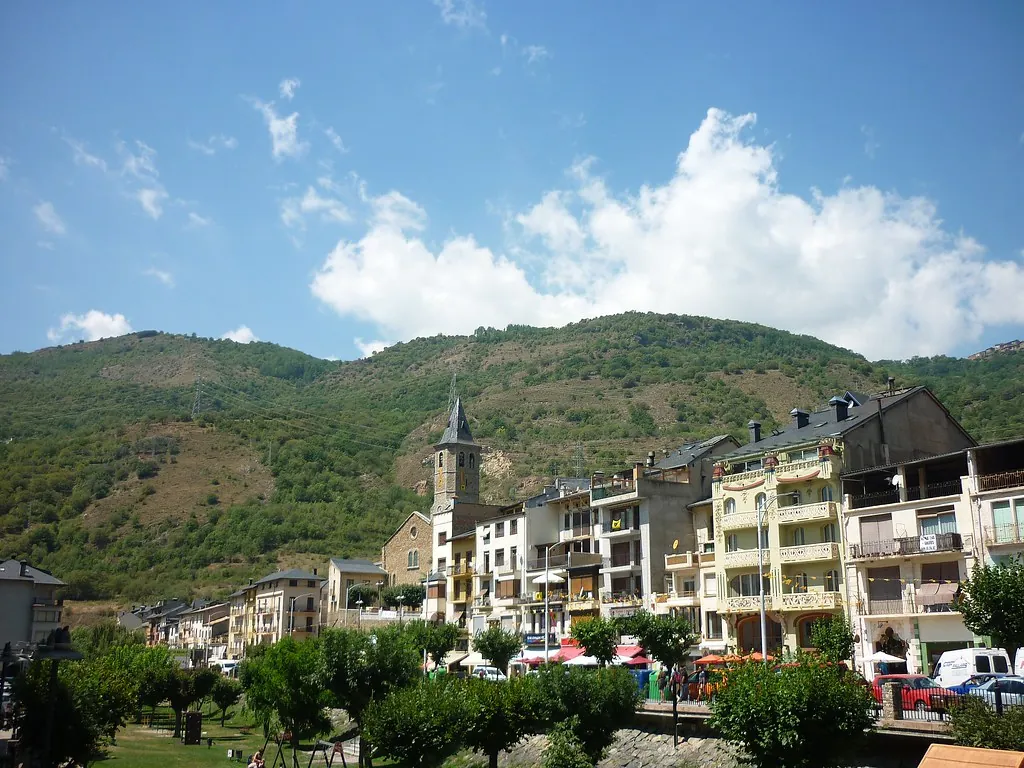
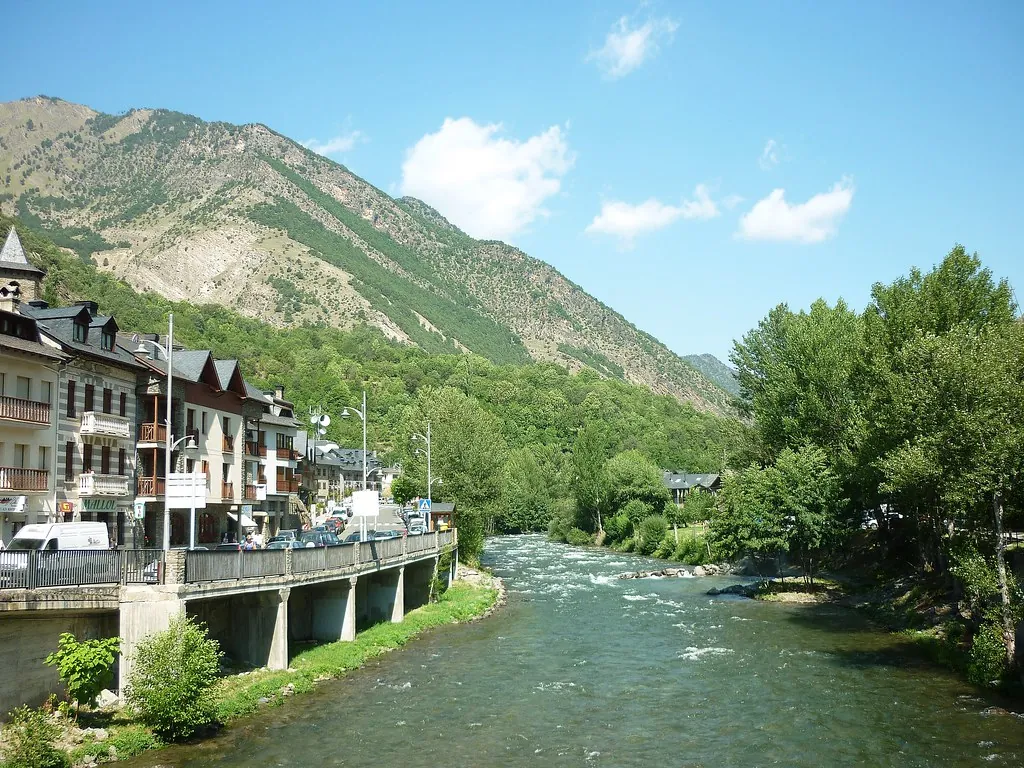
Espot itself is compact. You can walk across it in a short time. A handful of streets cluster around the river Escrita and that is more or less it. Most people are here in transit, on their way to the national park or the ski slopes rather than for the village alone.
The Door to Aigüestortes
Espot is one of the usual gateways to the Parque Nacional de Aigüestortes i Estany de Sant Maurici, one of Spain’s best known mountain landscapes in the Pyrenees. From here authorised vehicles head up towards the Estany de Sant Maurici, and several walking routes begin in the surrounding area.
The best known excursion ends at the Estany de Sant Maurici, with the twin peaks of Els Encantats rising behind it. This is the image that appears in most photographs of the park: a mountain lake framed by sharp rock. In August, the path and the viewpoints near the lake can be busy.
Beyond the lake, the terrain opens out. Routes continue towards other lakes such as Ratera or towards mountain refuges. Some of these walks are long enough to fill an entire day. The ground is not especially technical if you are used to mountain hiking, but it is not a short, gentle stroll either.
This is high mountain country. Distances stretch out more than they first appear, and even straightforward paths require time and steady effort. Those who go a little further than the first viewpoints often find more space and quiet.
A Village of Stone and Water
Within the village there is little in the way of major sights, and that is part of its character. The church of Santa Maria is the oldest building, originally Romanesque in style although much altered over time. Its presence hints at the long history of settlement in this valley.
Most of the other buildings are stone houses that have been modified over the years. Renovations and practical changes have reshaped them, so what you see today reflects adaptation rather than preservation in a strict sense.
Along the river Escrita there are still remains of former installations linked to the valley’s hydroelectric use. They are not set up as a formal visit or museum. Instead, they serve as a reminder of how the river was exploited before tourism became the dominant activity. The valley’s economy has shifted, and the traces of that earlier phase remain quietly beside the water.
The scale of Espot means there is no need for plans or routes within the village. You walk, cross the river, turn a corner and reach the edge almost immediately.
Winter: Snow and Ski Slopes
When the snow arrives, much of the village’s activity centres on the ski station located on the mountainside above. The slopes run through forested sections and mid mountain terrain. Snow conditions vary from year to year. Some winters bring only just enough cover, while in others it lasts well.
Snowshoe outings are also organised in the surrounding area. Walking on snow demands more effort than it appears to at first glance. Even those who are used to hiking notice the extra strain, and fatigue sets in quickly.
The atmosphere in winter depends heavily on conditions. When snow is good, movement in the village increases. When it is scarce, the rhythm changes. Espot adapts to both.
Wildlife and Open Slopes
Move away from the busiest routes and wildlife becomes easier to spot. Chamois appear on the higher slopes, sometimes visible against the rock if you take the time to look carefully. In summer, marmots can be seen near the park’s meadows. Birds of prey are also common enough if you pause and watch the sky for a while.
There is no need for elaborate tracking. A slower pace helps. Stop, wait and scan the hillside. The mountains around Espot still feel active and alive beyond the main footpaths.
The landscape shifts subtly with height. Forest gives way to open ground, and open ground to rock. The further you go from the main access points, the more the sound of vehicles fades.
One Clear Piece of Advice
Espot works best if you start early. By mid morning, cars and organised outings begin to arrive on their way up to the park. Parking becomes harder and the road towards the valley busier.
Arrive early, leave the car without stress and head up while most people are still on their way. Return to the village when others are just beginning the climb. The experience is calmer, and you avoid the typical August traffic build up that can define the middle of the day.
Espot does not try to be more than it is. It is a practical base at the edge of a national park, a small cluster of streets beside the river Escrita, and a place that fills and empties according to season. Come prepared for simple logistics, mountain weather and changing conditions. The reward lies beyond the village, in the lakes and slopes that have made this corner of Catalonia so well known.