Full Article
about Lladorre
High-mountain municipality with glacial lakes and the Tavascan ski resort
Hide article Read full article
Early light in the valley
At first light, before the sun reaches the bottom of the valley, tourism in Lladorre begins with a very specific feeling: cold hands even in summer and the steady sound of water running somewhere nearby, through a channel or a ravine. The village emerges slowly among meadows and stone walls darkened by the night’s damp. There is no rush. At that hour you hear little more than a stray rooster and the wind brushing through the poplars at the far end of the valley.
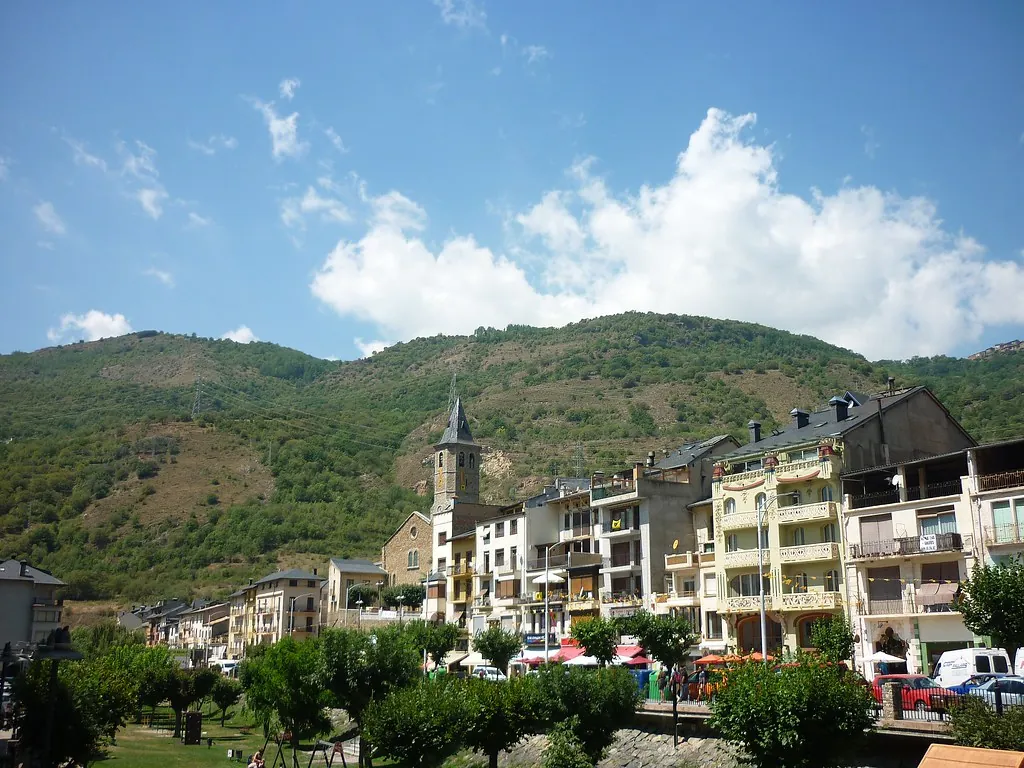
Lladorre sits in Pallars Sobirà, in one of the side valleys that open towards the Parque Natural de l’Alt Pirineu. The settlement is small and quite spread out, with houses gathered along narrow streets where some stretches are still unpaved. Stone dominates almost everything: thick walls, slightly irregular arched doorways, wooden balconies where geraniums or washing often appear in summer.
The village stands just over a thousand metres above sea level. That is enough for nights to feel cool even in July. Between May and October the light shifts noticeably through the day. Morning keeps much of the valley in shade, while by afternoon the slopes turn golden, especially in autumn when the meadows begin to dry.
Sant Pere and the texture of the old streets
The church of Sant Pere appears almost without warning among the houses. Its base is Romanesque, although later alterations are easy to spot. The simple bell gable, built in pale stone, carries sound across the valley when the bells ring, echoing off the opposite hillside.
A walk through the village draws attention more to small details than to major landmarks. Doorways show decades of wear. Former haylofts have been converted into homes. External staircases lead straight up to the first floor. Some courtyards still hold tools or small trailers used for work in the meadows.
Drivers quickly notice that space is limited. It makes sense to leave the car at the entrances and continue on foot, as the streets are narrow and turning can be difficult in places.
Routes through the valley villages
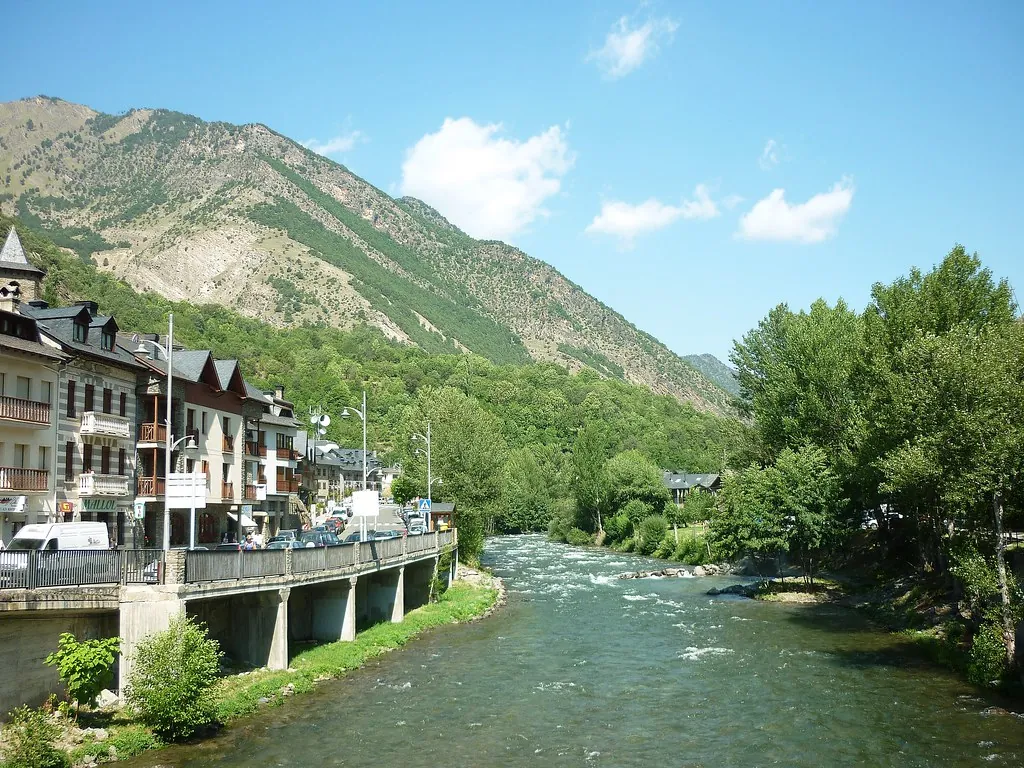
Lladorre also works as a point of passage towards other small settlements in the valley. The roads are narrow and winding, following the course of the river of Lladorre, which runs strongly for much of the year.
Paths branch out from here towards bordas, traditional mountain buildings linked to farming, as well as hay meadows and small villages where only a handful of families live. These routes have been used for generations to move livestock between the valley floor and higher grazing areas.
The landscape shifts quickly with height. Damp meadows spread across the valley bottom, while higher up the slopes are covered with black pine and fir. On clear days, peaks well above two thousand metres come into view.
Into the Parque Natural de l’Alt Pirineu
Many of the routes that begin in Lladorre lead into the Parque Natural de l’Alt Pirineu. Some paths climb up the valley towards glacial lakes and high pastureland where herds still graze in summer.
The ascents tend to be long and steady rather than technical. Early starts help in summer, as the sun can be strong on open slopes and afternoon storms are not unusual in July and August. Carrying enough water and a light extra layer makes a difference, since the weather can change quickly in this part of the Pyrenees.
Winter alters these routes completely. Snow covers many of the paths, and some people explore them with snowshoes or touring skis. Conditions require care, and it is important to understand the state of the snow before heading out.
Wildlife of the high mountains
The valley and its surroundings are home to wildlife typical of the Pyrenees. The bearded vulture, or quebrantahuesos, can be seen again with some regularity, circling in the sky once thermal currents begin to rise later in the morning.
Brown bears also inhabit this part of the range, although encounters are very rare. Most visits pass without any sighting at all. At best, there may be tracks or signs in quieter areas. Early starts and quiet walking increase the chances of spotting birds and other animals.
Cold rivers and careful fishing
The river that runs through the valley stays cold even in the height of summer. Fishing takes place along certain stretches, always with the required permits and in accordance with regulated sections.
The current moves quickly and the water is very clear. Those who fish here tend to know the river well, moving slowly among the stones to avoid startling trout.
Summer rhythm and village festivals
August brings a subtle change in atmosphere. Families who have homes in the valley return, and the village becomes more active. Children gather in the squares. Conversations stretch out into the evening. Music drifts from open windows.
The main village festival, the fiesta mayor, usually takes place in summer. It centres on dances and simple events organised by residents themselves. There are no large stages or elaborate setups. Long tables, unhurried conversations and familiar faces shape the mood, with people who have known each other for years sharing the same space.