Full Article
about Llavorsí
Rafting capital on the Noguera Pallaresa; stone-and-slate village by the river
Hide article Read full article
Where the River Sets the Tone
Early in the morning, when low clouds hang over the valley, the Noguera Pallaresa runs with a deep, steady roar that fills the bottom of Llavorsí. Tourism here almost always begins by the water. The river carries leaves and foam, and there is a cold scent of wet stone in the air. Stand for a moment on the bank and other sounds emerge: the creak of alder branches and the uneven удар of the current against rock.
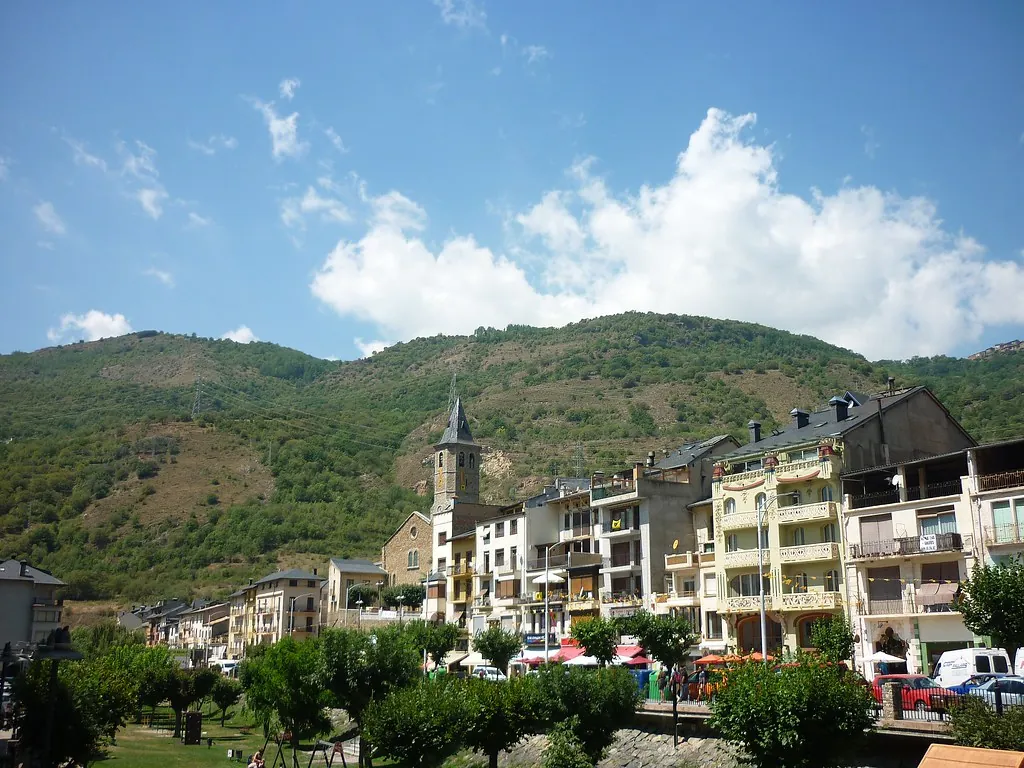
Llavorsí has just over three hundred registered residents and sits at around 800 metres above sea level in the Pallars Sobirà, a comarca in the Catalan Pyrenees. The village occupies a slight widening of the valley, a place where the river seems to draw breath before narrowing again between mountains. Stone houses with dark roofs climb the slope without much order, their wooden balconies weathered, their shutters still closed in the early hours.
The church of Sant Martí, Romanesque in origin though much altered over time, shapes the village skyline. Its bell tower is visible from the road. There are no grand monuments or sweeping squares. What defines Llavorsí is simpler: the constant sound of water, the dampness that lingers after a night of rain, chimney smoke in winter.
Summer light falls hard on the stones in the riverbed, turning the water a deep green. In winter the mood shifts completely. The village grows quieter and the smell of burning wood drifts through the narrow streets.
The River That Rules
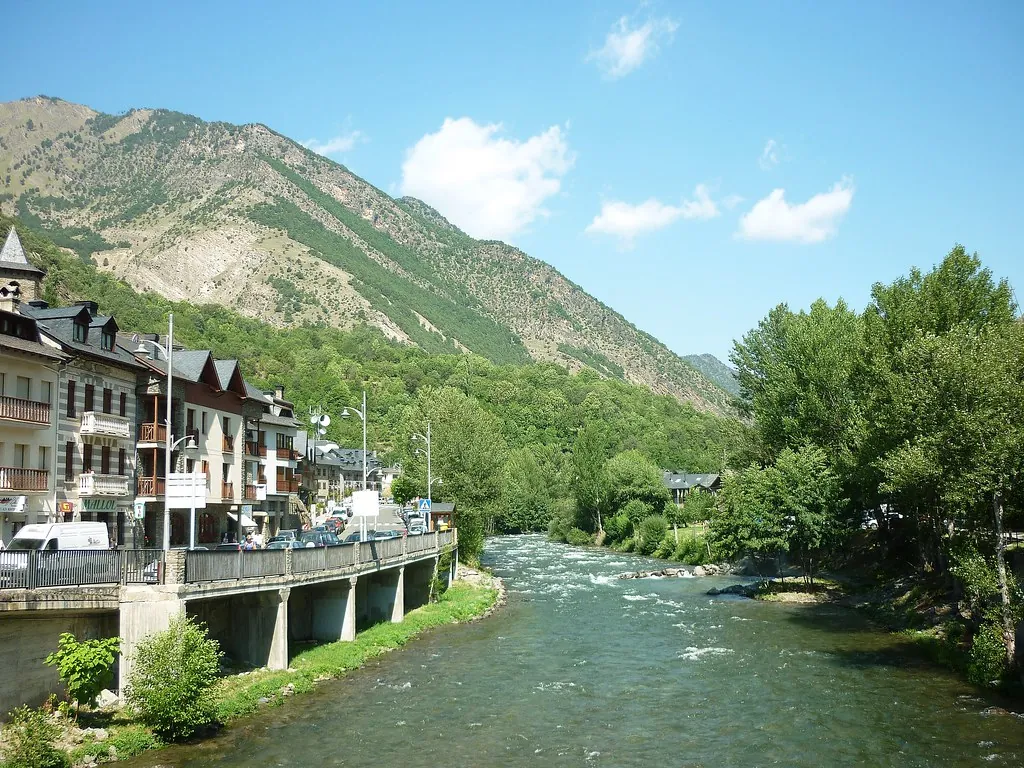
Life in Llavorsí looks towards the Noguera Pallaresa. The bridges that cross it act as informal viewpoints. From above, the width of the channel is clear, as is the speed of the water, which here rarely appears calm.
This stretch of river has long been known among those who practise white‑water rafting and kayaking. In spring, when snowmelt descends from the Pyrenean peaks, the flow gathers strength and the sound of water can be heard from almost anywhere in the village. In summer the volume tends to fluctuate more, partly due to the management of reservoirs upstream.
During the warmer months it is common to see inflatable rafts bouncing through the waves, flashes of coloured helmets appearing and disappearing behind rapids. Even so, walk a few metres upstream or down and quieter sections return, where the noise settles back into the steady rhythm of running water.
The presence of the river shapes the atmosphere as much as it does the landscape. In the busiest weeks of summer there are more cars, more wetsuits drying in the sun and more movement around the bridges. Yet the Noguera Pallaresa remains the constant thread, whether swollen with meltwater or flowing at a more measured pace.
Towards the Vall de Cardós
From Llavorsí, a road heads into the Vall de Cardós, one of those Pyrenean valleys that gradually tighten between forests of pine and fir. Within a few kilometres small villages appear, such as Ribera de Cardós and Estaon, where Romanesque churches still stand tucked among stone houses.
Here the mountains feel closer. Paths climb towards glacial cirques, high pastures and peaks that rise comfortably above 2,500 metres. The landscape changes quickly. First come damp meadows by the river, then denser woodland, and higher up bare rock, wind and silence.
In autumn the forest smells different: wet earth, fallen leaves and, in some stretches, mushrooms pushing up through the moss. The seasonal shift is tangible, a reminder that life in these valleys follows a clear annual rhythm.
The Vall de Cardós offers a sense of enclosure typical of the Pyrenees, where settlements sit low and the terrain rises sharply on either side. Even a short drive reveals how varied the terrain can be within a small area.
Walking Straight from the Door
There is no need to leave the village to start walking. Trails lead directly out of Llavorsí. Some follow the course of the river; others begin climbing the hillside almost immediately.
The GR‑11, the long‑distance footpath that crosses the Pyrenees from coast to coast, passes relatively close by and links with several routes in the area. For those unfamiliar with Spain’s network of marked trails, the GR routes are signposted long‑distance paths that connect different mountain regions. Here, they serve as a backbone for local walks.
Not all routes are gentle. The terrain demands steady ascents and descents, and in summer the heat is noticeable when the path lies exposed. A simple piece of advice applies in the warmest months: set off early. By mid‑afternoon the air in the valley bottom often turns heavy.
Walking here means moving through distinct layers of landscape within a short distance. The shift from riverside greenery to shaded forest and then to open slopes happens quickly. Each level brings its own sounds and textures, from the rush of water below to wind higher up.
Eating in the Pallars
The cooking in this part of the Pyrenees is direct and closely tied to the seasons. In autumn, dishes featuring forest mushrooms appear, and when the season allows, game meats such as wild boar or venison. Cured sausages made locally are also common, their flavour robust.
Many menus still include trinxat, a traditional mountain dish made from potato and cabbage, sometimes enriched with a little bacon. River trout, prepared simply, remains a classic across the villages of the valley.
These are foods shaped by climate and terrain. Winters are cold, and historically the cuisine relied on what could be stored, cured or gathered nearby. Even today that link to the surrounding land is evident.
The Rhythm of the Year
The feast of Sant Martí in November is one of the moments when the village gathers around religious events and meetings among neighbours. It is a celebration closely tied to the traditional calendar of mountain communities.
Summer brings a clear contrast. With good weather comes a marked increase in visitors connected to the river and water sports. The atmosphere shifts. There is more traffic, more activity and a livelier mood around the bridges.
For those who prefer a quieter impression of Llavorsí, late spring or early autumn tend to be more forgiving. The river remains lively, the forests begin to change colour and the village settles back into a steadier pace.
In the end, Llavorsí is defined less by sights to tick off and more by sensations: the sound of the Noguera Pallaresa, the damp air after rain, the smell of wood smoke when cold weather returns. It is a small place in the Pallars Sobirà, shaped by water and mountains, where the year moves to the rhythm of the river.