Full Article
about Rialp
Tourist town near Port Ainé; old quarter with arcades and sports activities
Hide article Read full article
Between River and Mountains
Rialp lies in the valley of the Noguera Pallaresa, in the comarca of Pallars Sobirà, in Catalonia. The village sits at around 725 metres above sea level and today has just over six hundred residents. Its position in the valley explains much of what happens here.
For years, Rialp has functioned as a base for exploring the Alt Pirineu, the High Pyrenees of Catalonia. The river runs close by and several ski areas are only a few kilometres away. That combination has brought visitors in both winter and summer, with activity shifting according to the season.
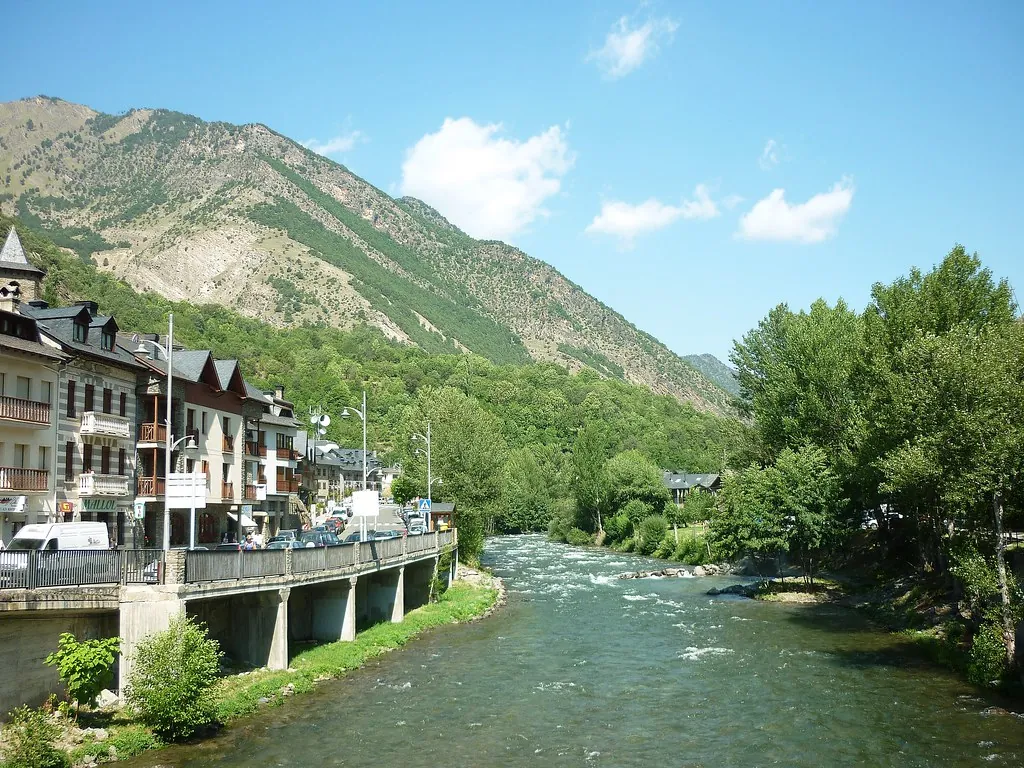
The Noguera Pallaresa sets the tempo of daily life. It shapes the landscape and has also shaped the local economy, especially through white-water sports. When the snow melts and the river swells, the sound of water becomes more noticeable even from within the village itself. In spring, the river feels closer and more present.
A Small-Scale Mountain Village
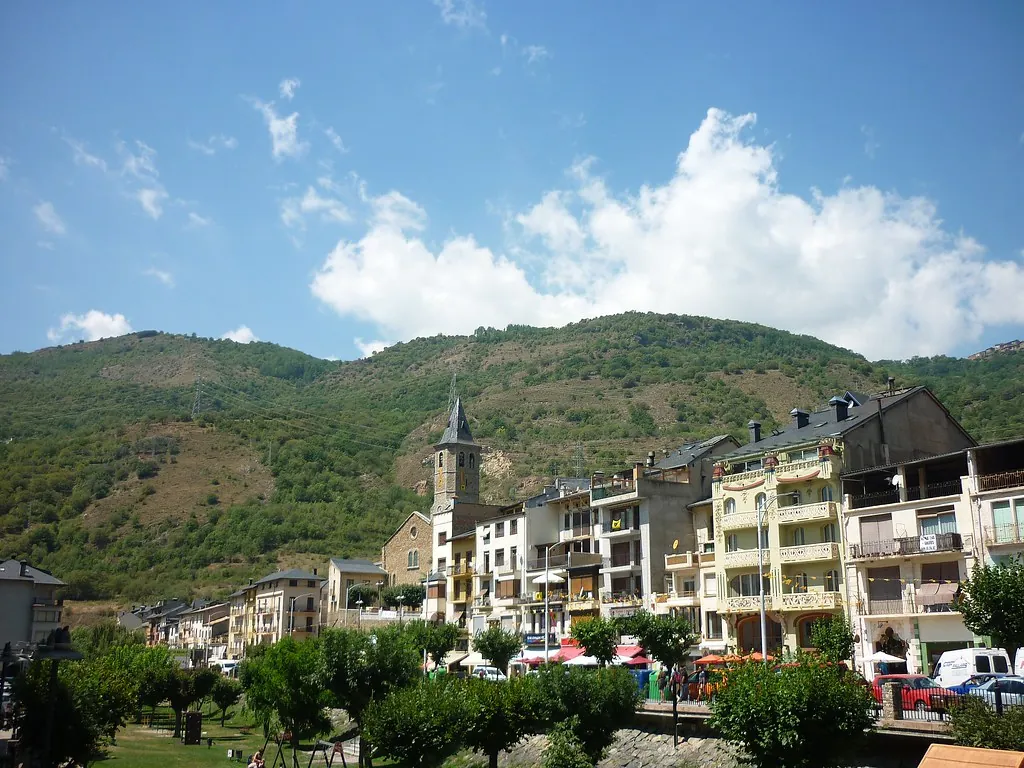
The historic centre of Rialp remains compact. Narrow streets wind between stone houses topped with slate roofs. Many of these houses still have wooden balconies facing the sun, practical features adapted to the mountain climate.
The layout is not entirely regular. Some streets climb uphill towards the higher part of the village, while others slope down in the direction of the road and the river. The gradients inside the village already hint at the terrain beyond it.
At the edges of the built-up area, small vegetable plots can still be seen. During the quieter parts of the year, when there are fewer visitors, this rural edge becomes more apparent and the village feels closely tied to its surroundings.
Rialp can be walked through quickly. In less than an hour, it is possible to get a clear sense of the centre. Much of the interest, however, lies just beyond the houses: the river corridor, the paths that follow the valley and the routes leading towards the nearby mountains.
Visitors interested in traditional architecture should look closely at the older houses. Many still retain typical elements of the Pyrenees, particularly in their roofs and balconies, where local materials and building techniques respond directly to climate and terrain.
White Water on the Noguera Pallaresa
The Noguera Pallaresa is one of the best-known rivers in the Pyrenees for white-water sports. During the warmer months, rafts and kayaks pass along this stretch in significant numbers. Most of this movement is concentrated in summer.
These activities did not appear overnight. Since the late twentieth century, the valley has been associated with this kind of sport. Rialp’s location makes it well placed for organising descents downstream, and over time the village has become part of that wider network linked to the river.
The rhythm of the seasons is clearly visible here. In winter the river is quieter in terms of sport, while in spring the increased flow from snowmelt gives it greater force and presence. By summer, activity shifts towards organised rafting and kayaking, with the valley filling with movement.
Even for those who are not taking part, the river forms a constant backdrop. Its sound and changing volume are part of daily life, especially when the thaw increases the current.
Paths, Forests and Valley Slopes
Several paths leave directly from the village, leading into the valley and up the surrounding slopes. Some follow old routes that once connected neighbouring settlements. Others are now used as local walking trails.
Within a few minutes on foot, wooded areas begin. Pine trees dominate much of the landscape, though in wetter zones beech trees appear. Near the river the atmosphere changes again, and in summer the air feels cooler and fresher.
The hills inside Rialp itself offer a preview of what lies beyond. Streets rise and fall sharply, and the transition from built space to open countryside is quick. Comfortable footwear is advisable for anyone planning to explore the nearby paths, as the terrain is rarely flat.
The surrounding landscape is not presented as a single viewpoint or landmark. Instead, it unfolds gradually along tracks, between trees, and beside the water. The experience is tied to movement through the valley rather than to one fixed panorama.
Winter Links: Port Ainé and Espot Esquí
Rialp is relatively close to the ski resorts of Port Ainé and Espot Esquí. In winter, many people choose to stay in the village and drive up to the slopes. The atmosphere in Rialp is calmer than in the purpose-built centres next to the ski lifts.
This pattern becomes noticeable during the snow season. There is more movement early in the day and again towards late afternoon, as skiers head out and return. Outside those moments, the village maintains a quieter rhythm.
The link with the ski stations reinforces Rialp’s role as a year-round base. In summer the focus turns to the river and walking routes; in winter, attention shifts to the mountains and snow.
Mountain Cooking in the Pallars
Local cooking in the Pallars follows the logic of the territory. Dishes are hearty, designed for cold weather and physical work. River trout appears frequently on menus. Cured sausages are common, and mushrooms play an important role when autumn arrives.
The cuisine is straightforward rather than elaborate. It relies on nearby produce and direct preparation. The emphasis is on sustenance and seasonality, reflecting the agricultural and mountain context.
This style of cooking forms part of the broader identity of Pallars Sobirà, where food traditions remain closely linked to landscape and climate.
Practical Perspective
Rialp does not require long to explore, at least in terms of its streets and buildings. The core can be understood in under an hour. The wider appeal lies in its immediate surroundings: the Noguera Pallaresa, the valley paths and the short journeys towards higher ground.
Its position at 725 metres, beside a river known across the Pyrenees for white water and within reach of Port Ainé and Espot Esquí, explains why the village sees visitors across different seasons. Rialp’s role is shaped less by monuments than by geography. The valley, the river and the mountains define both its past and its present.