Full Article
about Tírvia
Rebuilt after the Civil War; stone-and-slate architecture.
Hide article Read full article
Getting There and Parking
Tírvia lies a short drive from Sort, reached by a mountain road full of bends. The route is not especially difficult, but it rewards a steady pace. The village appears quite suddenly at the end of the climb.
Cars are left at the entrance. There is a small parking area and little more. In summer and at weekends it fills up quickly. Arrive late and you may need to circle patiently or turn back.
From that point on, everything is done on foot. The streets are narrow and were never designed with traffic in mind.
A Small Village on the Slope
Tírvia is compact. A slow stroll is enough to see it.
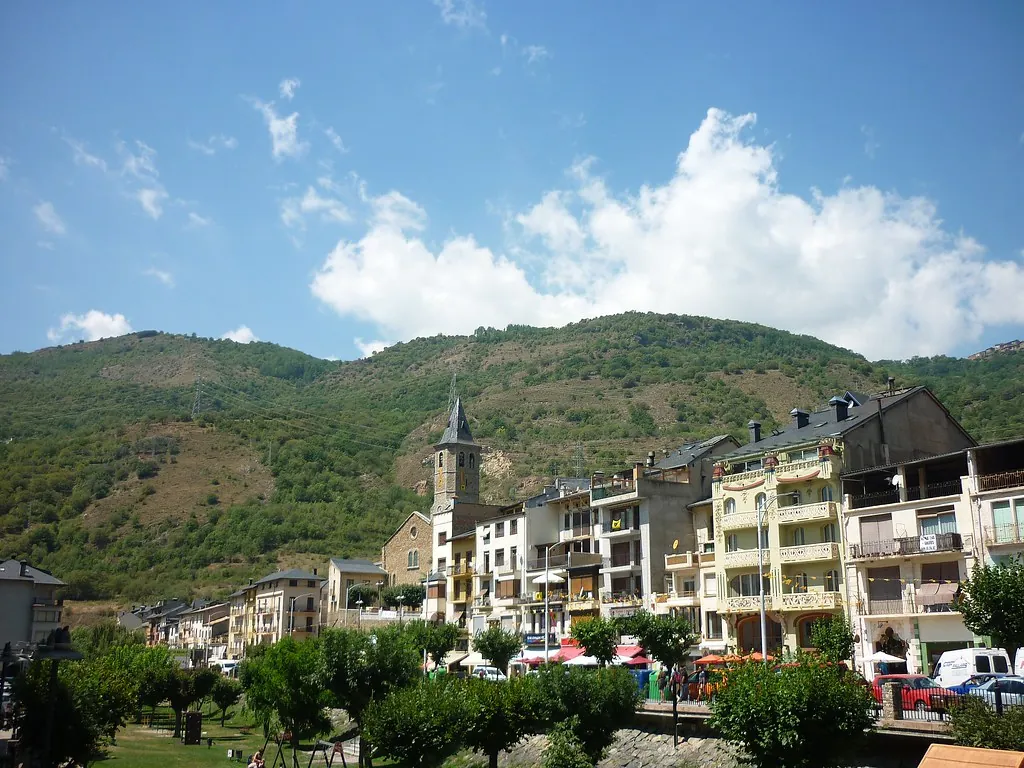
The houses cluster along the hillside, most built in stone with dark roofs. Some have been carefully restored. Others are still waiting for work that may or may not come. That contrast is common in villages of this size, where the population is small and resources are limited.
At the centre stands the church of Sant Martí. Its origins are Romanesque, although the building has been altered over the centuries. The bell tower can be seen from various points in the valley, rising above the rooftops. The church is sometimes open and sometimes closed, depending on the day.
Beyond that, there are few surprises. There are no shops and no constant bustle. Only a small number of people live here, and it shows in the quiet streets.
Tírvia does not try to reinvent itself. It feels like what it is: a small settlement in the Pallars Sobirà comarca, in the Catalan Pyrenees, where daily life follows a rural rhythm.
Walks, Forest and Old Bordas
The most interesting part of Tírvia lies beyond the village itself.
Forest and meadows surround the houses. Several paths lead out into the landscape, used for years by local residents to move between areas or to reach old bordas, traditional mountain huts once linked to farming and livestock. Some of these structures are still standing. Others are partly collapsed, so it is wise not to get too close.
The routes are usually not long. Many can be completed in about an hour, perhaps a little more. After rain, the terrain changes quickly and mud appears without much warning. Signage is irregular. A map or a preloaded route on a mobile phone makes things easier.
In the nearby hills there are remains of hermitages and other old buildings connected to agricultural work. They are not always signposted, and access may involve narrow paths. Anyone setting out should be prepared for simple trails rather than marked circuits.
The setting is straightforward mountain countryside. There are no prepared viewpoints or interpretative panels described here. The appeal lies in walking through a working landscape that has changed slowly over time.
Winter Conditions and Mountain Routes
Snow can complicate access in winter. It does not happen every time, but it does happen.
Those who know the area head into the surrounding mountains with snowshoes or touring skis. The terrain is not prepared or signposted. This is high mountain country, and people rely on their own experience and judgement.
During other seasons, cyclists appear on the forest tracks. These routes are demanding, with plenty of stone under tyre and long uphill stretches. They are not gentle rides.
Tírvia’s surroundings therefore attract people who are comfortable navigating unmarked ground. There are no references here to managed ski areas or dedicated cycling centres. The landscape remains largely as it is.
Festivities and Local Rhythm
Life in Tírvia revolves around the rural calendar. In summer there is usually a celebration linked to Sant Martí, the village’s patron saint. These are simple festivities: mass, a gathering of neighbours and little else. The scale matches the size of the community.
There is also a tradition of walking up to the hermitage of the Mare de Déu d’Arboló on certain dates. Plans depend heavily on the weather and on how many people are in the village that day. It is not a fixed spectacle designed for visitors, but a local custom that continues when circumstances allow.
Autumn brings mushroom hunters into the nearby woods. Foraging is common in many parts of Catalonia at that time of year. Anyone unfamiliar with local species should avoid improvising.
Throughout the year, the sense of pace remains steady. There are no large programmes of events and no packed agenda. Tírvia is not a place for elaborate plans. People come to walk for a while, to see what a village in the Pallars Sobirà looks like without cosmetic changes, and then to continue along the valley.
An early start helps if parking matters to you. After that, everything here moves slowly.