
Full Article
about Fontcoberta
Municipality near Lake Banyoles; known for the Espolla Beach area.
Ocultar artículo Leer artículo completo
The church bell strikes seven and the baker at Forn de Pa Montse yanks the metal shutter halfway down. That's the evening shift over—no point waiting for a rush that won't arrive. In Fontcoberta, population 1,400, the working day still bends to daylight and the loaf tin, not to TripAdvisor rankings. Most visitors race straight past the village on the C-66, bound for the photo-ready arcades of nearby Banyoles. Those who brake at the turning signed "Pla de l’Estany" discover a place that measures time in tractor gears and almond blossom, not coach-park turnovers.
A Grid of Stone and Soil
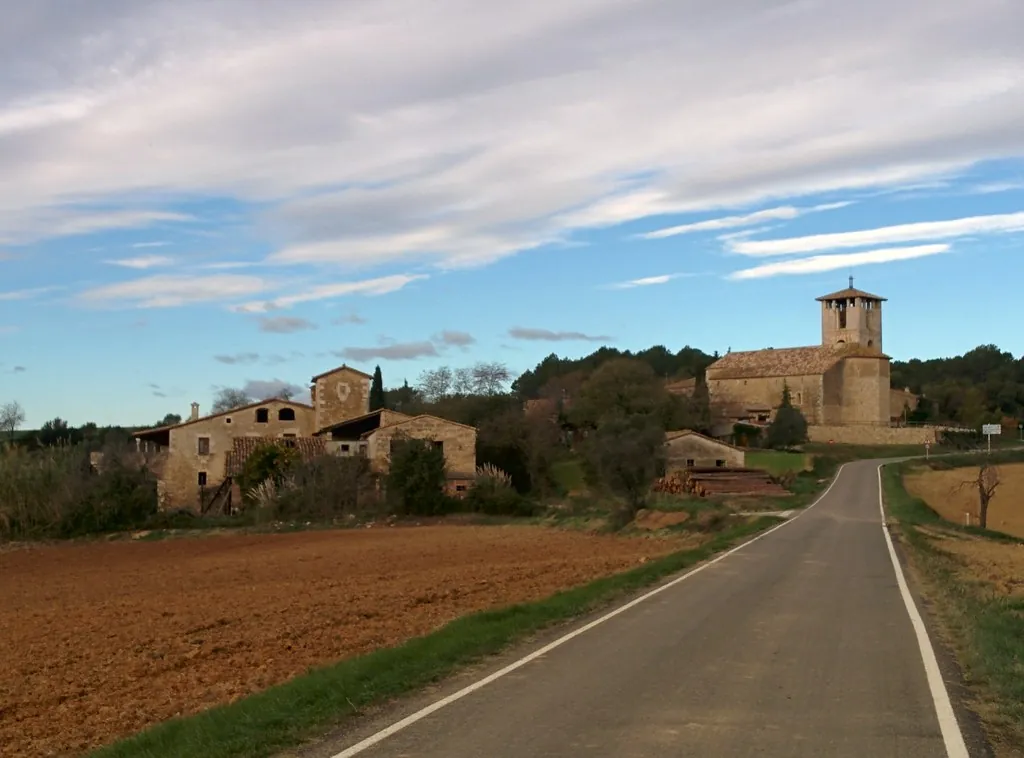
Altitude here is 200 m—low enough for olive trees to outnumber oaks, high enough that the Pyrenean tramontana wind arrives unfiltered. The older houses are built from greyish gneiss hacked out of local fields; the stone is warm to the touch on sunny days and seems to store the smell of dry earth. Narrow lanes run north–south so the midday sun dries the cobbles after rain; east–west streets still carry the drainage channels that once fed the communal trough. Look up and you’ll see dates chiselled into lintels—1789, 1834, 1902—each marking a barn raised with proceeds from a good hemp or flax harvest. Agriculture is no museum piece: the clatter of a 1990s Massey Ferguson echoes off the walls most mornings, and pallets of lettuces bound for Mercadona supermarkets are stacked beside stone fonts older than the Spanish constitution.
There isn’t a single postcard rack in the village. That absence feels deliberate. The parish church of Sant Miquel keeps its doors unlocked, but the interior is plain whitewash, a world away from the gold-leaf excess tourists expect after Barcelona. The only colour inside comes from a faded republican flag draped behind the altar—local lore says it was hidden here throughout Franco’s reign. Step back outside and the plaza is silent except for the click of pétanque balls: retired growers play each morning until the bar owner at Cafè de la Plaça delivers mid-game coffees without being asked.
Lake Days without the Crowds
Banyoles Lake lies four kilometres east—close enough that villagers cycle there for morning training, far enough that coach parties rarely back-track to Fontcoberta. The lake’s six-kilometre perimeter path is paved and popular, but the tracks that radiate from the village edge are not. Pick up the signed rural route called Camí de Can Morgat and within ten minutes you’re between cornfields, listening to hoopoes rather than selfie-stick banter. Spring brings carpets of white garlic flowers; autumn smells of damp fig leaves and mushroom soil. The terrain is forgiving—no Category-1 climbs, just steady rollers that top out at 350 m—so a hybrid bike is plenty. If you’re on foot, allow two hours for the circular loop that drops to the lake’s reed bed and returns via the 17th-century masia of Can Xargay (now a smart rental house with a chlorine-free pool).
Swimming is officially banned in the lake to protect water quality, though locals admit early-morning bathers slip in from the north shore where the guard isn’t posted. Kayaks and rowing boats can be rented at Club de Remo for €12 an hour; the water is so clear you can watch grass carp shadowing your paddle. Weekday mornings you’ll share the surface with the Catalan national rowing squad—Olympic medallists training under cranes that once served textile mills.
What Grows and What Goes on the Table
Fontcoberta has no Michelin stars, yet the food tastes of the kilometre-zero philosophy British chefs preach. Vegetables come from huertos the size of suburban gardens; pork arrives from pigs that grazed acorns in the Serralada Transversal. The village’s single restaurant, Cal Serra, opens only at lunch and closes when the last daily dish sells out. Try the oca amb peres—goose slow-poached with conference pears and a slug of rancio wine—if you’re here between October and February. Outside those months the menu switches to rabbit with rosemary and tiny mountain snails that taste faintly of thyme. A three-course menú del día costs €16 and includes half a bottle of house red grown on terraced slopes above nearby Santa Pau.
Shoppers looking for souvenirs will be disappointed; there isn’t even a fridge magnet. Instead, knock on the door of Mas Prat, signposted "Venda Directa" on the western exit. The owner, Maria, will sell you a litre of just-pressed arbequina oil in an old fizzy-water bottle for €7. She weighs hazelnuts on 1970s scales and apologises that the almond cake isn’t ready—come back after siesta. Payment is cash only; the honesty box is an empty tin of Nescafé.
When to Come, How to Reach, Where to Sleep
Public transport exists but demands patience. Teisa buses leave Girona bus station at 08:15 and 18:00, reaching Fontcoberta forty-five minutes later (€2.85 single). The return services are timed for schoolchildren and commuters: 07:00 and 17:00. Miss the last bus and a taxi from Banyoles costs around €18. Driving is simpler: take the AP-7 from the French border, exit at Figueres, then follow the C-66 towards Olot. Parking is wherever you can squeeze a tyre without blocking a tractor—usually directly under the plane trees on Carrer Major.
Accommodation is limited to five self-catering houses and a pair of rural B&Bs. Can Xargay, the restored manor on the walking loop, sleeps twelve and has underfloor heating for off-season visitors (from €250 per night whole house). Smaller parties might try Cal Templer, a two-bedroom townhouse with original bread oven and fibre-optic broadband—proof the village isn’t entirely stuck in dial-up days. Book early for late September; the Festa Major fills every bed as ex-pat offspring return and sofas are pressed into service.
The Trade-Off
Fontcoberta’s quietness can tip into hibernation. In deep winter the tramontana gusts above 70 km/h, rattling loose shutters and persuading even residents to stay indoors. The bakery opens late, the bar may close if trade is slow, and streetlights switch off at 23:00 to save the council money. Summer weekends bring a different pressure: cyclists descend for pre-season training camps and the narrow lanes echo with Catalan banter at 30 km/h. Yet the village absorbs them; there is no queue for the cash machine because there is no cash machine.
Come without a checklist and Fontcoberta delivers small, solid pleasures: the smell of new bread at dawn, lake water purling against a wooden hull, the sight of storks gliding over cut hay. Leave expecting nightlife or souvenir epiphanies and you’ll be back on the C-66 before the bread cools. The baker will have the shutter halfway down either way.


