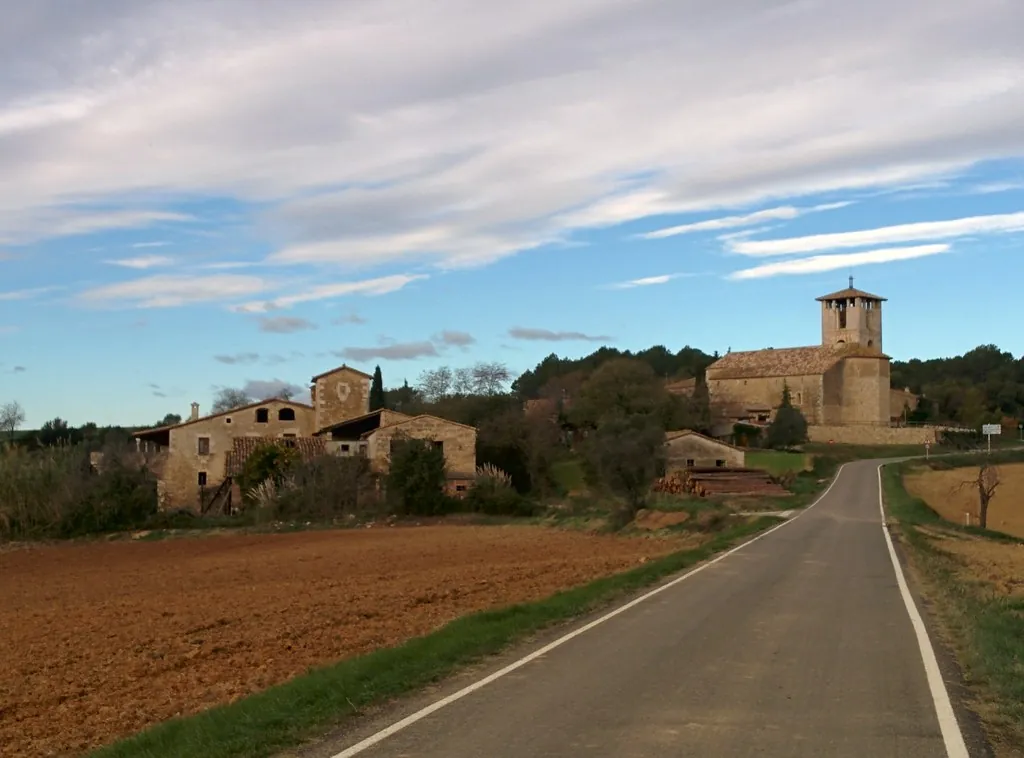
Absis de l'església de Sant Miquel de Campmajor.jpeg
Josep Salvany i Blanch · Public domain
Cataluña · Sea, Mountains & Culture

Sant Miquel de Campmajor

The church bell tolls twice at noon and the only other sound is a tractor changing gear on the brow of the hill. From the stone bench beside the ti...

258 inhabitants · INE 2025
217m Altitude

Why Visit

Mountain Falgons Castle Hiking

Best Time to Visit

summer

Main Festival (September) septiembre

Things to See & Do
in Sant Miquel de Campmajor

Heritage

  • Falgons Castle
  • Ginestar Tower

Activities

  • Hiking
  • Visit to Falgons

Festivals
& & Traditions

Fecha septiembre

Fiesta Mayor (septiembre), Aplec de Santa Quitèria

Las fiestas locales son el momento perfecto para vivir la autenticidad de Sant Miquel de Campmajor.

Full Article
about Sant Miquel de Campmajor

Quiet valley with medieval towers; surrounded by forests and streams

Ocultar artículo Leer artículo completo

The church bell tolls twice at noon and the only other sound is a tractor changing gear on the brow of the hill. From the stone bench beside the tiny bar, you can watch the driver raise two fingers from the wheel in silent greeting to the woman sweeping her threshold across the lane. Sant Miquel de Campmajor doesn’t announce itself; it simply carries on, 247 souls scattered among oak woods and cereal fields at 217 m above the Pla de l’Estany plain.

This is not the Costa Brava of yacht magazines, nor the Pyrenees of ski brochures. It is the buffer zone between the two: rolling country where dry-stone walls divide small holdings and every lane seems to lead to a farmhouse whose lintel still bears a 1789 date. The pace is set by seasons, not by opening hours, and the most reliable way to tell summer has arrived is the scent of newly cut hay drifting through open windows.

Stone, Tile and Timber

The village core clusters around the parish church of Sant Miquel, a modest single-nave building whose Romanesque bones survive beneath later renderings. There is no ticket office, no audio guide; push the heavy door and you step straight onto flagstones worn smooth by 800 years of Sunday boots. Look up and you’ll spot a mediaeval stone slab built sideways into the wall—local masons recycling older material long before the word “sustainable” existed.

Beyond the church the settlement dissolves into isolated masías: compact stone cubes with clay-tile roofs and wooden galleries that once stored grain now converted to weekend kitchens for families from Girona. These houses are private, but the web of farm tracks that link them is public. Walk five minutes and the lane narrows into a hollow-way sunk two metres below field level, its banks thick with wild rosemary. Another ten minutes brings you to the Font de la Móra spring where water spills from a copper pipe into a stone trough. No signpost points the way; directions are given by the angle of a telegraph pole or the bend in a dry-stone wall.

Walking Without Waymarks

Serious hikers may scoff at the gradients—nothing steeper than a 120 m rise—but the pleasure here is micro-navigation. One morning circuit starts at the bakery (open 08:00–13:00 except Monday), follows the GR-83 footpath waymarks for 200 m until they mysteriously stop, then continues straight on faith past a barn where three elderly men are pruning walnut trees. Thirty minutes later you reach the Romanesque chapel of Sant Mateu del Mont, really just a stone cell with a bell-cot, surrounded by a carpet of wild gladioli in May. Sit on the threshold; swallows stitch the air above and the only traffic is a farmer on a quad bike moving sheep.

Bring a print-out map: phone signal drops to one bar in the oak hollows, and Google has been known to place walkers in the middle of irrigation ponds. After rain the clay lanes turn slick as soap; boots with a decent tread save dignity.

Lake Days and City Lights

When the quiet becomes almost too complete, Banyoles lies 11 km east. Its 2 km-long lake has a paved perimeter path favoured by joggers, plus a roped swimming area where entry costs €4.50 in high season and the water stays cool even in August. Rowing clubs glide past in perfect synchrony; cafés on the north shore serve truita de Banyoles—a delicate trout omelette that tastes of clean water rather than fish.

Girona’s old quarter is 25 minutes down the C-66 dual carriageway. Here medieval walls, Arab baths and the neon-red river façades made famous by Game of Thrones provide the urban hit, before you retreat again to lanes where evening light turns the stone walls honey-coloured.

What to Eat and When

There is no supermarket in Sant Miquel. The bakery does excellent coca (a flat bread topped with roasted peppers), and the tiny grocery van calls on Thursday mornings, horn tooting like an ice-cream truck. Beyond that, you drive. Five kilometres south the hamlet of Porqueres hides El Xalio, a ranch-house restaurant where British visitors can ease into Catalan flavours: grilled botifarra sausage with white beans, or a mild sheep cheese called formatge de tupí served with quince paste. Ask for the “suau” version unless you enjoy barnyard aromas.

Market day in Banyoles is Wednesday: stalls sell mongetes de Santa Pau, buttery white beans that cost €6 a kilo and need four hours of gentle simmering. Buy them, add a bay leaf and the local butifarra negre (blood sausage) and you have supper sorted while swallows flicker across the terrace.

Where to Sleep

Accommodation is thin on the ground, which keeps visitor numbers low. The village-run Alberg Casal Sant Miquel occupies a restored manor at the top of the hill: four private doubles (€65) and a handful of bunks sharing spotless showers. There’s a pool dug into the old farmyard and Wi-Fi that actually reaches the bedrooms—rural Spain take note.

For more privacy, the 12th-century Castell de Roca has been split into two stone houses on VRBO; the smaller sleeps four, has its own pool, and costs from €180 per night even in July. Be aware the approach lane is single-track for the final 800 m; wing mirrors must be folded and negotiating a Fiat 500 with a delivery lorry at dusk is not for the faint-hearted.

The Calendar No One Prints

Festivity here is homemade. The main festa major lands on the last weekend of September. A foam machine turns the village square into a makeshift disco for local teenagers, the bakery stays open until midnight selling coca topped with pine nuts, and on Sunday morning a portable grill appears producing calçotada—long spring onions charred over vine shoots, peeled and dipped in romesco. Visitors are welcome but there are no tourist offices to ask; simply follow the smell of smoke and onions.

Spring brings the Fira de l’Embotit in nearby Castellfollit de la Roca (15 min drive), a sausage fair where producers hand out thumbnail-sized samples of llonganissa so smoky they leave a campfire after-taste for hours. Winter, conversely, can feel closed. January fog pools between the hills, daytime highs struggle past 8 °C, and many second-home owners retreat to Girona, leaving shutters bolted and lanes eerily silent.

Getting it Right

Ryanair’s morning flight from London Stansted lands at Girona-Costa Brava airport at 10:25; the car-hire queue is short and Sant Miquel is 30 minutes away on the GI-524. Do not trust the sat-nav’s estimate—tractors, cyclists and the occasional stray dog stretch the journey. Fill the tank at the airport; petrol stations in the area shut by 20:00 and none accept UK supermarket fuel cards.

Buses from Girona city run twice on weekdays, none on Sunday; the timetable is printed on a laminated sheet in the bakery window and is best regarded as approximate. Without wheels you are stranded, so hire a car or bring bikes and accept that every restaurant visit involves a designated driver.

Last Orders

Sant Miquel de Campmajor offers no souvenir shops, no sunset viewpoints with Instagram frames, and certainly no night-life beyond the bakery’s porch light. What it does give is a chance to calibrate your internal clock to agricultural time: bread emerges at dawn, tractors murmur home at dusk, and between those two points the day is yours to fill with slow miles of stone-walled lanes and the sound of cuckoos echoing across cereal fields. Come prepared for self-sufficiency, respect the fact that the stone house you’re photographing is someone’s actual home, and the village will repay you with a level of quiet that is becoming harder to buy anywhere on the Mediterranean rim.

Key Facts

Region
Cataluña
District
Pla de l'Estany
Coast
No
Mountain
Yes
Season
summer

Planning Your Visit?

Discover more villages in the Pla de l'Estany.

View full region →

More villages in Pla de l'Estany

Traveler Reviews