Full Article
about Serinyà
Known for its prehistoric cave park; located near Banyoles
Hide article Read full article
A village shaped by land and time
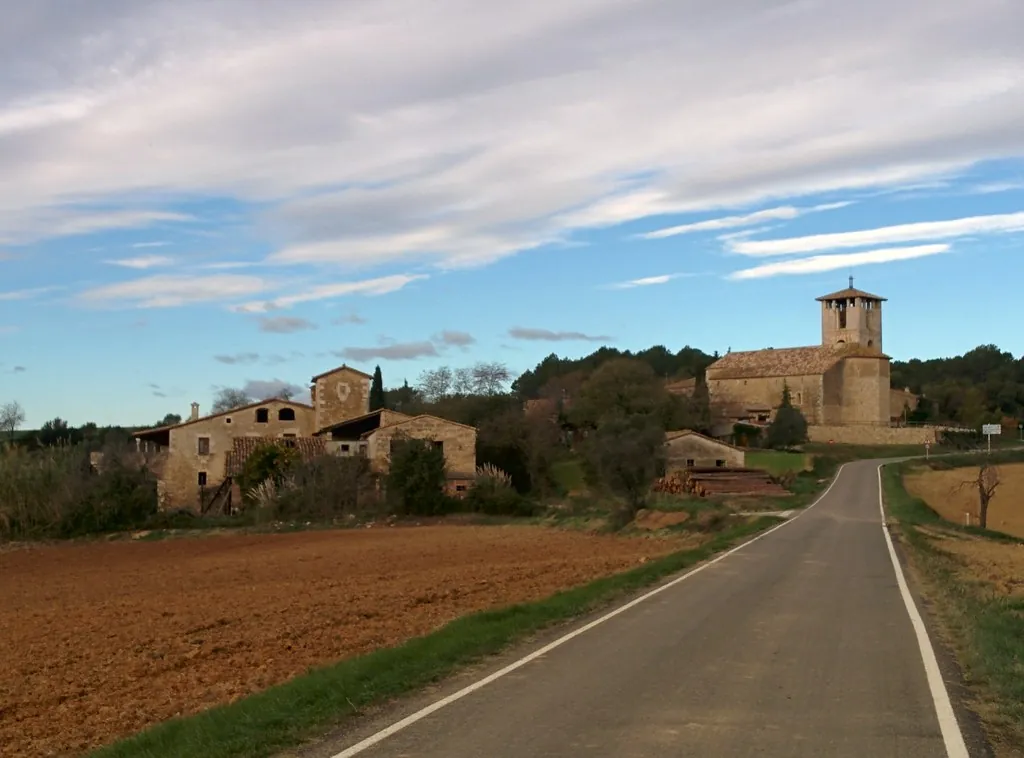
Serinyà sits in the comarca of Pla de l’Estany at around 188 metres above sea level. Like many rural villages in Girona, it grew around its parish church, with a compact cluster of traditional houses at its centre and fields and Mediterranean woodland spreading out beyond. With just over a thousand residents, daily life continues to balance agricultural activity with the preservation of an archaeological heritage that has helped explain human presence in this part of the Iberian Peninsula over tens of thousands of years.
The surrounding landscape differs from the coastal areas of the Empordà. Here, the terrain is made up of gentle hills, rural tracks and cultivated plots where modern machinery still appears during harvest periods. This working countryside gives Serinyà a steady rhythm tied to the seasons rather than tourism.
What stands out most is not a grand collection of monuments but the depth of time embedded in the area. The caves of Reclau Viver contain remains dating from the Middle Palaeolithic onwards, offering evidence of human life going back more than 200,000 years. Walking through the village is less about ticking off landmarks and more about understanding how a small settlement has evolved around its church and traditional buildings, at a scale that encourages a slower pace.
Traces of early humanity and village heritage
The key place for understanding Serinyà’s past is the Prehistoric Caves Park, which includes the Reclau Viver site and an interpretation centre. Discoveries made here have been important for reconstructing how early human communities developed across the Iberian Peninsula. The centre presents these findings through explanatory panels and audiovisual material, placing the archaeological remains into context.
A visit typically takes under an hour and does not require any prior knowledge. It is particularly engaging for those with an interest in archaeology or for families travelling with children. The aim is simple: to offer a clear picture of how the first inhabitants of this region lived and adapted to their surroundings.
In the centre of the village stands the parish church of Sant Esteve. It is a Romanesque building that has undergone later modifications, so its current appearance reflects different periods. Its size does not dominate the skyline, yet medieval elements remain visible to those who take a closer look. The bell tower can be seen from various points around the village and helps orient visitors within the layout of the settlement.
Beyond the built centre, the wider municipal area is dotted with masías, traditional Catalan farmhouses linked by rural paths. These buildings reflect the agricultural roots of the area and remain part of the landscape that defines Serinyà.
Walking the countryside
The natural setting around Serinyà invites exploration on foot or by bike. A network of rural tracks connects the village with the surrounding countryside and neighbouring towns such as Banyoles and Sant Miquel de Campmajor. The terrain is generally gentle, making it suitable for those who prefer relaxed routes rather than demanding climbs.
These paths reveal a patchwork of farmland and woodland typical of the Pla de l’Estany. On clear days, views extend across the comarca and reach as far as the Pyrenean peaks to the north. The scenery changes noticeably with the seasons. Spring brings green fields and renewed growth, while autumn turns nearby woods into shades of red and gold. Winter strips the landscape back, but the paths remain accessible for unhurried walks.
It is worth keeping track of directions when heading out, as some junctions are not clearly signposted. A short stroll can easily turn into a longer outing if attention drifts from the route.
Local flavours and nearby waters
Food in Serinyà reflects traditional Catalan cooking rooted in local produce. Typical elements include artisan cured meats, fresh vegetables and grilled meats. Dishes often echo influences from nearby areas such as Banyoles or the Empordà, linking inland and coastal culinary traditions.
At certain times of year, especially during weekends and festive periods, there are also interpretations of these recipes with a more contemporary approach. Even then, the connection to local ingredients and familiar flavours remains central.
A short distance from the village lies the Estany de Banyoles, one of the most distinctive natural settings in Girona. This lake expands the range of activities available in the area. Visitors come to walk around its perimeter, take part in water-based sports or observe birdlife. Its presence adds a different dimension to a stay in Serinyà, combining inland rural landscapes with a notable aquatic environment.
Festivities and seasonal rhythms
The main annual celebration in Serinyà is the Festa Major, held around 3 August in honour of Sant Esteve, the village’s patron saint. During these days, the programme includes traditional activities such as sardanas, a type of Catalan circle dance, along with evening festivities and communal meals. Religious events also form part of the celebration, reflecting the enduring role of shared traditions in village life.
These festivities offer insight into how local identity is maintained through collective participation. They are less about spectacle and more about continuity, bringing together residents across generations.
Throughout the year, Serinyà also takes part in celebrations linked to the agricultural calendar and wider Catalan customs. Spring is often marked by events tied to the end of winter and the beginning of the farming cycle. In autumn, gastronomic and cultural gatherings bring together different towns in the Pla de l’Estany, reinforcing connections across the comarca.
In this way, Serinyà moves with the seasons, its rhythm shaped as much by the land as by its long human history.