Full Article
about Els Guiamets
Quiet village with a nearby reservoir perfect for outdoor activities and relaxation
Hide article Read full article
A Hillside Village in the Priorat
By mid-morning, on the track that cuts through the vineyards towards the Guiamets reservoir, the air carries the scent of damp earth and freshly cut grass. The light is still soft, lingering on the slate terraces that ring the village. Every so often a tractor rolls past along the dirt road. On the main street, a few shutters remain half closed, as if the day has yet to properly begin.
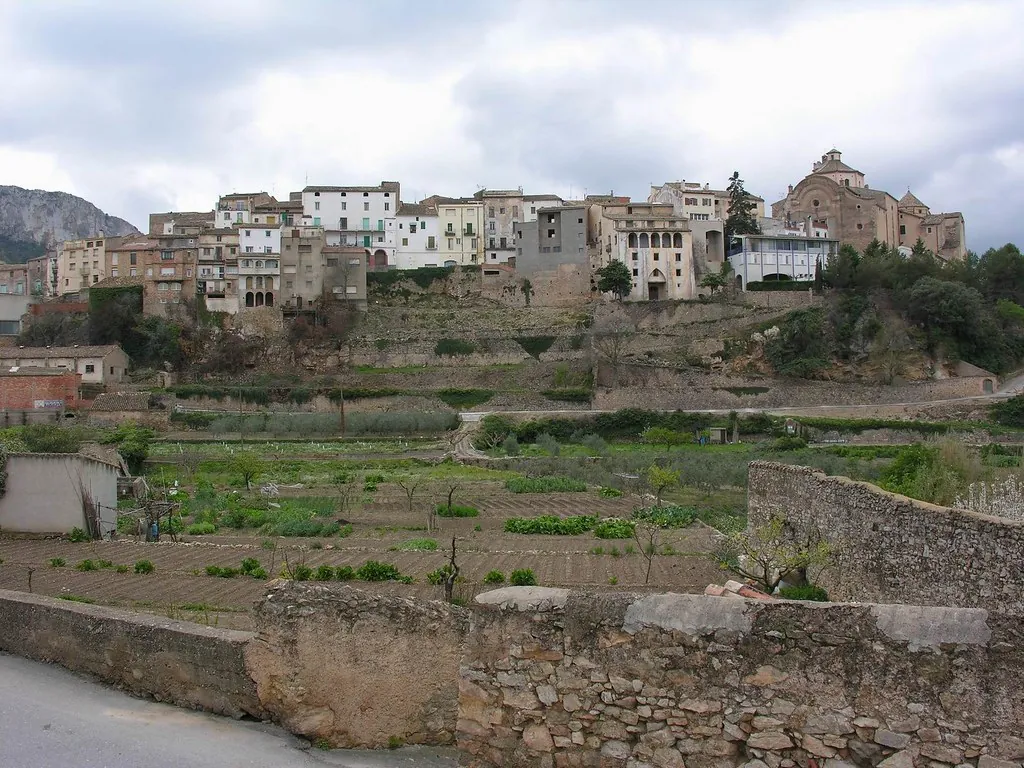
Els Guiamets sits on a gentle slope in the comarca of the Priorat, in inland Catalonia. Its streets rise and dip without any obvious plan, bending around houses that have grown here over time rather than according to a grid. At the centre stands the parish church of Sant Jaume, with its restrained façade of pale stone and very little decoration. It is not large, but it works as a natural meeting point. In the evening, when the heat eases, neighbours tend to cross paths in front of the door and someone may carry a chair outside to catch the cooler air.
The village is small, home to only a few hundred people, and its story remains closely tied to the land. Viticulture shapes both the landscape and the rhythm of the year. Around Els Guiamets, terraces of dark slate climb the hillsides, held in place by dry stone walls that need repairing from time to time. In spring the slopes turn green. By late summer the ground shifts towards dusty, drier tones.
A walk through the historic centre does not take long. In under an hour it is possible to cover the main streets, although it is worth moving slowly. There are stone doorways with dates carved into the lintels, balconies with slightly twisted iron railings, and inner courtyards where the clatter of plates or the murmur of a radio drifts out. From certain corners the view opens suddenly onto vineyards descending towards the reservoir.
Water Among the Vines: The Guiamets Reservoir
The Guiamets reservoir lies a short distance from the village and changes the feel of the landscape. Water appears between hills covered in vines and Mediterranean scrub. On windless days the surface is almost still, reflecting a clear sky.
Several rural tracks lead from the village in that direction. They are not signposted in detail, yet they are straightforward to follow if you keep to the network of agricultural paths. In summer, carrying water is essential. The sun falls directly here and shade is scarce at midday.
Walking towards the reservoir gives a broader sense of how Els Guiamets sits within its surroundings. The vines form ordered lines across uneven ground, while patches of low scrub break up the slopes. The presence of water softens what might otherwise feel austere, especially in the hotter months when the earth takes on a faded, powdery look.
Looking Out Across the Priorat
From the edges of the village, several nearby mountain ranges come into view, depending on where you stand and how clear the day is. Among them are the Montsant and the Llaberia. Their outlines shift in tone as the light changes.
Morning and late afternoon offer very different impressions. As the day draws to a close, the hillsides turn reddish and the vines cast long shadows over the terraces. The slate catches the last light in muted flashes. Anyone travelling with a camera tends to find good vantage points along the tracks towards the reservoir or on the small rises that surround the village.
The Priorat is known for its rugged terrain, and Els Guiamets reflects that character in miniature. There are no grand viewpoints marked out with signs or railings. Instead, the landscape reveals itself gradually, between houses, at the end of a lane, or just beyond the last row of vines.
Wine, Slate and Quiet Roads
Wine is part of daily life throughout the Priorat, and Els Guiamets is no exception. Within a few minutes by car, various wineries are scattered across the comarca. Many are linked to these slopes of dark slate, known locally as llicorella. Farmers use this word to describe the flaky, mineral-rich rock that forces vine roots to dig deep into the soil. It is often mentioned when people talk about the character of wines from this area.
The terrain that shapes the vines also defines the roads. The secondary routes of the Priorat attract cyclists looking for a challenge. These are not gentle stretches of tarmac. There are constant short climbs and bends that require a steady pace. In summer, setting off early in the day is the sensible choice.
Driving through the area follows a similar rhythm. Roads wind between vineyards and low hills, with little traffic and frequent changes in gradient. Els Guiamets works as a quiet base from which to explore this part of inland Catalonia, especially for those drawn to landscapes where agriculture still dominates the scene.
Food and the Calendar of the Village
Local cooking revolves around straightforward ingredients: olive oil, almonds, cured sausages and wine from the comarca. Traditional stews tend to be hearty, designed to sustain long days of agricultural work. The emphasis is on substance rather than presentation, reflecting the practical needs that shaped these recipes over generations.
In Els Guiamets, places to eat are limited and opening times can vary depending on the season. If you have something specific in mind, it is wise to check in advance what is open, particularly outside weekends.
The annual calendar brings a few moments when the village feels busier than usual. In August, the fiesta mayor takes place, the main local festival celebrated in many Spanish towns. During these days, Els Guiamets fills with returning residents who now live elsewhere. Activities are centred around the square and the surrounding streets, giving the village a livelier atmosphere.
In January, around the feast of Sant Antoni, the tradition of lighting bonfires and blessing animals is still maintained. Sant Antoni is widely associated with animals in rural Spain, and the custom reflects the agricultural roots that continue to define life here. The celebrations are simple and closely linked to the farming calendar that has structured the year for generations.
As evening falls and the heat recedes, shadows stretch across the vineyards and the village settles back into its usual pace. There are few voices in the street, the occasional car passing slowly, and the steady presence of the countryside all around. Els Guiamets remains a small Priorat village where the landscape carries more weight than any single monument, and where daily life moves in step with the vines.