Full Article
about Porrera
Iconic Priorat village with sundials and renowned wineries in a steep valley
Hide article Read full article
A Village Shaped by Wine
There are small villages where one single thread seems to hold everything together. In Porrera, that thread is wine. Not as a staged attraction or a museum piece, but as part of daily life. This Priorat village has around 400 residents and sits among steep hillsides that look demanding even from a distance. Each vine appears hard won.
The landscape explains itself as soon as you arrive. The famous licorella, the dark slate that defines Priorat, is everywhere. It shows up in the terraces, along the paths and mixed into the soil of the vineyards. From afar, the slopes look finely striped, as though someone had drawn the terraces with a ruler. It is not a question of aesthetics. These terraces exist because cultivating on such serious inclines leaves little alternative.
Olive trees and almond trees appear among the vines, without any fuss. This is a worked landscape, shaped by necessity rather than designed for photographs.
The Old Centre and Everyday Life
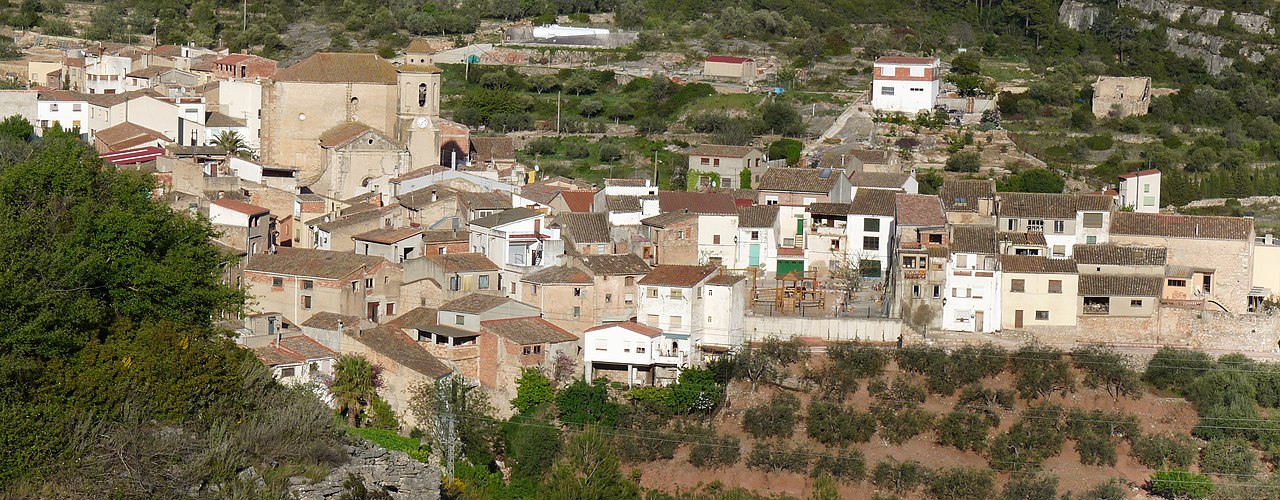
Porrera’s centre can be covered in a short stroll. Narrow streets, sober stone houses and the sense that everything is within easy reach. It is not a monumental old quarter filled with grand buildings. Instead, it is a cluster of streets that still reflect a life closely tied to agriculture and wine.
The church of Sant Joan Baptista stands slightly elevated, visible from various points in the village. The current building is the result of several extensions over time, which is common in this part of Catalonia. Inside, it is simpler than its size might suggest.
One of the more curious features of Porrera is the presence of old “cups”. These traditional deposits were either dug into the ground or constructed to store water or wine, depending on their purpose. Remains of old cellars are also scattered through the village, some incorporated directly into houses. They serve as a reminder that wine production was not separate from domestic life but closely intertwined with it.
The entrance through the Portal de Sant Antoni hints at a time when the village had more clearly defined access points and a more enclosed layout.
Walking Through the Vineyards of Priorat
Heading out on foot around Porrera is often the most rewarding part of a visit. There is no need to venture far. As soon as you leave the village, tracks lead into vineyards. Many of these follow old agricultural routes that once linked terraces and small plots.
The slopes can be deceptive. From below they appear manageable, but ten minutes into a steady climb between vines, it becomes clear that this is far from flat country. The terrain demands effort, and that effort shapes both the work and the character of the place.
The long-distance trail GR‑174, known as the Camí de Sirga, passes relatively close by. This route crosses much of the Priorat region. Some stages offer views over the mosaic of vineyards that defines the comarca, with small terraces adapted to each fold of the hills. From certain vantage points, the pattern of licorella, vines and stone walls becomes especially clear.
Seeing the land at close quarters helps to make sense of what makes Priorat distinctive. The poor soils, the fragmented plots and the steep slopes are not abstract concepts. They are visible in every direction.
Understanding Priorat Wine on Its Own Ground
Porrera lies within the Priorat designation of origin, so wine is central to the village’s identity. Several local wineries organise visits or tastings at certain times of year. The focus is often on explaining how work is carried out on these slopes: manual harvesting, small parcels of land and very poor soils that force the vines to struggle.
Towards late September or early October, there may be visible activity linked to the grape harvest, although each estate follows its own timetable depending on how the fruit ripens. During this period, it is possible to see grapes being brought in and to sense the shift in rhythm that harvest brings.
The landscape gives context to everything. When standing among the terraces, it becomes easier to understand why yields are low and why Priorat has earned a certain reputation among wine enthusiasts. The terrain sets clear limits, and the way wine is produced reflects those limits.
In Porrera, wine does not feel like a theme imposed for visitors. It is part of the working year, tied to the seasons and to the physical demands of the land.
When Porrera Feels Livelier
For much of the year, Porrera moves at a steady, quiet pace. Daily life unfolds without great fuss. There are, however, moments when the village feels more animated.
The main festivities usually take place towards the end of August around Sant Joan Baptista. During these days there are local activities, music and more life in the streets. It is a village celebration rather than a large-scale event, and it briefly changes the rhythm of the place.
Autumn also brings a different kind of movement. The grape harvest attracts visitors who are curious to see how work is done in the wineries or to walk through vineyards heavy with fruit. Even then, the atmosphere remains grounded in agricultural reality.
What to Expect from Porrera
It helps to arrive with the right expectations. Porrera is not a monumental town, nor a place packed with major sights that will fill an entire afternoon. It is somewhere to pause, wander slowly and then spend time looking at the surrounding hills.
The appeal lies less in ticking off landmarks and more in understanding how the land shapes daily life. In Priorat, grasping the terrain is already half the story. Each vineyard, each terrace and each fragment of licorella tells the same thing: cultivating these slopes has never been easy. That difficulty is precisely what gives the landscape its character.
Porrera offers a direct encounter with that reality. A small village, a network of terraces, a church overlooking the streets and traces of old cellars embedded in houses. Together, they form a place where wine is not an accessory to tourism but the framework around which everything else turns.