Full Article
about Ascó
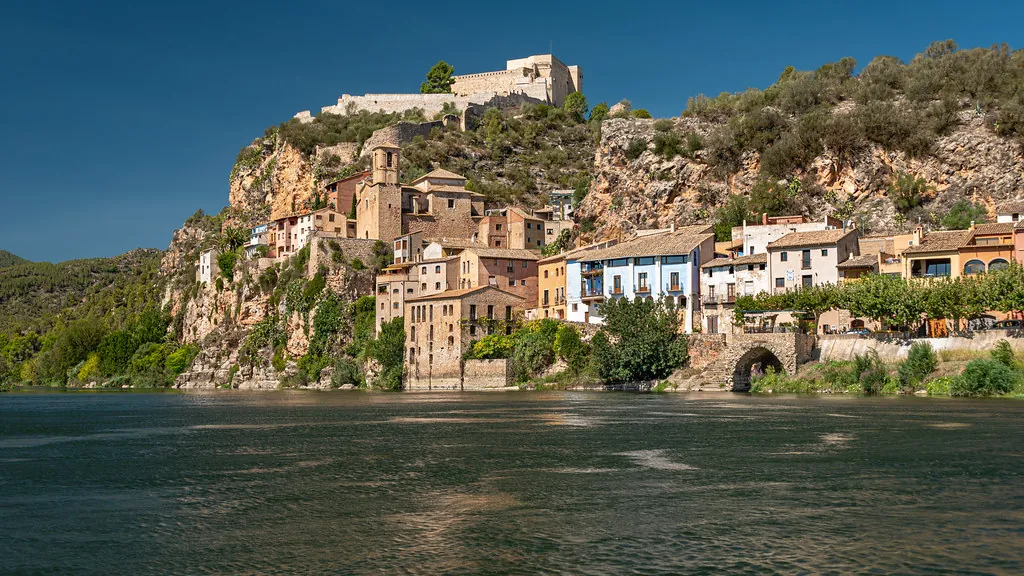
A town on the banks of the Ebro, dominated by its Templar castle and known for its nuclear power plant and river setting.
Ocultar artículo Leer artículo completo
The morning train from Barcelona pulls in at Ascó's station—four kilometres outside town, three services daily, no Sunday trains. From the platform you see neither sea nor sand, but a river looping like a loose shoelace through almond orchards and low vineyards. This is the first clue that Ascó refuses to follow the standard Catalan script.
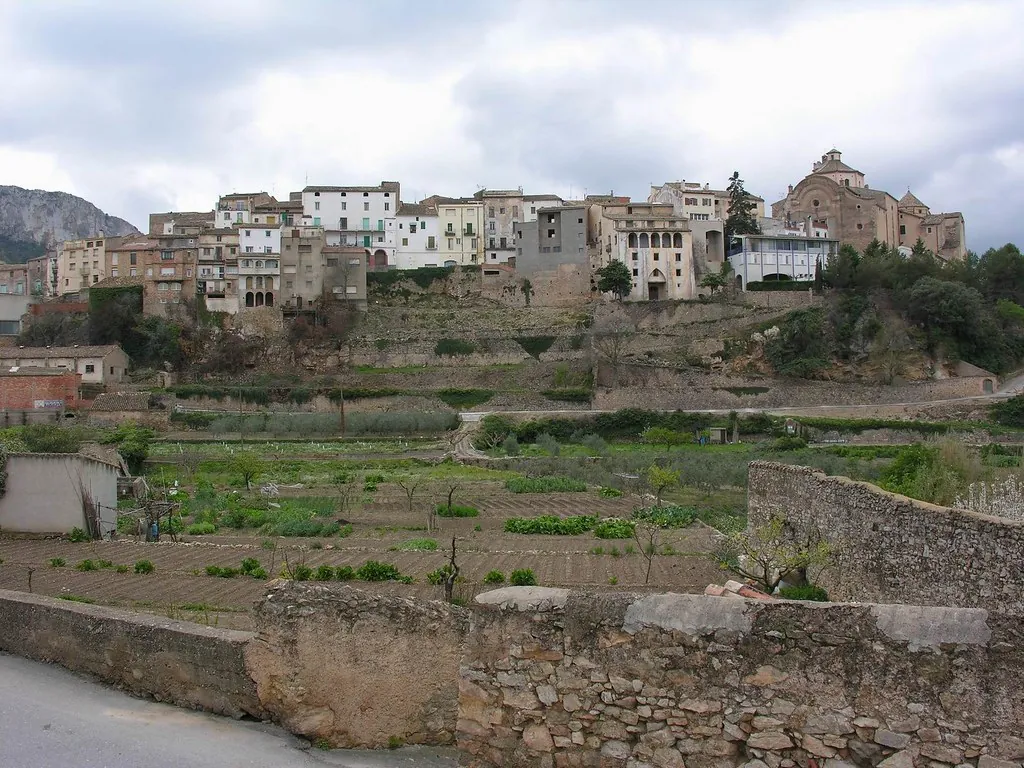
At barely 70 m above sea level, the village sits lower than most British market towns, yet the landscape feels raised: terraces of olive and peach trees step up from the Ebro's edge, and the church tower of Sant Miquel pokes above red-tiled roofs as if keeping watch over an inland sea. The river, 120 m wide here, behaves like one—changing colour from slate to jade depending on cloud cover, carrying the occasional heron past the old ferry ramp where boats once crossed to the opposite bank.
Riverside Logic
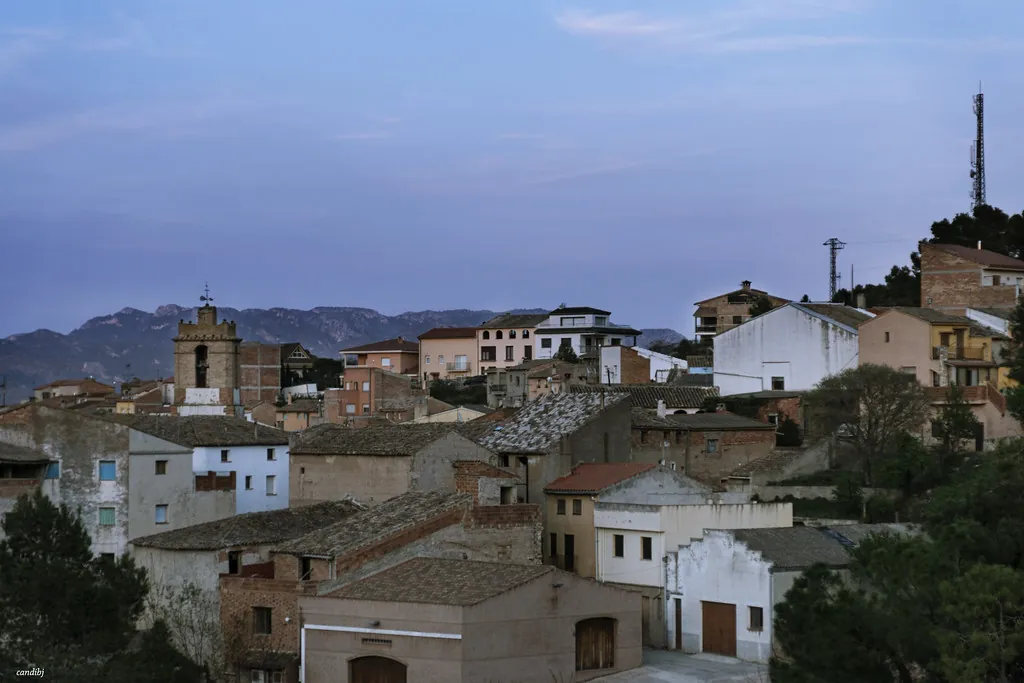
Ascó's streets were laid out for mules, not motorcars. They twist uphill, shrink into passages, then widen suddenly into tiny plaças where elderly men still play cards under a mulberry tree. Houses grow out of the rock; some cellars are carved directly into the hillside, their walls blackened by centuries of olive-oil lamps. Nothing is picturesque in the postcard sense—paint flakes, satellite dishes bloom from medieval walls—yet the place holds the eye. Pause at the corner of Carrer Major and you can trace the village's economy in one glance: ground-floor cooperativa selling local wine for €4 a bottle; upstairs balcony draped with washing the colour of the surrounding fields; beyond, the glint of the Ebro through a gap in the houses.
The river explains everything. It provided transport when roads were mule tracks, irrigation when rainfall was fickle, and, during the Civil War, a front line that left bullet scars on the church façade. That damage has been left visible—Ascó prefers its history unvarnished. Inside Sant Miquel, the interior is plain stone, no gilded excess, the silence broken only by swifts nesting in the bell tower. Climb the narrow stair to the roof and the view unfolds: a mosaic of green allotments stitched together by irrigation ditches that predate the Romans, the railway viaduct marching south towards Tortosa, and, upstream, the grey hulk of the nuclear plant that employs a third of the working population. Mention the plant in the bar and conversation pauses; locals are proud of the jobs, tired of the jokes about glowing tomatoes.
Walking the Loop, Tasting the Valley
Ascó's best asset is the footpath that leaves from the far end of the plaça, drops past the last house, and follows an irrigation channel into the fruit terraces. The route is way-marked but faintly—look for yellow paint on dry-stone walls. Within twenty minutes the village noise is replaced by bee hum and the scrape of farmers pruning almonds. Spring brings a brief, extravagant bloom: peach blossoms first, then poppies smearing vermilion through the wheat. By late May the ground is baked biscuit-hard; walkers thankful for the shade of tamarisk tunnels planted a century ago to stop the soil sliding into the river.
The standard circuit is 8 km, climbing 250 m to a limestone bluff that faces back across the valley. From here the Ebro looks manageable, almost domesticated, until you notice the pale high-water mark two metres above present level—winter floods can submerge the orchards in a night. The descent passes a ruined water-mill where you can refill bottles from a stone trough; the water is safe, though it carries a mineral tang that reminds you how close the geology is to Priorat's slate ridges further north.
Back in the village, lunchtime starts at 14:00 and shutters go down at 16:00 sharp. Menu del dia in the only restaurant open on Tuesdays is €14 and begins with pa amb tomàquet that tastes of garden tomatoes rather than supermarket red bullets. The house wine comes from the cooperative you walked past earlier—Garnacha that hasn't seen an oak stave, violet-purple, ideal for washing down a stew of river eel and potatoes that eats like a Catalan take on Lancashire hot-pot. Ask for seconds of the alioli; garlic here is judged by bite, not politeness.
Seasons of Silence
Summer is the cruel season. Daytime temperatures sit in the mid-thirties from mid-June to August; the river turns warm and sluggish, and the valley traps air like a lidded pan. Accommodation lacks air-conditioning—most visitors are day-trippers who retreat to the coast by 17:00. If you must come in July, walk at dawn, siesta through the afternoon in the dim interior of the Ecomuseu (free entry, ask at the ajuntament for the key), then drift along the river at dusk when swallows stitch the surface.
Autumn is kinder. Grape harvest starts in mid-September; the cooperative presses on Saturdays and the smell of fermentation drifts across the lower streets. A local outfit called Riu de Somnis rents bikes for €18 a day and will drop you at the hydro-electric dam 10 km upstream; from there you freewheel back to Ascó on a dirt service road that hugs the water. November brings the olive oil rush—tiny, bitter fruit shaken onto nets, then trucked to the mill beside the railway. New oil appears on tables overnight: thick, green, peppery enough to make you cough. Buy it in five-litre cans; the cooperative will seal one for your hold luggage.
Winter is underrated. Daytime highs of 12 °C feel mild after a British December, and the low sun sets the cliffs opposite aglow like oxidised copper. Some pensiones close, but Ca la Lola stays open year-round—three rooms above a bakery that fires its wood oven at 05:00, so you wake to the smell of bread crust rather than alarm clocks. On clear nights the sky is dark enough to see the Milky Way reflected in the river; the village streetlights switch off at midnight, an austerity measure that doubles as light-pollution control.
Getting There, Getting In, Getting Out
Public transport exists in theory. The R15 line links Ascó-Ribera d'Ebre station with Barcelona-Sants in 2 h 20 min, but the onward journey into the village requires a taxi—book the previous day, €12 fixed fare. Car hire from Reus airport is simpler: 75 minutes on the AP-7, then the C-12 river road that feels like driving through a 1970s Spanish film set. Parking is free but chaotic on market Thursday when stalls spill across the only plaça large enough for twenty cars.
One bank machine, one pharmacy, one small Condis supermarket that opens 09:00–13:00, 17:00–20:00 except Sunday. Bring cash; the bakery and two out of three bars refuse cards for purchases under €5. English is scarce—learn how to ask for "un got d'aigua de l'aixeta" if you want tap water rather than €2 bottles. The tourist office keeps irregular hours; the woman inside knows every footpath but speaks Catalan at machine-gun speed—smile, point at the map, and she will draw routes in biro that prove more reliable than any app.
Leave time for the river at the end of the day. Walk past the last house, past the sign warning of strong currents, and sit on the concrete slip where boys launch homemade kayaks. The water moves faster than it appears from the bank; a fallen branch can travel from Aragón to the Mediterranean in four days. Watch long enough and you understand Ascó's creed: life measured by irrigation cycles, not Instagram likes; a village that asks you to adjust to its tempo, not the other way round. When the church bell tolls seven, head back uphill for supper. Tomorrow the train leaves at 07:43. Whether you're on it is up to you.