Full Article
about Móra la Nova
Important railway junction with a notable train museum and trade fairs
Hide article Read full article
Arriving by Rail, Staying by the River
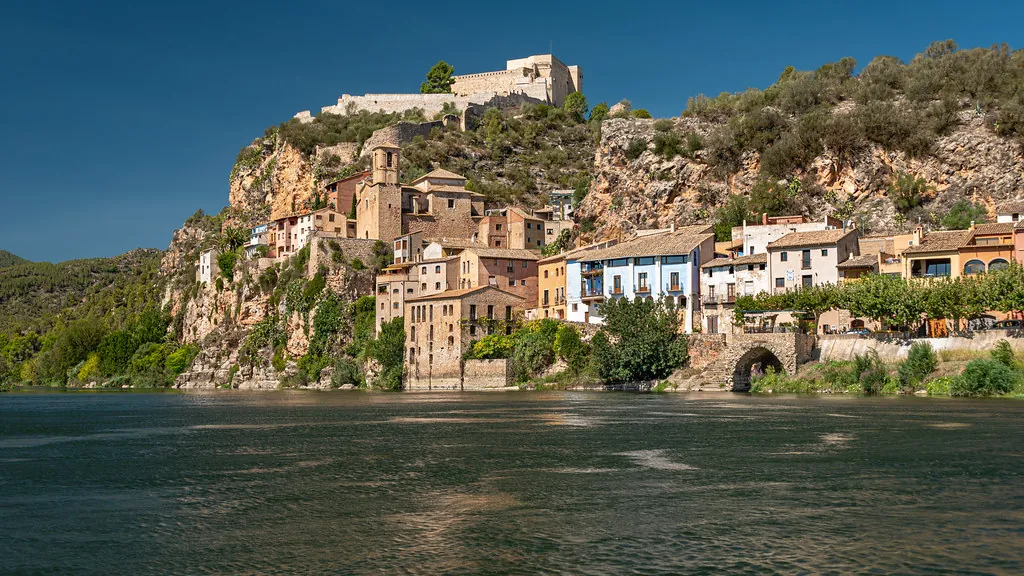
The train slows just before the bridge over the Ebro. From the window, the river appears wide and unhurried, with the town resting along its left bank. Tourism in Móra la Nova often begins like this, arriving at the station. This is not somewhere people drift into by accident. You come because you have a reason, or because a closer look at the map of the Ribera d’Ebre leads you here.
The station remains central to the town’s identity. When the railway line linking the inland Ebro valley with the coast was built in the late 19th century, it turned Móra la Nova into a small communications hub at a time when trains were reshaping the territory. That moment of growth left a lasting mark. The platforms, the passenger building and the steady movement of travellers still form part of everyday life.
There is no grand historic centre to announce itself on arrival. Instead, the railway explains much of what the town became: a practical place, shaped by transport and agriculture, with the Ebro setting the wider scene.
The Ebro as Framework
The Ribera d’Ebre is a fertile strip of land organised around the river that gives it its name. Móra la Nova occupies the left bank, where the terrain opens out just enough to allow both irrigated plots and dry farming. Olive groves, almond trees and vineyards spread across the surrounding fields.
The Ebro is not a backdrop but a defining presence. It influences the local economy, the layout of the streets and even the orientation of many houses. For centuries the river also served as a transport route. Timber and goods once floated downstream towards the delta, part of a fluvial traffic that has long since disappeared. Even so, traces remain: old landing points, paths that slope down towards the water, and a direct relationship between town and riverbank that still feels intact.
The metal bridge linking Móra la Nova with Móra d’Ebre on the opposite side underlines how closely the two function together. Separated only by the river channel, they operate almost as a single urban unit.
Fields, Olive Oil and the Fira de Móra
Agriculture continues to shape daily life. In autumn, the Fira de Móra usually takes place, an event that reflects the area’s rural character. It is not a large-scale fair. The atmosphere is closer to that of a traditional county market, with producers of olive oil, wine, honey and cured meats setting up stalls, agricultural machinery on display, and neighbours taking the opportunity to meet and talk.
Olive oil carries particular weight in the local economy. Olive groves occupy a significant share of the land around the town, and the harvest sets the rhythm of the countryside towards the end of the year. The seasonal cycle is still visible in the activity of the fields and in the conversations that revolve around yield and weather.
In winter, calçots appear on the table. These long spring onions are strongly associated with the Camp de Tarragona, rather than the Ribera d’Ebre, yet they are grown in several riverside fields here as well. Between January and March they become the focus of informal gatherings. Meals are simple and, when the weather allows, held outdoors. The emphasis is on company and the fire used to grill them, rather than on ceremony or elaborate ritual. For visitors unfamiliar with the tradition, calçots are typically charred over open flames and eaten by hand, a seasonal excuse to bring people together.
Crossing to Móra d’Ebre
Part of everyday life in Móra la Nova unfolds across the river. The walk to Móra d’Ebre takes only a few minutes via the iron bridge. On the other side are several of the comarca’s cultural and administrative facilities.
Those interested in the history of the area will find small exhibitions and local centres that explain the relationship between the river, agriculture and the more recent episodes of the 20th century that left their mark on the region. These are not large museums, and they do not aim to overwhelm. Instead, they provide context, helping visitors understand why these towns developed as they did and how geography shaped their experience.
Moving between the two municipalities quickly becomes routine. In this part of the Ribera, the distance across the bridge counts for very little, almost as if both sides belonged to the same place.
Walking the Town
Móra la Nova is easy to explore on foot. Many of its streets run roughly parallel to the river, and the terrain is mostly flat. There are few slopes to negotiate, and distances are short.
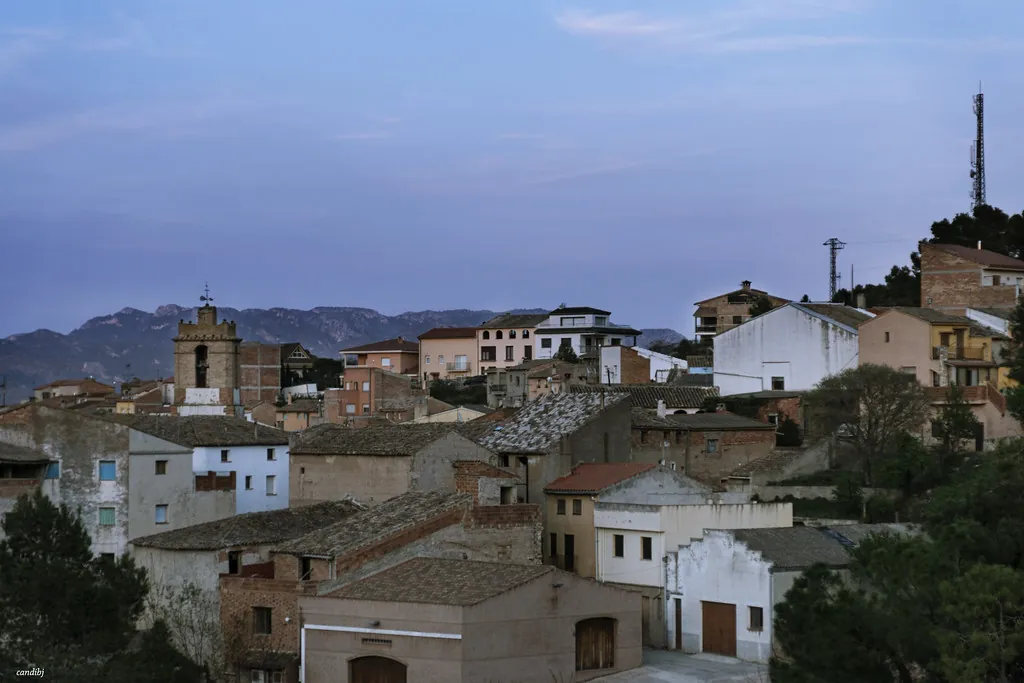
There is no monumental old quarter. The town grew mainly under the impulse of the railway and agricultural expansion, rather than around medieval walls or grand civic buildings. That gives it a straightforward, lived-in character. Low houses line the streets, often with interior courtyards. Now and then a corral still hints at the rural past that has not entirely disappeared.
A gentle walk might begin by heading down towards the riverbank, then looping back up in the direction of the station. From there, the scale of the place becomes clear. Everything feels measured and close at hand: the water, the fields beyond, the tracks that once transformed the town’s prospects.
As for timing, autumn is often the most rewarding season to visit. The intense heat of summer has eased, agricultural activity is in full swing, and the light over the Ebro valley softens. Summer itself can be harsh in terms of temperature, while winter sometimes brings cold winds channelled along the river.
For overnight stays, many travellers also look to Móra d’Ebre, just a few minutes away across the bridge. In practical terms, the separation is minimal. In this stretch of the Ribera d’Ebre, the two towns are so closely linked that choosing one or the other feels less like a decision between destinations and more like picking a side of the same river.