Full Article
about Rasquera
Village at the foot of the Sierra de Cardó known for its palm-leaf crafts and pastissets.
Hide article Read full article
A small village on the Ebro route
Rasquera sits about 75 kilometres from Tarragona, reached by following the C‑12 towards Tortosa. It is a small place that can be covered quickly on foot. The simplest approach is to leave the car near the entrance or along one of the wider streets in the centre, then continue walking.
In summer, timing matters. The heat builds early and there is very little shade in the more open streets, so arriving in the morning makes things easier.
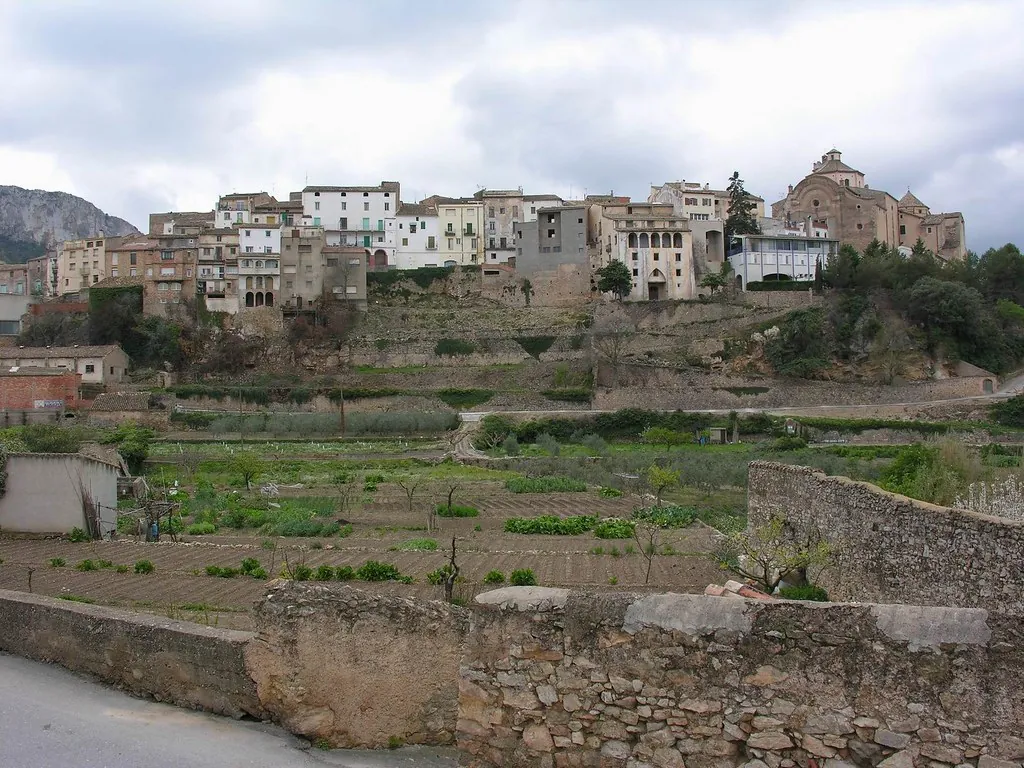
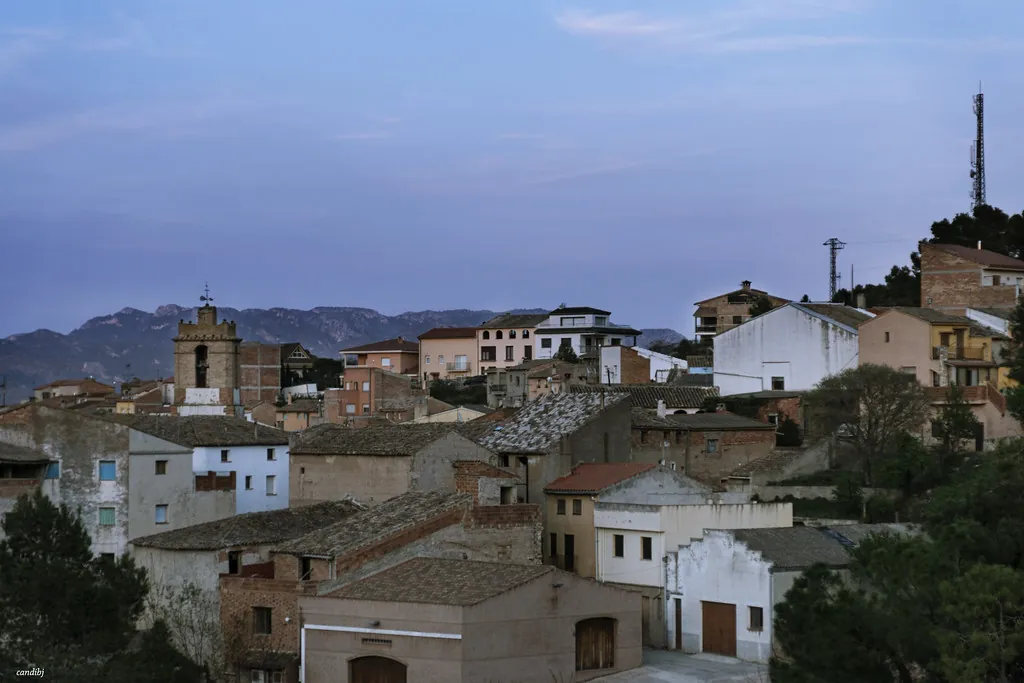
The village is set on a gentle slope. Streets are narrow, with tight turns and closely packed stone houses. There is nothing especially monumental here. The medieval origin shows itself more in the layout than in individual buildings. The church of Sant Jaume marks the centre, and its bell tower appears between rooftops as you move up or down through the streets.
Walking the old streets and beyond
A visit to Rasquera is mostly about wandering through the old quarter. It is a compact network of streets that cross and climb slightly. In summer, this part offers some relief, as the shade lingers longer than in the exposed areas.
Sant Jaume is the most visible building. It is not large or elaborate, but it works as a useful point of reference while finding your way around.
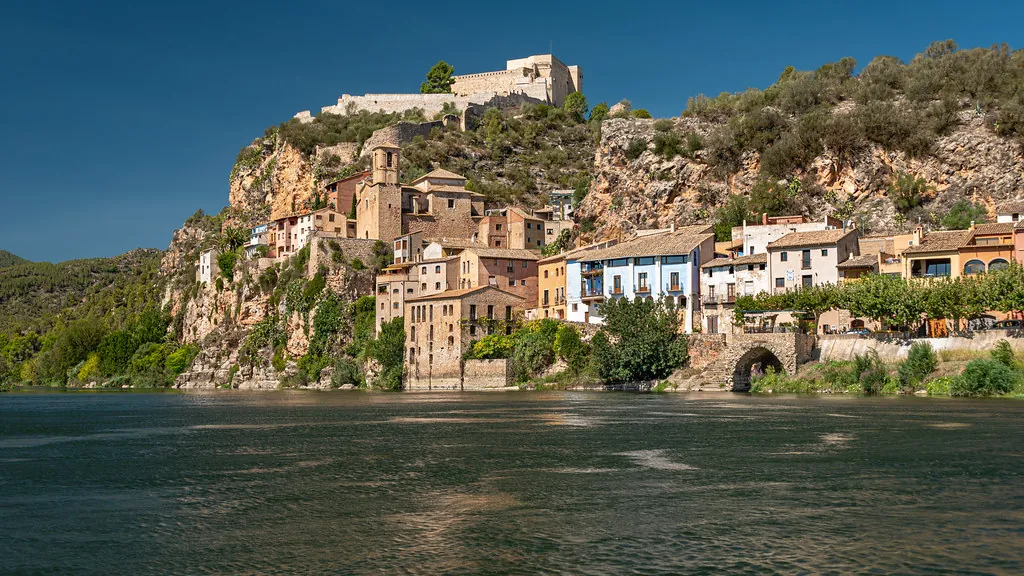
Not far from the village, the Ebro flows past. There is no developed riverside promenade. Instead, the banks are lined with vegetation and simple dirt paths. Locals come here to walk or fish. After rain, the ground can turn soft, so footwear that can handle mud is a good idea.
If you head west, the landscape begins to change within a few kilometres. Tracks and paths start climbing towards the first hills of the sierra de Cardó. From higher points, the view opens across the whole Ebro valley. Towards evening, the agricultural terraces around the village stand out clearly.
Simple routes and outdoor activity
This is a place more suited to walking than anything else. There are paths along the river and others that lead up towards the nearby hills. Many are stony and lack shade, so carrying water and wearing a hat becomes important in warm weather.
Close by runs the Vía Verde de la Val de Zafán. This route follows a former railway line and is used by both cyclists and walkers. Its gentle gradient makes it an easy option compared to the rougher tracks in the surrounding countryside.
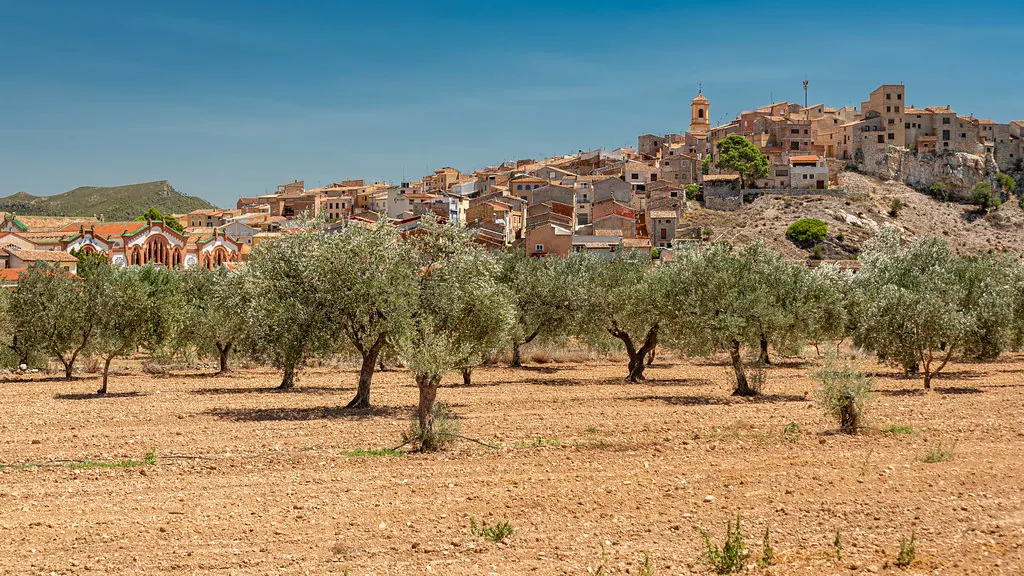
The landscape around Rasquera is closely tied to agriculture. Olive trees dominate, and olive oil plays a significant role in the local economy. Wines from nearby areas such as Terra Alta are also present. The food typically found in homes and local bars reflects this setting: olive oil, pulses, some river produce such as eel, and dishes that keep things simple rather than elaborate.
Local traditions and gatherings
The main annual celebration is the Festa Major, usually held in summer around the feast of Sant Jaume. During these days, the village hosts religious events, evening music and activities organised by local groups known as peñas.
There is also a fair dedicated to olive oil and wine. Producers from the surrounding area bring their bottles and larger containers for tasting and buying. It is not a large-scale event, more a local gathering that has gradually opened up to visitors.
In summer, there are sometimes open-air concerts or communal meals held in the streets. These are mainly organised with residents in mind, though visitors are welcome to join.
Getting there and practical notes
The most direct route from Tarragona is the C‑12 towards Tortosa. The road follows the Ebro valley and reaches Rasquera without complicated turn-offs.
Anyone planning to walk or explore the surrounding tracks should carry water. Distances can be deceptive in this landscape, and shade is not always available when it is most needed.